Ahnest Kitchen Is Preserving a Labor of Love
Korean recipes and cooking secrets from the 2026 James Beard Award–winning duo behind Ahnest Kitchen and Umma
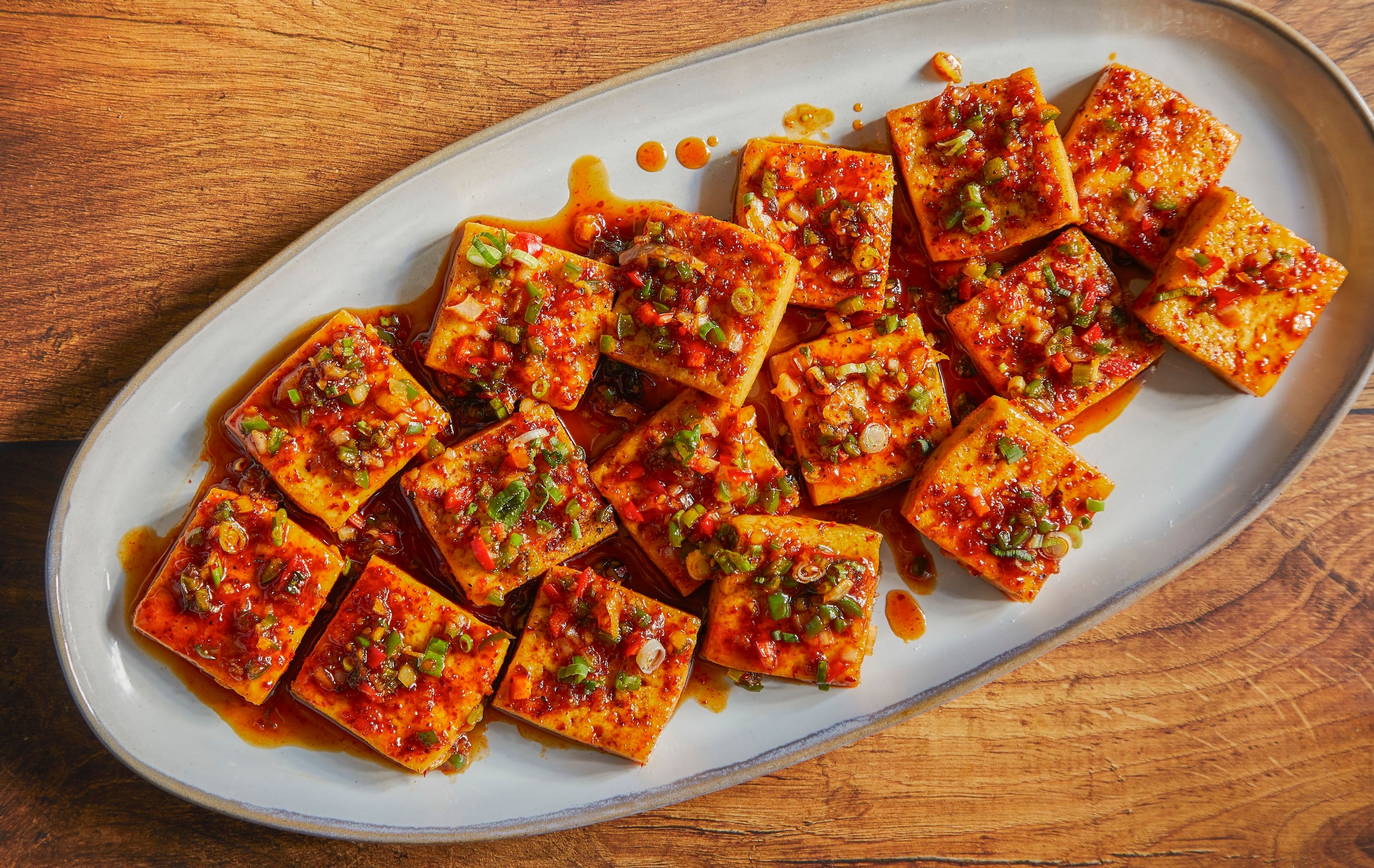
The Dubu Jorim (Spicy Braised Tofu) from the Umma cookbook tastes even better chilled the next day. (Photo: Kritsada Panichgul)
Mon, August 3, 2026
Sometimes, the best chefs are the ones that you haven’t heard of (yet). They’re the everyday cooking heroes like Nam Soon Ahn, whose Korean family recipes and stories were brought to life by her daughter, Sarah Ahn of Ahnest Kitchen. These days, Nam Soon is a viral social media star and Ahnest Kitchen has over one million Instagram followers who can’t get enough of the engaging videos, authentic recipes, and practical cooking advice that showcase Nam Soon's experience as a skilled home cook and former restaurant owner.
This mother-daughter collaboration turned into their 2026 James Beard Award–winning cookbook, Umma: A Korean Mom's Kitchen Wisdom and 100 Family Recipes. It’s a beautiful tribute to Korean cooking and the recipes, techniques, and intimate memories Nam Soon has passed along to Sarah—including a whole chapter dedicated to banchan, the small side dishes such as kimchi, stir-fried vegetables, and pickled components that accompany Korean meals.
Read on to learn how Sarah’s passion project turned into a calling, how writing a cookbook deepened her relationship with her mom, and what it was like for her and her mom to win a James Beard Award. Plus, discover the beauty of banchan and get Sarah’s favorite banchan recipe—a sweet-spicy braised tofu dish that’s even better the next day—if you can resist eating it all in one sitting.
This interview has been edited for clarity and length.
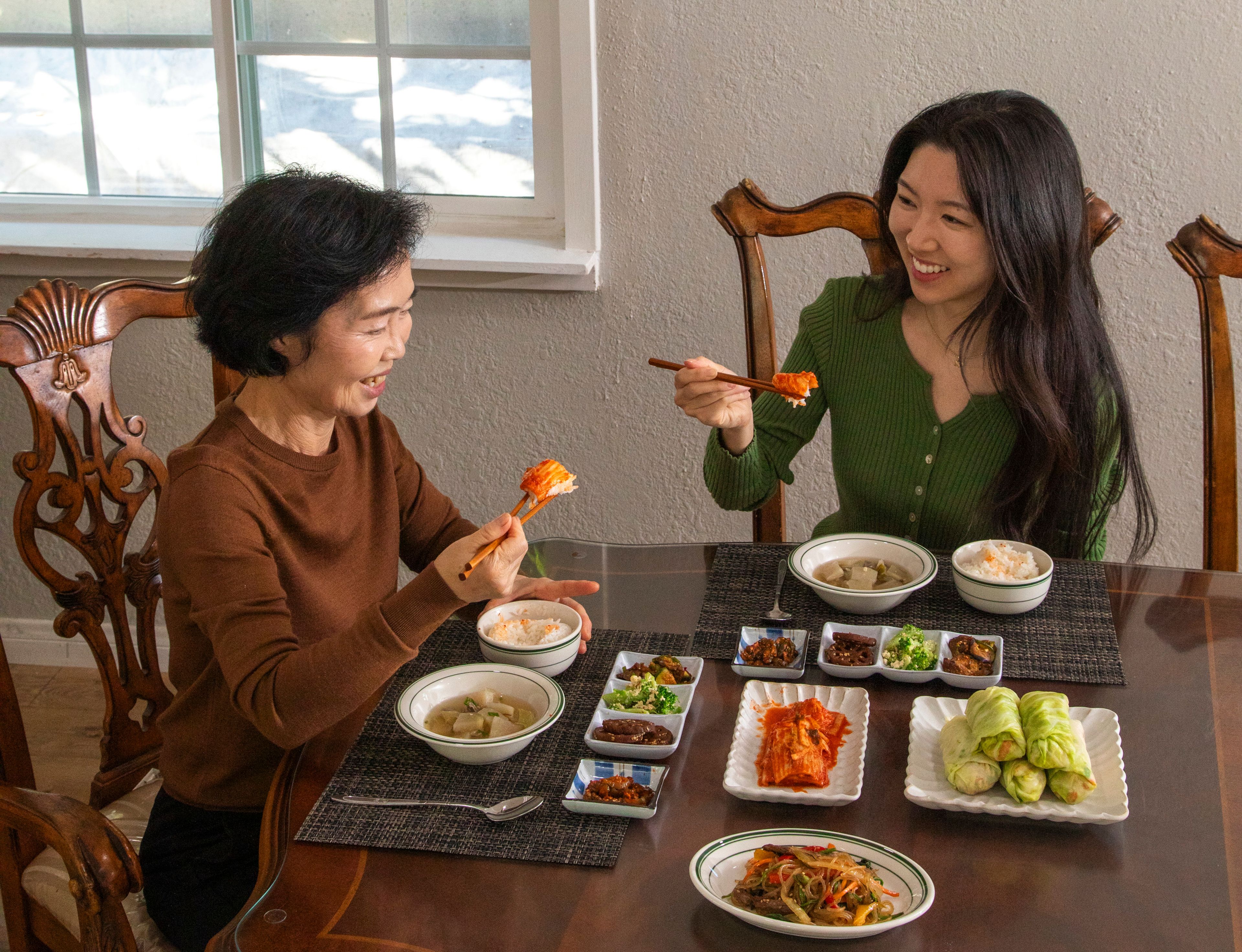
Nam Soon and Sarah Ahn eating at home. (Photo: Kritsada Panichgul)
What was the inspiration for starting Ahnest Kitchen and what was the process like in the early days?
The whole purpose of starting Ahnest Kitchen was that I didn’t feel like there were people like my mom—who have all this knowledge and who are a bit older—represented online. There are a lot of amazing cooks who don’t do it for a living because they’re just busy trying to survive life. They understand what it means to make lemonade out of lemons.
How did Ahnest Kitchen evolve into your cookbook, Umma?
As it evolved and became more professional, and these recipes were being developed for a cookbook, it made me realize the importance of preserving these recipes. Because a lot of people who are of the younger generation aren’t cooking as much.
I didn’t want to write a book where it was coming from me, someone who would make modern recipes, fusion recipes, things that are adapted to the American lifestyle. I needed this book to traditionally preserve the recipes that have been passed to my mom, which is one of the last generations to learn from people who cooked out of pain, memory, and survival. It became more than just a passion project. It felt like something I was destined to do.
How did your relationship to one another and to Korean food and heritage change while writing the cookbook and developing recipes?
I had initially collected these recipes for myself. When I finished the book, I realized making food for us was my mom’s expression of love. And I realized there’s so much work that goes into making Korean food. It is a labor of love. I can’t just collect the recipes for myself and call it a day. I need to make these same recipes she made for me and our family and give that back to her and feed her those recipes. And so, I made all these laborious foods for her, like seafood soup and kimchi and different fermented foods.
Your mom is one of your cooking heroes, but do you have any cookbook author mentors or cooking heroes who you look up to?
It's the everyday people who inspire me. It’s the abuela that’s your next-door neighbor, the Italian family that has the best meatball recipe, the mom-and-pop shops that have a line out the door in a plaza that's run down. It's those people that I always want to befriend and talk to.
I owe a lot of inspiration to fellow James Beard Award winner® Randy Lau of Made with Lau. He was documenting his Cantonese father's recipes; I thought it was fascinating that an 80-year-old former chef was being recognized.
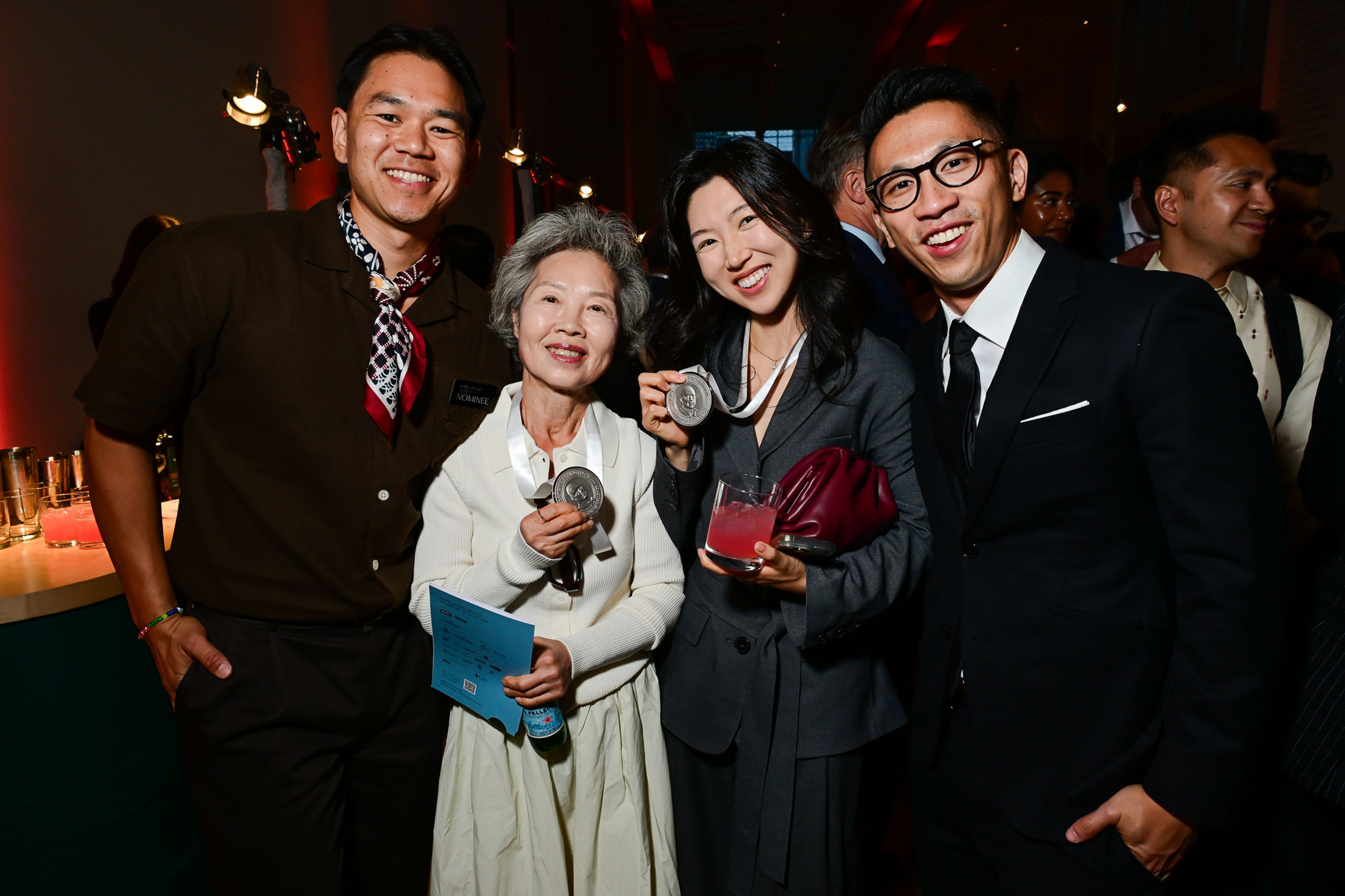
Sarah Ahn and Nam Soon Ahn at the 2026 James Beard Media Awards with James Beard Award winners Randy Lau (right) and Rio Oshiro. (Photo: Max Flatow)
We love that Umma includes a whole chapter devoted to banchan. Can you tell us more about its significance in Korean cooking and dining traditions?
Banchan are small side dishes that accompany your meal. Kimchi is considered banchan, but because kimchi is such a significant part of our identity and cuisine, it has its own section [in the book]. There are usually different types of banchan in different colors; some are fermented, some are pickled, some are plant-based, and some are protein-based.
What do you wish more people knew about banchan, whether it’s making them at home or dining out at a Korean restaurant?
It’s such a beautiful representation of Korean food, because banchan are not always the simplest recipes—sometimes it’s just as much [labor] as making the main dish. Next time you're at a table that's serving Korean food, notice the way that they placed the banchan, the way the colors are patterned, and how the same colors are not directly adjacent to each other. Notice the way that they deliberately place the pickled banchan next to the plant banchan that's not pickled. It's very intentional; I think that's very beautiful, because presentation matters a lot too.
As you write in the book, one of your favorite banchan is Dubu Jorim, or Spicy Braised Tofu. What makes it so special?
It combines the balance of Korean flavors—sweet, spicy, tangy, umami—with plush tofu. Tofu and soybeans are a huge part of Korean cuisine, and it highlights tofu’s abilities with Korean flavors in a very simple, yet delicious way. It uses plum extract syrup, which is a pivotal ingredient in Korean food because that’s what we used before we had sugar, and it has this multi-dimensional sweetness that sugar alone can’t give. Gochugaru [Korean red chili pepper flakes] is what makes it spicy; you can adjust it to what you can tolerate.
Does Nam Soon have any tips or techniques for getting the texture of the tofu right?
Within our book, there are all these tips that didn’t quite make it into the instructions. When it comes to cooking tofu, don't focus on making it so crispy. The secret is to not overcook it and to focus on maintaining the structural integrity of the tofu, which is keeping it plush. When you bite into dubu jorim, it’s just barely crispy on the outside—it’s golden-brown. When you bite into this plush, cottony, buttery tofu that’s coated in this spicy yet sweet, nuanced sauce—it's unbelievable.
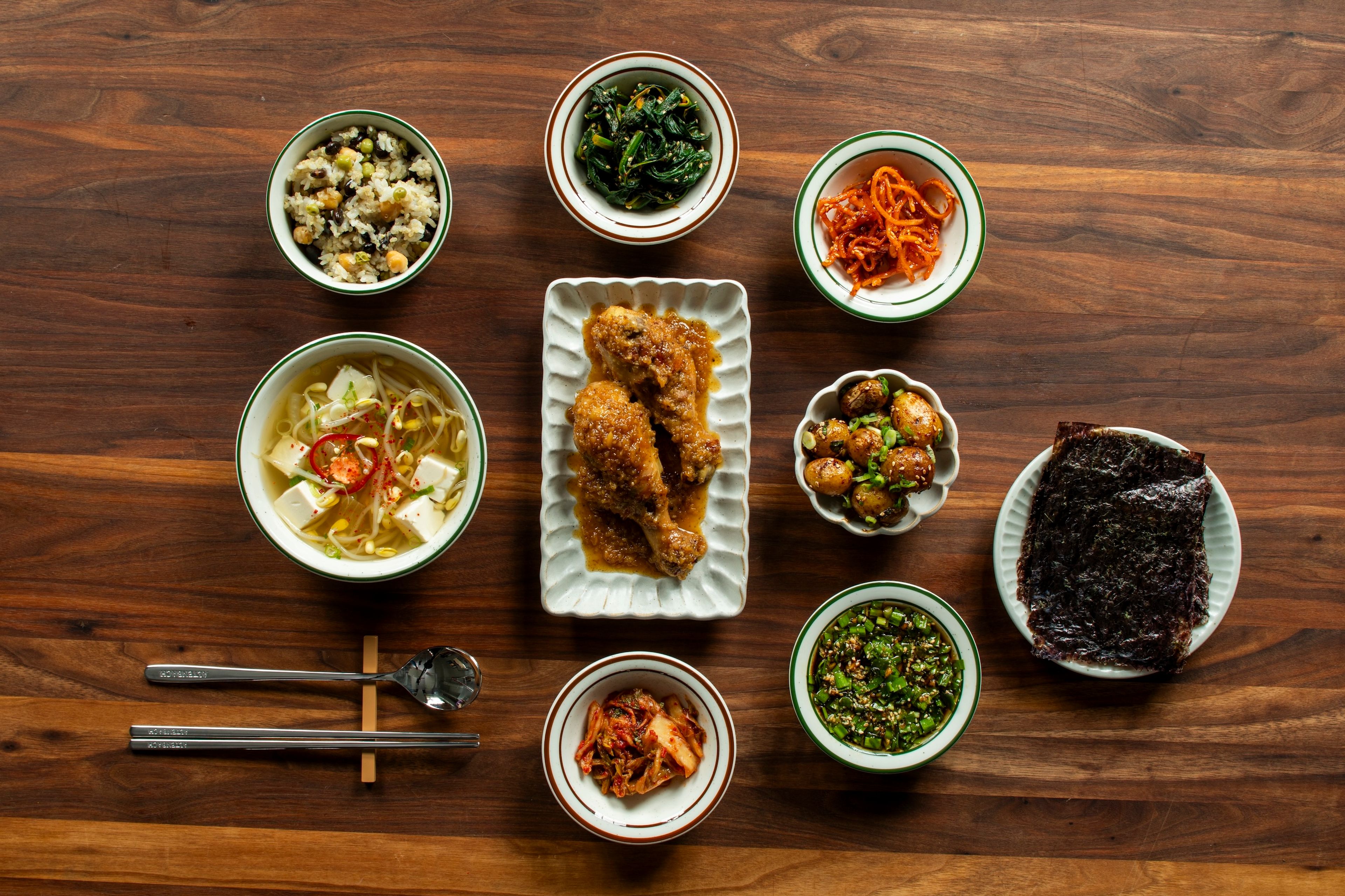
A traditional Korean meal includes a main protein, multiple banchan, soup, and rice. (Photo: Kritsada Panichgul)
You wrote that you've been known to eat this dish on its own, but it can also be part of a spread of banchan. What are some other banchan recipes in the book that it pairs well with?
Any non-spicy banchan; because it is a spicy dish, you don’t want to put too many spicy things on the table. Something that’s a bit more mellow, like the soybean sprout banchan or the seasoned fish cake banchan. You can make it a full Korean meal, which is banchan, rice, protein, and maybe a soup. That would be a very filling and hearty meal.
It’s also the kind of dish that gets better with time. How might you serve leftover braised tofu?
Everyone who tries it the next day always texts us and says it’s so much better the next day when it’s cold. You could microwave some rice and enjoy just those two things. That is just as filling and it’s so satisfying.
How did it feel to win a James Beard Award for your cookbook?
I felt proud of myself. I felt proud of my mom. To see a 67-year-old woman—who comes from a working-class background, who lived paycheck to paycheck, who struggled to operate her restaurant—win that award was just unbelievable. And I thought she looked so beautiful and so wise, because she is so wise. It wasn’t about me; it was about her.
I can’t believe that the James Beard [Foundation] was able to recognize someone like us. We deserve to be in the room, but sometimes we get in our heads and think that we don’t. I couldn’t believe that they were able to see the beauty in our book. And that’s a reflection of my mom—because the book carries all our warmth and soul.
Can you share what your mom said in Korean in her acceptance speech? Or what she shared with you about how she felt about winning a James Beard Award?
It was a very straightforward thank you speech. And while she was very calm and read her speech beautifully, she read it to me privately—in tears, with so much heart—before we went to the event. We felt silly reading our speeches, because that’s us assuming that we won. She expressed her gratitude for our teamwork, ‘cause I couldn’t have done it without her, and she couldn’t have done it without me.