British Baker Nicola Lamb Has Strong Opinions About Holiday Cookies
The 2025 James Beard Award winner® shares her easy amaretti recipe and how to make the best cookie platter.
Mon, December 1, 2025
It’s a crisp October afternoon in London when I call Nicola Lamb, author of the 2025 James Beard Award–winning cookbook Sift: The Elements of Great Baking. She admits she’s spent the better part of the day recipe testing pumpkin-spiced swirled buns for her Substack newsletter, Kitchen Projects, and left a full sink of dishes behind to take a walk and get some fresh air.
We chatted about what the James Beard Award win means to Lamb, her baking icons, and one of her all-time favorite topics: cookies (or biscuits, as they call them in England). Read on to discover how Lamb became a self-avowed cookie lover, why the English tradition of tea and biscuits is such a sacred ritual, and how to make the best holiday cookie platter. Plus, get Lamb’s recipe for amaretti, delicious Italian cookies that double as edible homemade holiday gifts.
This interview has been condensed for clarity and length.
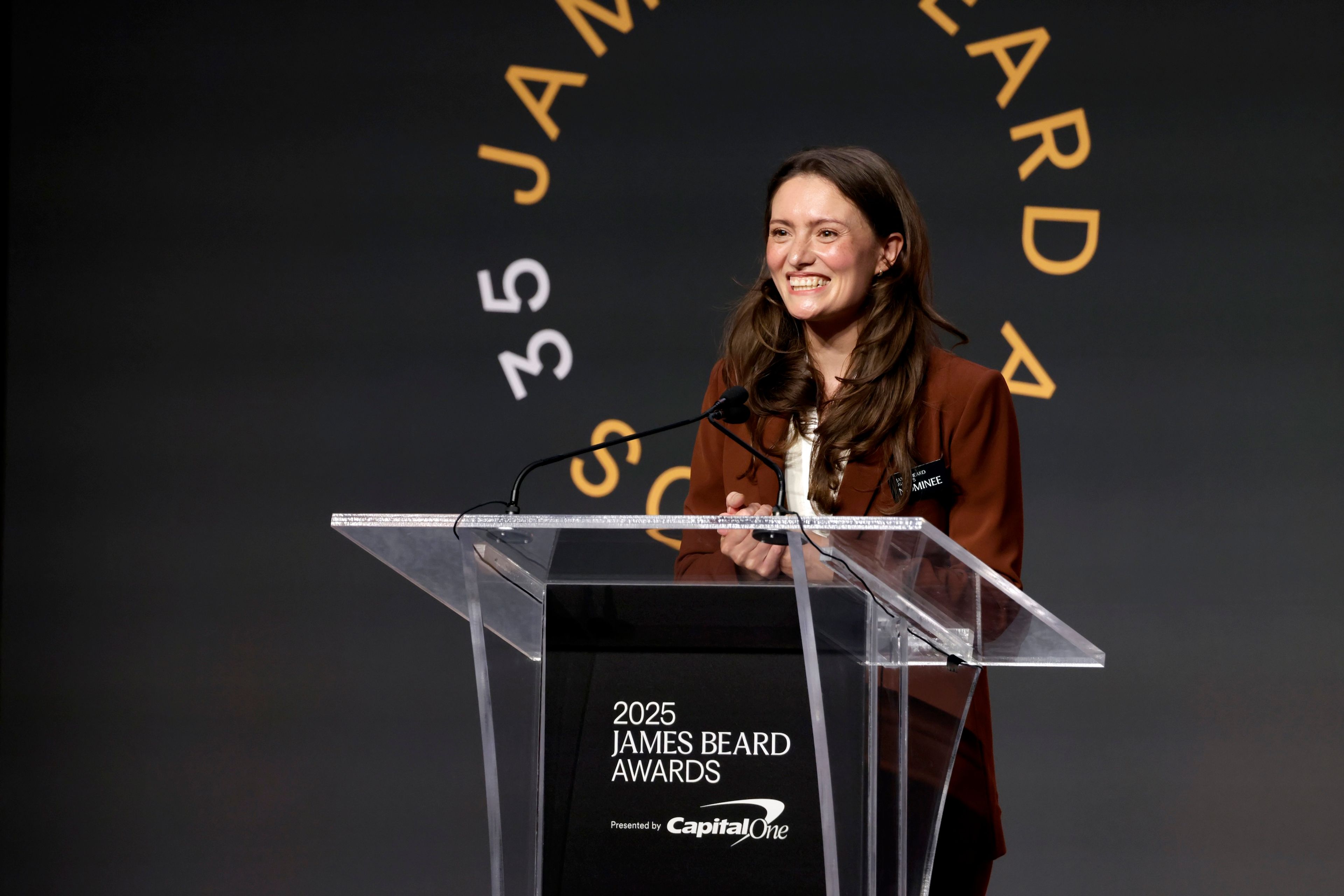
Lamb accepting her Baking and Desserts Book Award at the 2025 James Beard Media Awards. (Photo: Jeff Schear)
At the Awards, Rose Levy Beranbaum announced your win, and you shared in your speech that she’s one of your baking icons. Can you share what made that moment so meaningful?
I was so nervous! She was on the program, and I just thought ‘Oh my god, I can’t believe I’m going to meet the grand dame of baking,’ who’s been so instrumental in my life and has been such a reference to me. And I couldn’t believe that would be when I did or didn’t meet her. I don’t know what made me feel more nervous—I couldn’t work it out!
Can you share a little bit more about how Levy Beranbaum has been instrumental in your journey as a baker?
Her books are brilliant. Her style is so meticulous; it’s incredibly inspiring and encouraging. You know that she’s tested her recipes so many times. She's got absolutely no qualms about you also querying her. On her website she will respond to reader questions and she’s so open about her process. And I think having someone at that level be so open to their process, putting so much into their recipes, so much thought, and all the notes—you can tell that she really wants you to succeed. Having someone on the page seemingly cheering you on and encouraging you is so helpful, especially as you’re learning as you go.
I went to pastry school for a few months, but I ended up learning more in kitchens and through books. This is why cookbooks are so important—because you can go to the library, you can read it, you can borrow a copy from someone; I’m always lending out copies of pastry books to people starting out—because there’s so much wisdom in there and so much to learn. [Rose] is just a trusted voice—she's brilliant!
Who are some of your other baking icons?
The two authors who were nominated with me. Clarice Lam, [who wrote] Breaking Bao; that was an utterly gorgeous book. So, anyone who wants to think about Asian baking, I can’t think of a better book. And Katarina [Cermelj], who wrote [The Elements of Baking] all about gluten-free baking, she’s absolutely brilliant. Both of them are writing such useful texts that will be referred to for years to come.
I’ma big fan of Camilla Wynne; she is a preserving expert. She wrote an amazing book about candying fruit called Nature’s Candy. She also taught me all about preservation, and I turn to her books whenever I have a fruit that I want to turn into jam. She has a brilliant book called Jam Bakes which solves the problem of ‘what do I do with all this jam?’ I think she’s got some of the most interesting flavor combinations, and unexpected as well.
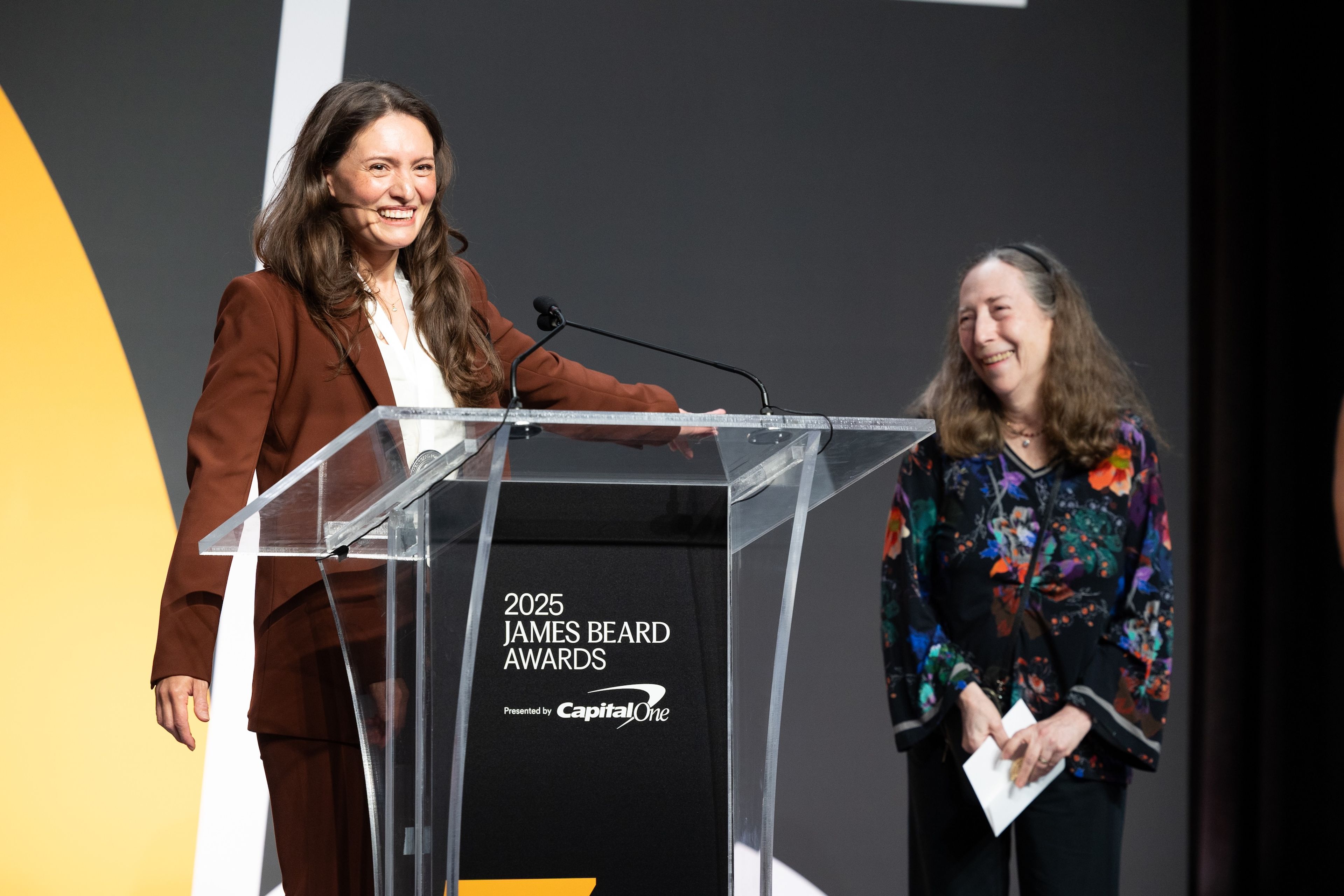
Lamb and Rose Levy Beranbaum. (Photo: Galdones Photography)
In Sift, you describe yourself as a cookie lover. Can you tell us a little bit about how this came to be?
Growing up, we were a real biscuit family. At Christmas time we would just go absolutely mad for biscuits. We would always have several biscuit collection tins; my dad and mom just always had them around. We had—and still have—a whole biscuit cupboard.
I don’t know if you know this about British people, but we quite like tea. A cup of tea is often not complete, especially if you’ve got company, without a biscuit on the side. It would just be rude not to offer. So, growing up you’d always have tea and a biscuit. And I think, especially when I worked in offices in my early 20s, that was such a sacred time around three o’clock—which is why I actually have a recipe in my book called the 3pm Oat Cookies—where everyone just pushes their chairs away from their desks and goes, ‘Let’s have a cup of tea and just have a chat for a bit.’ It’s when everyone really needs a lift—and there’s nothing that can lift the spirits like a cookie.
Are there cookies that you typically associate with the holidays and look forward to eating or baking?
When you put together a Christmas biscuit selection or Christmas cookie platter, I do have quite strong feelings about it. Crucially they all have to have good lasting power because ideally when you gift a box of cookies to someone, you want them to last a couple weeks. You want them to be able to eat them as they go and be able to share them when they have people round for drinks.
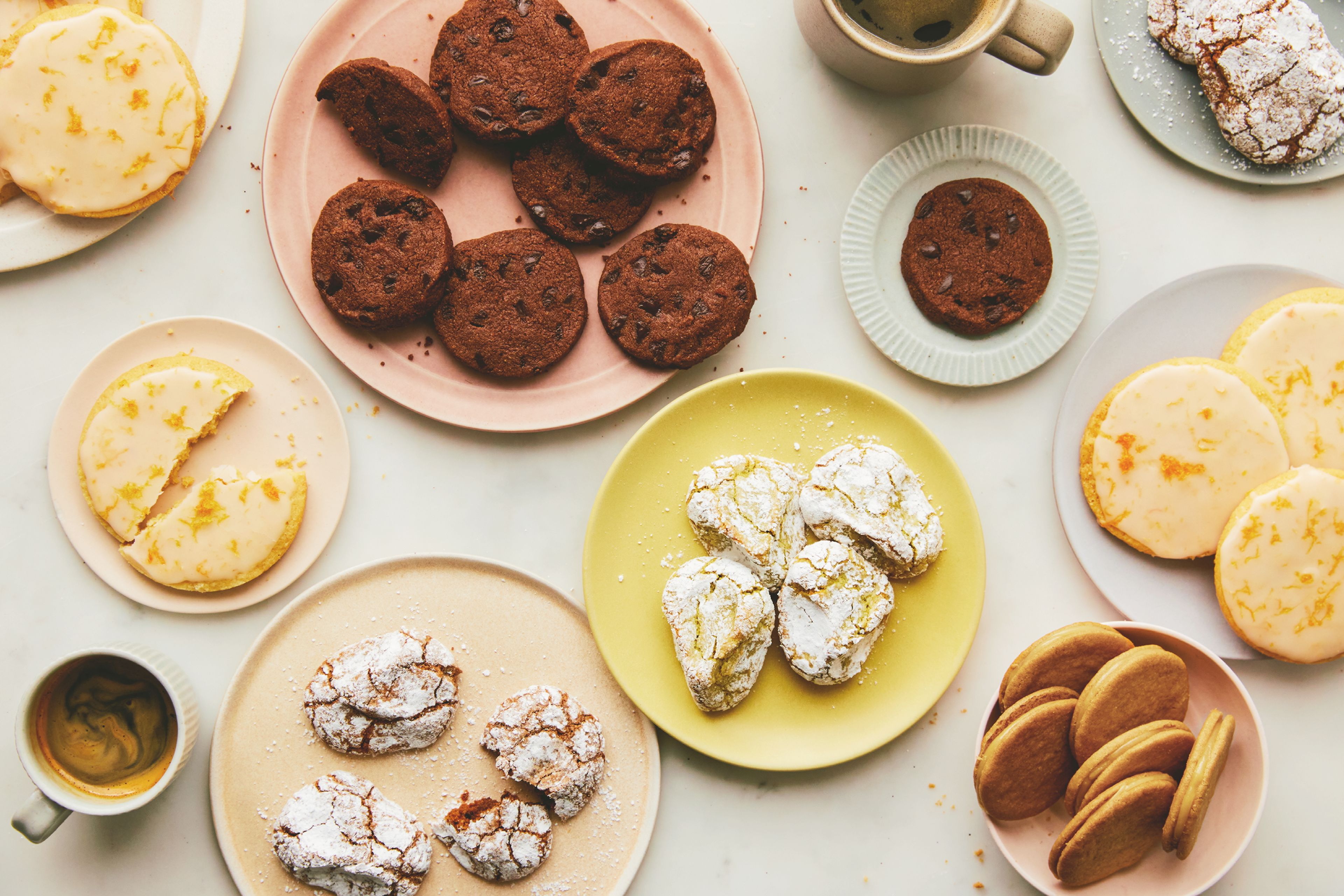
Anything with good bite, that is low-moisture, that’s been formulated to last, and sometimes even get better over time—that gets to be in the cookie selection. I always like to have a very chocolatey one and I like to have a pretty decorated one, like an iced cookie, and then I like to have something gluten-free and soft and squishy like amaretti, for example. Because you always have someone that comes over that can’t have [gluten], so it’s always good to have something in the selection for them but that everyone also likes.
Tell us about why you included a recipe for amaretti in Sift, which you describe as “squishy, crunchy cookies that make wonderful gifts.”
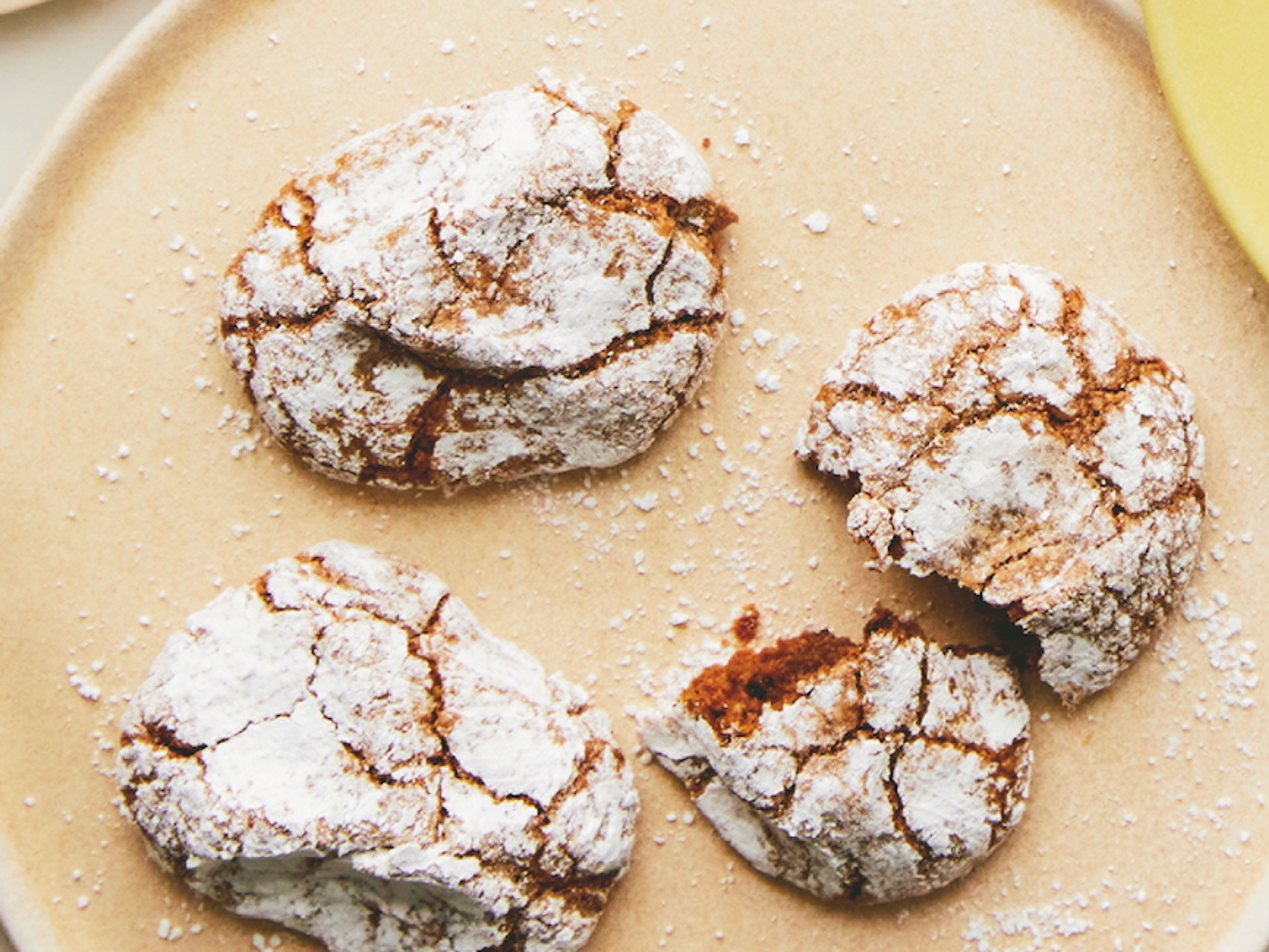
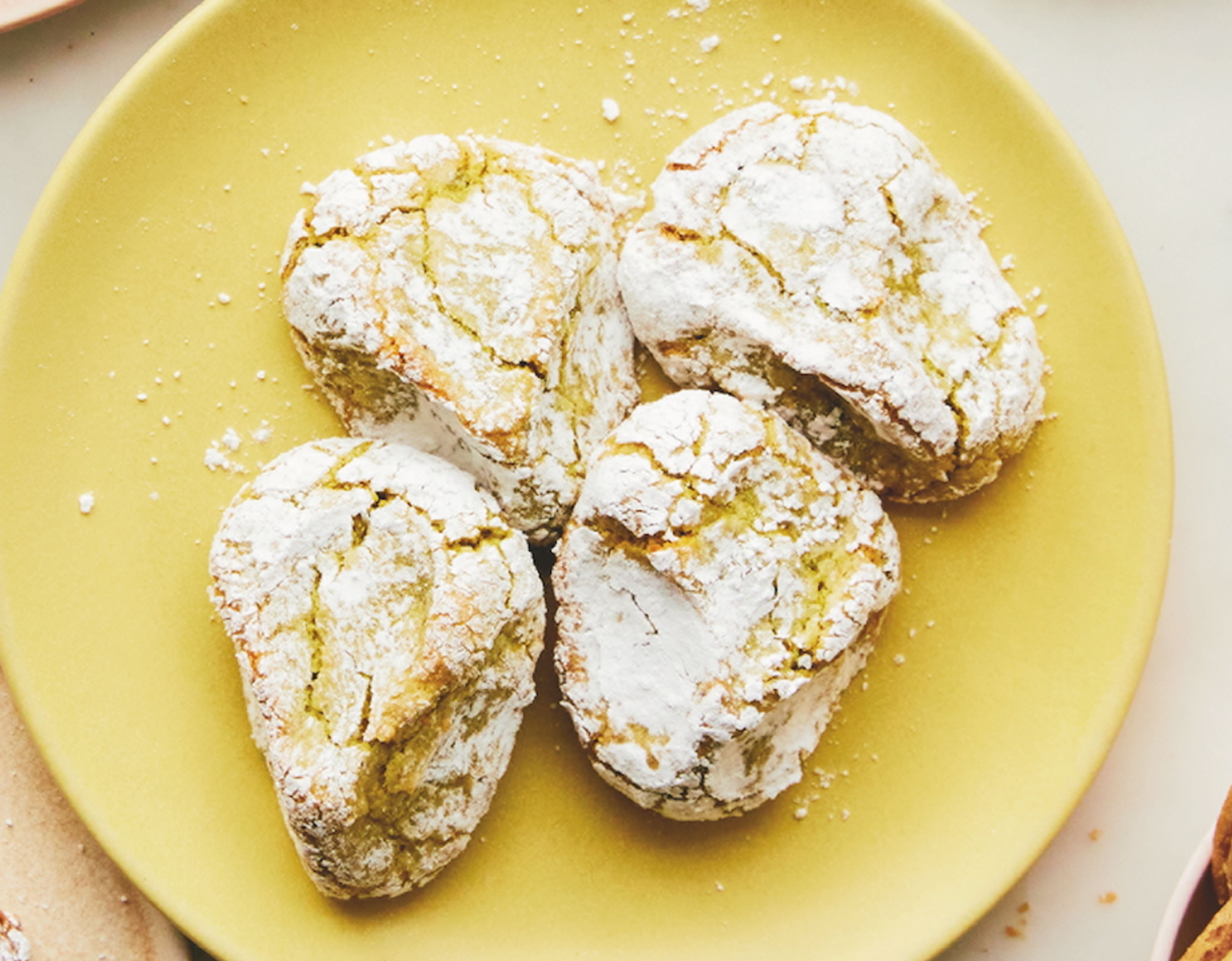
I wanted people to be able to make a cookie platter. As you can see from the photo, these amaretti are part of a spread. I wanted to make sure there were gluten-free recipes in there. And recipes that showed how you can use nuts and egg whites in baking in less traditional ways. With every page in Sift in the top lefthand corner, I describe what technique I used in the recipe—like “Baking with nuts”—so if you want to go deeper you can go back and read.
I really wanted to make sure there was always a different bake to fill the gap, whether you had only ten minutes to bake or two hours. Amaretti represent a good bang-for-your-buck recipe: they’re easy, fun to make, all ages can get involved, and it just felt like it was a good all-rounder.
What are your favorite amaretti flavor combinations?
There are two versions [in the book]: chocolate–hazelnut and lemon–pistachio. But I wanted people to see how adaptable the recipe is and how you can adjust it and change it with what you’ve got on hand. What’s good to refer to is making sure you’re always keeping an eye on the fat content of the nuts. So, for example you could do a delicious brown butter or brown sugar pecan, but pecans are very high in fat so pairing it with almonds, which is lower.
Which is why it’s quite useful to have the nut page because it’s got all of the nut fat content—as long as you’re keeping the fat content in the same sort of space. I think macadamia and toasted white chocolate is a really delicious combination. You could go more savory and do fennel seed–almond. It’s also whatever you’ve got in your cupboard.
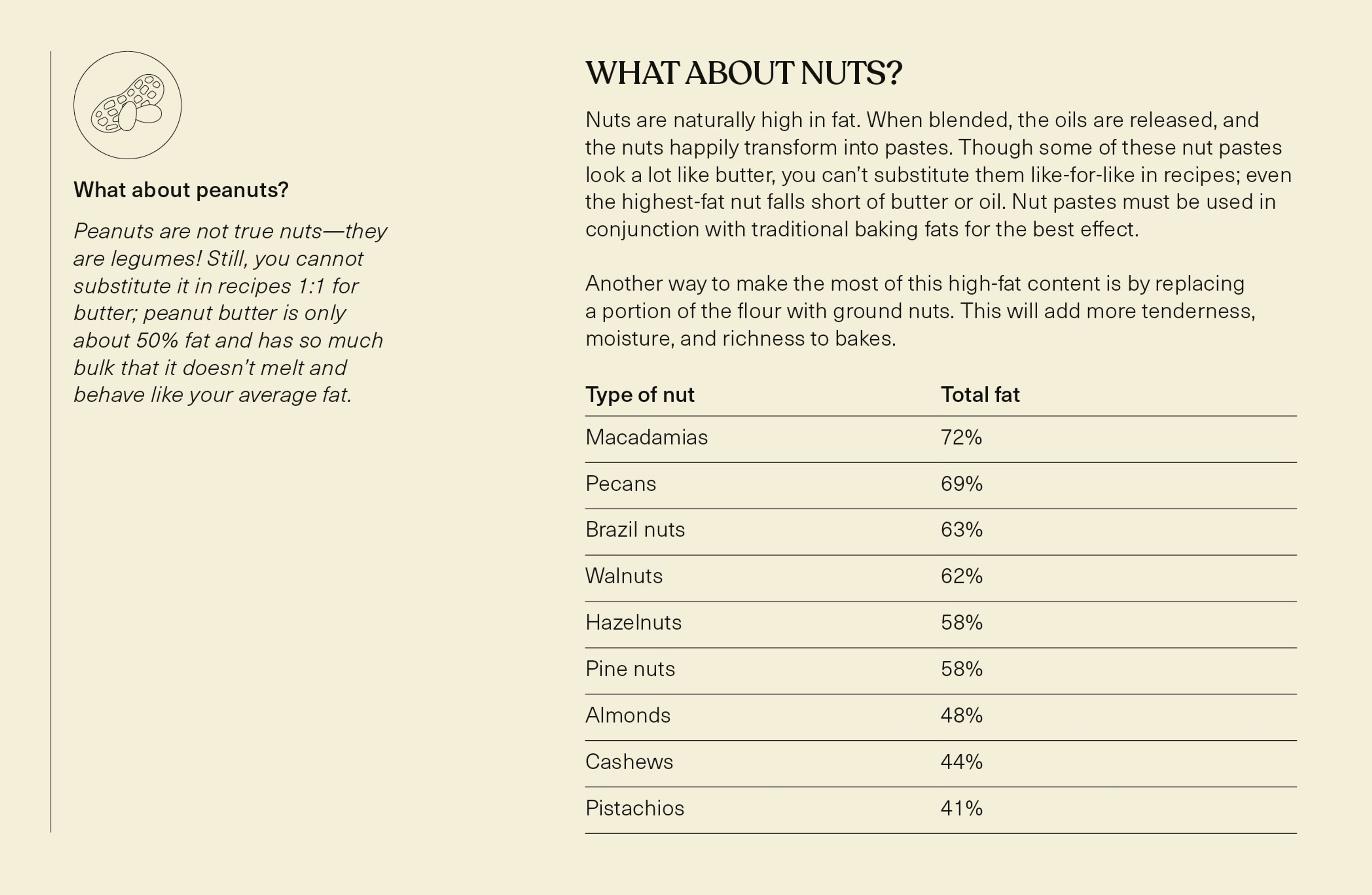
Excerpt from Sift. (Illustration: Nueker)
Do you have any other tips about baking with nuts?
A good tip is almond is your good all-around, reliable nut. It’s got a good fat content, it’s not too oily, it’s also relatively neutral in flavor compared to other nuts. So, doing a mixture of almond and another nut either because they’re expensive, like pistachio—actually, pistachio can be overwhelming, so almond actually helps just lift it—or hazelnuts can be really rich. Almonds are a good all-around team player. Of all the nuts, I always have almonds in stock.
Do you have any suggestions for packaging or gifting presentation if you’re offering someone a biscuit assortment or cookie platter?
It’s always nice if you want to go to your local gift store to get cellophane bags. If you don’t have the energy to seek those out, I honestly think baking paper [a.k.a. parchment paper] is so beautiful if you just kind of fold them up and secure them with string. I think that has a nice homemade feel to it. You can’t stick tape to it—it doesn’t stick, so string is essential. I know from experience! You could even do a layer of baking paper and then wrap it in the newspaper; as long as there’s food safe baking paper around it, you can go wild, really.
For more of 2025 James Beard Award winner® Nicola Lamb’s recipes and baking insights, pick up a copy of Sift or check out her Substack newsletter Kitchen Projects.