Mentorship on the Menu
The gifts of giving back with chef and JBF Legacy Network Program advisor Ji Hye Kim

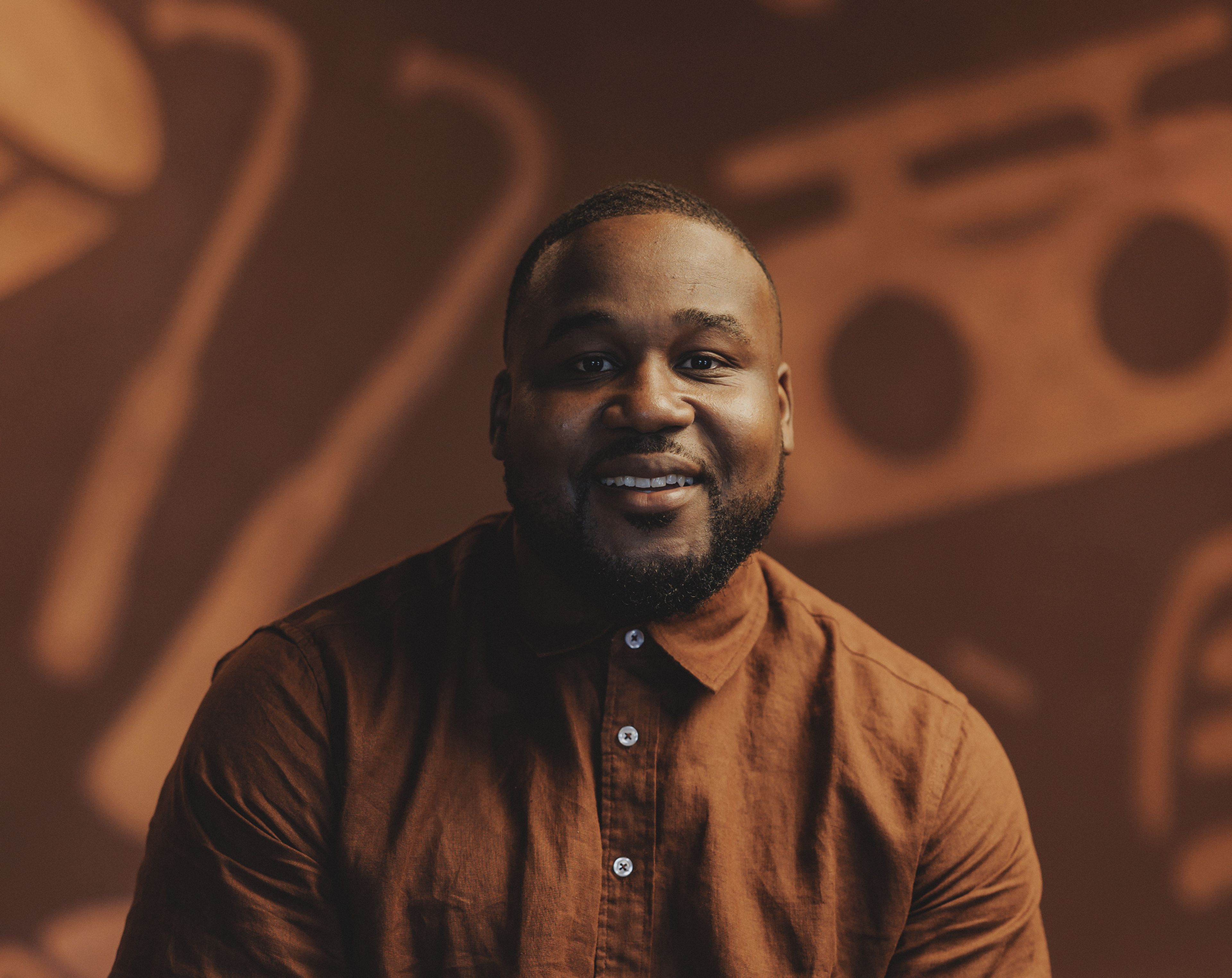
Legacy Network advisor Ji Hye Kim. (Photo: Emily Berger)
Mon, March 30, 2026
Celebrating a decade in business is a milestone in any entrepreneur’s journey, but perhaps even more so in the restaurant industry, where success is defined by the slimmest margins. Ji Hye Kim, a five-time James Beard Award semifinalist® and chef/owner of Miss Kim in Ann Arbor, Michigan, is preparing to celebrate her restaurant's tenth anniversary. On the heels of serving as an advisor in the JBF Legacy Network Program presented by Heinz, Kim reflects on the critical role mentorship has played in her success as an entrepreneur, the surprising thing she learned serving as a mentor, and how she’s helping to shape the next generation of industry leaders in her restaurants.
When Kim was 27, she traded a successful career in hospital administration for a role in hospitality, following an inkling that she wanted to do something in food. Living in Michigan, Kim, who was born in Seoul and raised in New Jersey, no longer had access to her mom’s home cooking and dreamed of opening a Korean restaurant. She says she chose to work at Zingerman’s, the Ann Arbor institution most associated with Zingerman’s Deli, because the company has “a good reputation as a good employer—and good food.” Through Zingerman’s Path to Partnership program, she participated in an eight-week leadership development program, working with other partners to refine her restaurant concept and learning operational skills like managing inventory, profit and loss statements, and cash flow. “The inspiration was fueled more when I was faced with real-life operational questions and real-life leadership questions every day by the people who were helping me.”
As she learned through her experience at Zingerman’s, identifying and executing professional goals is easier when you have clear benchmarks and a tangible support system. Kim is also an alum of JBF’s Women Entrepreneurial Leadership (WEL) program, an 11-week virtual program that provides advanced educational, training, and networking opportunities to a cohort of 20 women. Kim credits WEL with helping her launch her second restaurant, Little Kim, and expanding her professional network. “The WEL cohorts are the first people that I reach out to if I am stumped for something,” Kim says. “It’s easy to pick up the phone or put it in the chat [and ask about] really practical things and get helpful advice in real-time.”

Dishes at Miss Kim. (Photo: Emily Berger)
Having benefitted from participating in mentorship and leadership programs, which also includes JBF’s Chef Bootcamp for Policy and Change®, Kim said applying to be an advisor for the Legacy Network Program (LNP) presented by Heinz was a natural next step in her entrepreneurial journey. As an advocate for industry equality, she felt aligned with LNP’s mission, which is dedicated to empowering emerging culinary talent from historically under-resourced communities and supporting professional growth through mentorship, training, and a peer network. “The fact that we’re starting with a diverse group is setting the ball [rolling] for more diverse groups,” Kim says, noting that LNP’s participants reflected not only gender, race, ethnic, and age diversity, but diversity of lived experience, professional backgrounds, and geography, too. “The more diverse we are, I believe we have more strength."
During the 12-week virtual program, a 20-person cohort of advisors and advisees meet to receive leadership coaching and educational training in critical areas such as professional development, staff management, mental wellness, media, and strategy. “I thought I’d be giving, but I’m also receiving and learning so much,” Kim says. "Just because I have more than a decade of experience in the industry doesn’t mean that I know how to be a good mentor necessarily, so you’re sort of training the trainers, and setting them up to be evergreen mentors,” Kim says. “And mentees are getting the same education, so it’s sort of a good, habitual cycle.”
One of Kim’s favorite parts of participating in the Legacy Network Program was the small-group conversations that fostered the kind of professional network development that has been vital to her own success. “Break-out rooms are great because it gets jumbled—you get a diversity of advisors and advisees. You learn a little bit more about each other as well, share trials, tribulations, and successes. It makes you feel human because everybody is connecting a little more, having similar wins and troubles and challenges.”
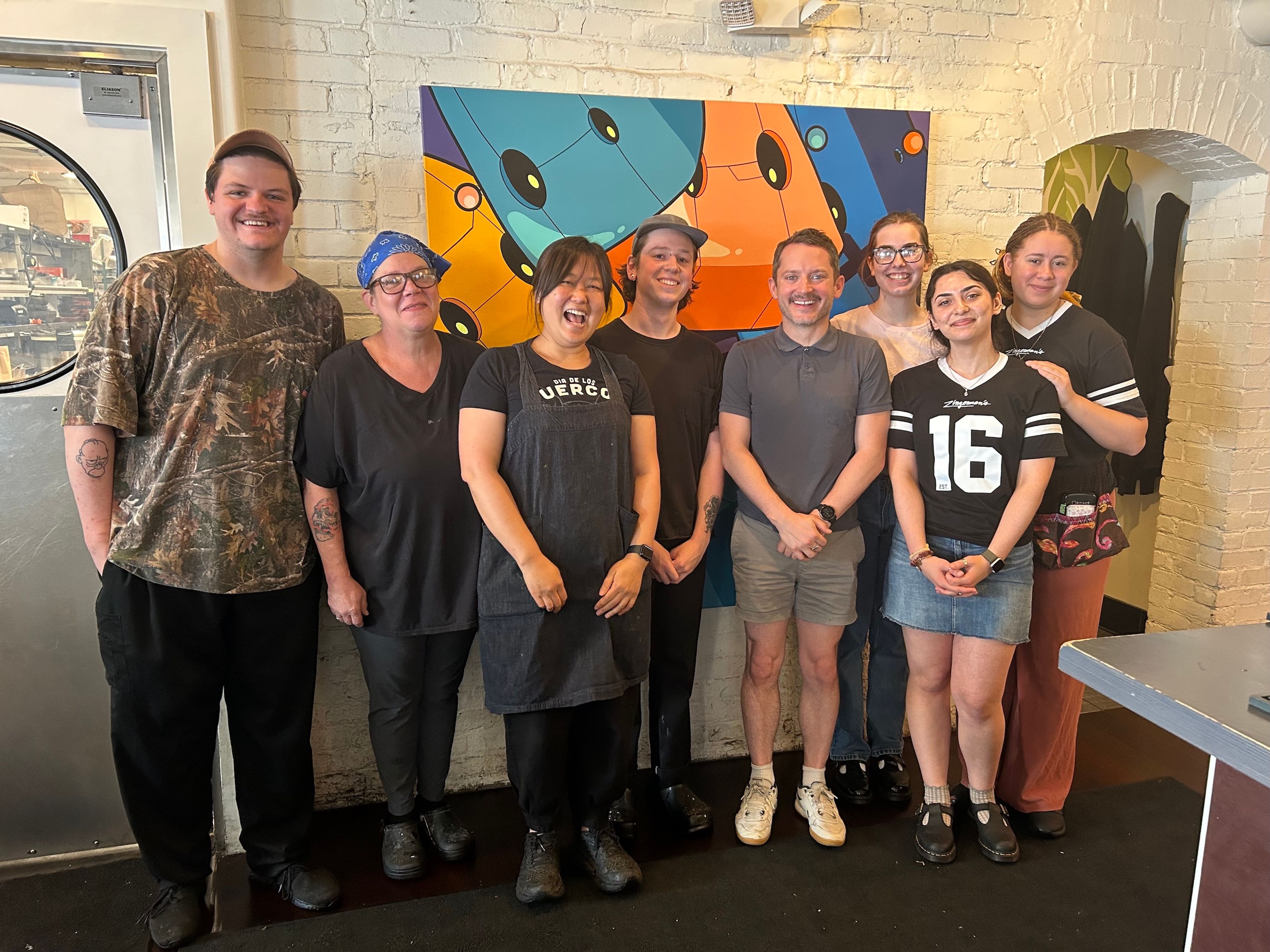
Kim and her team with actor Elijah Wood. (Photo courtesy of Ji Hye Kim)
In addition to developing her professional networks, programs like LNP and WEL have helped Kim implement systems that cultivate mentorship in her restaurants. Miss Kim is a tip-share restaurant, and employees are on the same pay grade. This makes it easier to cross-train employees—which improves operational efficiency but also lays the foundation for professional growth. Staff have the option to assume incremental responsibilities for a small pay raise, rather than creating a hierarchy of roles with bigger jumps in responsibility and compensation.
“You learn to be a leader one little thing at a time. And I didn’t set a limit, like, ‘only two people can be shift leaders,’” Kim says. “Our goal is to have as many shift leaders as people [who] want to step up, so then that creates a team of emerging leaders, and they also learn from each other by facing the same challenge every day.” On the flip side, if an employee tries to be a shift lead and finds it’s not for them, those choices are also celebrated. “It is also OK to step down because you’re making a good choice for yourself and when you do that, it’s also better for the business—rather than someone who insists on staying and crashes and burns,” Kim says.
Weekly meetings at Miss Kim’s include staff-wide meetings where finances are reviewed, as well as department leadership meetings in which managers communicate challenges, and which employees are doing well and who needs more help; a representative from human resources attends to provide additional guidance. “Doing all this isn’t branded as mentoring, but I think it is mentoring,” Kim says. “It’s so incredibly good for business, as well as people, when they feel they have ownership and leadership and want to do more for the business and for themselves.”
The Legacy Network Program is made possible thanks to the support of our presenting partner, Heinz, who shares JBF’s continued commitment to building and supporting a more diverse and sustainable independent restaurant industry.
5 Things We Learned from the 2025 Chef Action Summit

5 Top Takeaways From JBF’s Women’s Entrepreneurial Leadership (WEL) Program