Dining with Dignity at JBJ Soul Kitchen
Fighting hunger, homelessness, and poverty with Impact Award winner Jon Bon Jovi Soul Foundation.
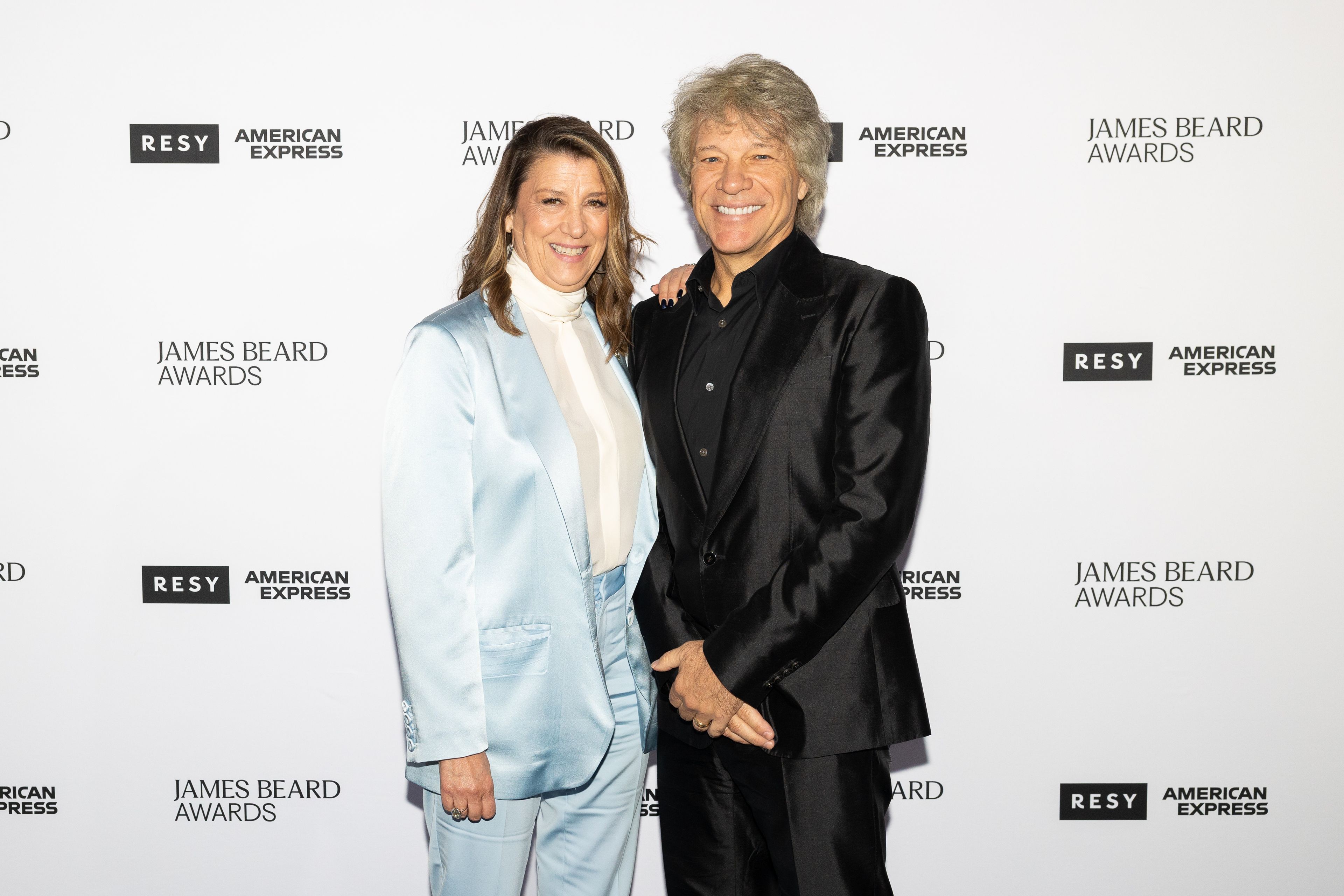
Dorothea Bongiovi and Jon Bon Jovi at the 2026 James Beard Impact Awards. (Photo: Galdones Photography)
Fri, May 22, 2026
“Have you dined with us before?”
It's a standard question asked in restaurants, but at JBJ Soul Kitchen (JBJSK), it has deeper implications beyond hospitality or highlighting additions to the seasonal menu. Here, the question is posed by a JBJSK community coordinator, who welcomes and seats guests as well as explains JBJSK’s mission and pay-it-forward model to first-time visitors. Diners can either pay for their meal (and choose to cover the cost of another diner’s meal) or volunteer their time performing maintenance tasks around the restaurant. By feeding people a healthy, three-course meal with dignity, JBJSK restaurants are helping to address food insecurity while creating a safe space to facilitate support for in-need individuals to manage mental health issues, addiction, homelessness, and more.
“We say that food is the vehicle that gets people in the door. We meet them where they’re at,” says Dorothea Bongiovi, JBJSK’s founder and program director. “We're building relationships. Nobody walks up and says I’m a vet; I have PTSD; I am struggling with addiction and mental health issues. You have to build that safe community, that safe space, and maybe because they feel like they’re part of our community, they’re more open [to sharing what barriers they’re facing].” The community coordinator, in conjunction with support from multiple community partners in Monmouth and Ocean counties, works with in-need guests to connect them with services.
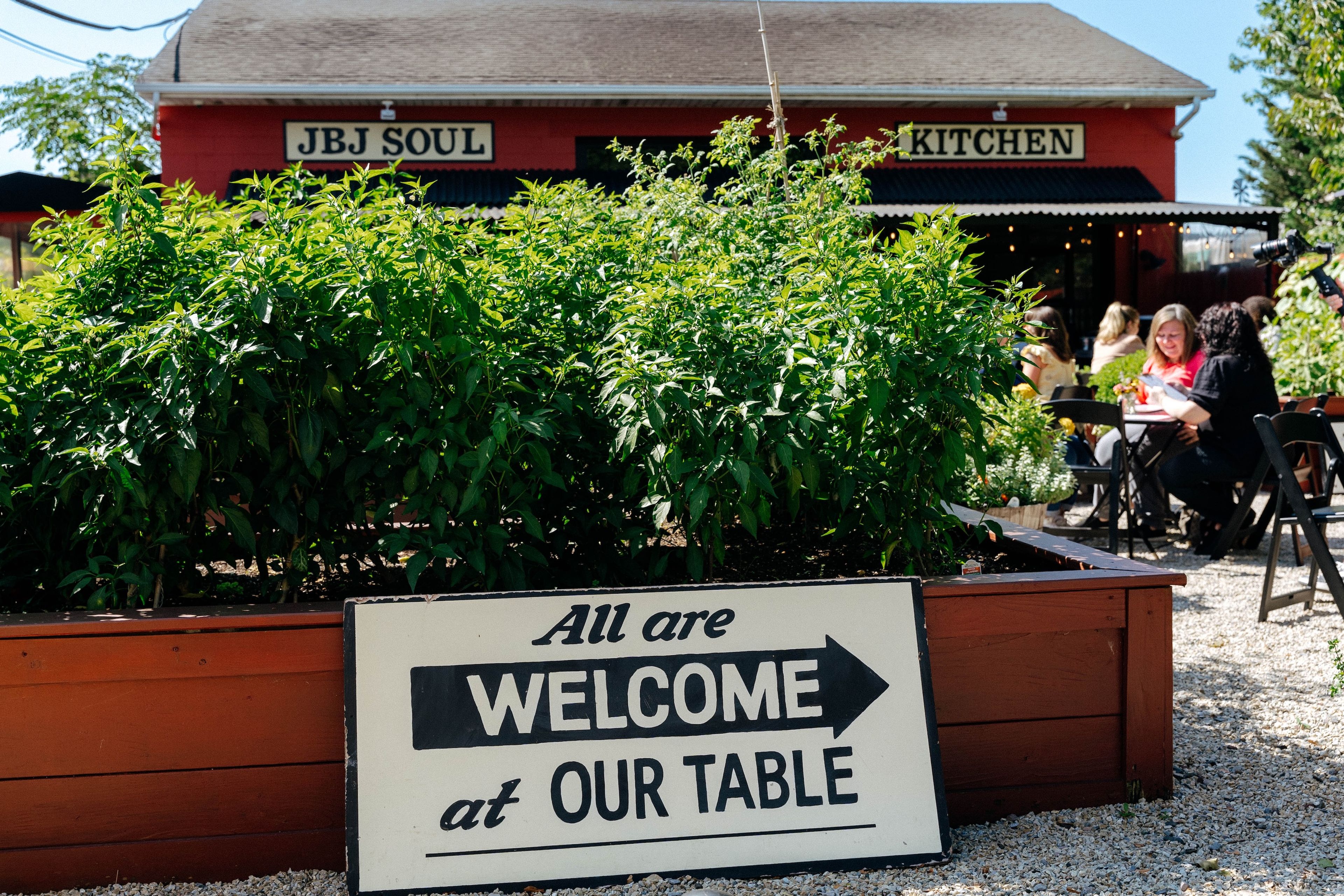
JBJ Soul Kitchen's Red Bank location.
Since its founding in 2011, JBJSK has served over 275,000 meals at its four New Jersey locations: Red Bank, Toms River, Toms River Pop-Up at Ocean County Library, and Rutgers–Newark. It is part of the 2026 James Beard Impact Award winner Jon Bon Jovi Soul Foundation, which was established in 2006 with a mission to break the cycle of hunger, poverty, and homelessness. At the time Jon Bon Jovi was a co-owner of the Philadelphia Soul arena football team and was looking for a way to give back to the community. The Foundation started by partnering with local charities to help distribute resources as the need arose. “And then one day he was looking out the window in Philadelphia, and he saw a man sleeping on a grate and he's like, ‘Homelessness. That is something everyone can understand and relate to, and it’s a problem everywhere,’” Bongiovi says. “So that became his focus.”
Since then, the Foundation has expanded its scope and reach; to date, it has provided funding to housing and hunger projects in 12 states plus Washington, D.C. When the first JBJSK opened in Red Bank in 2011, the Foundation shifted more of its focus to New Jersey but continues to fund mission-aligned projects around the country. It was Dorothea's idea to create JBJSK. “You know the movement of pay-what-you-can-restaurants? So, I had heard about that, and I became obsessed with that idea of a restaurant. Like, we’d all been to soup kitchens, foodbanks, food pantries, things like that,” she says. “But I thought, what if there was a restaurant where people could go and have a beautiful meal in a dignified way? And instead of paying what you want, what if they volunteered their time and the paying people paid for the volunteer piece?”
Each JBJSK location features a chef-crafted, three-course menu; part of its conception of dining with dignity is offering diners choices. Each meal includes a soup or salad—say, a zucchini corn soup or Greek-inspired salad; an entrée, like pistachio-crusted salmon or spring vegetable primavera; and a dessert, either fresh fruit or chef’s choice. Menus change every two weeks and often feature garden-grown produce such as lettuce, herbs, tomatoes, peppers, and zucchini from JBJSK’s Red Bank and Toms River locations. JBJSK also procures ingredients from a stipend contributed by one of their partners, ShopRite. “We try to keep things local, fresh, organic, when possible,” Bongiovi says. “We have a strong belief that healthy food is not a privilege; it’s a right in this country.”
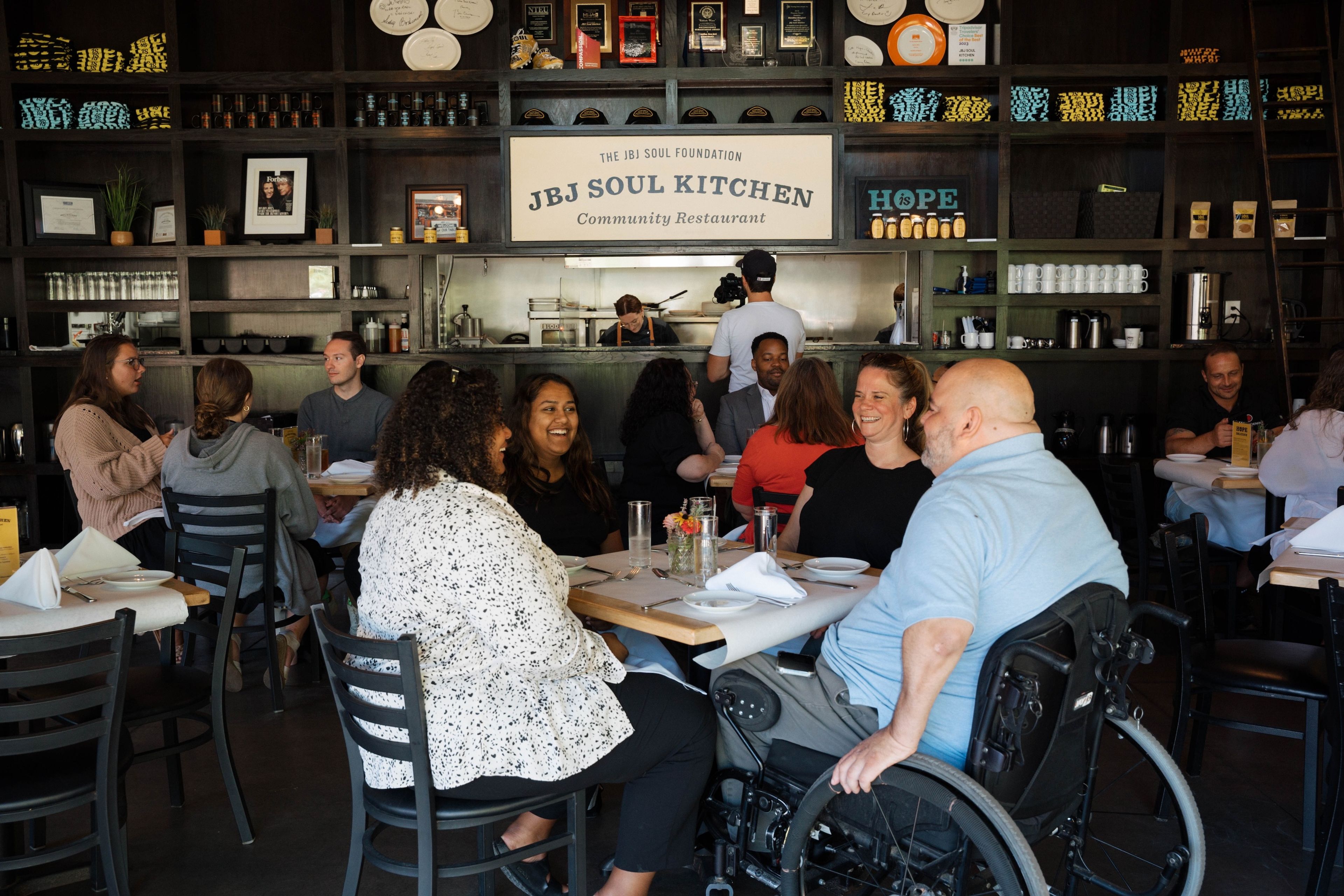
Diners at a JBJ Soul Kitchen.
JBJSK restaurants are staffed by paid employees, including executive chefs and line cooks, and a mix of volunteers—both trained volunteers who assist with kitchen prep work, serving, and washing dishes, and in-need diners who volunteer their time doing maintenance tasks such as sweeping, bussing tables, or tending the garden. Part of the experience of dining at JBJSK is that customers have learned to expand their definition of people in-need. “They’re not going to present how you think they’re going to present. Some do. A lot of people have jobs; a lot of people have disabilities. There’s a wide range of people who come in who you would never suspect,” Bongiovi says. “When you come to JBJ Soul Kitchen, 78% of our diners identify as in-need. So, you see it every day. When you come there, you are effecting change directly, right at the table next to you.”
Over time, in-need volunteers build a relationship with one point person at JBJSK, fostering trust and dialogue that facilitates addressing barriers and connecting them to the right resource or organization. Sometimes, that means directing people to JBJSK’s resources; the Toms River location is part of The B.E.A.T. Center, where they’ve partnered with Fulfill and the Peoples Pantry to create a hub for free community services, including assistance with food, housing, utilities, mental health, substance use, domestic violence, SNAP, health insurance, and job skills.
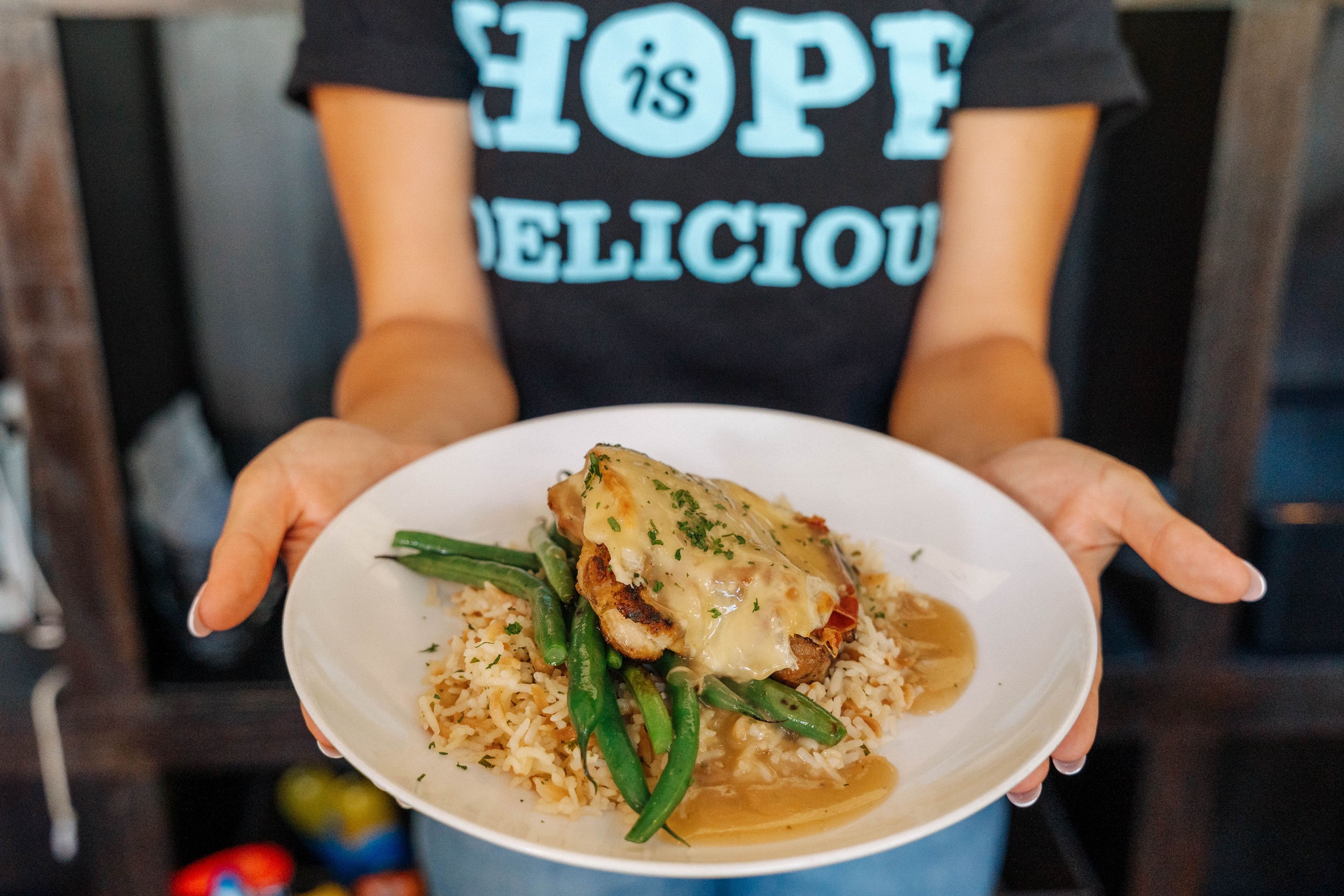
JBJ Soul Kitchen offers a three-course menu that changes every two weeks.
JBJSK also works directly with several community partners to address needs related to hunger, poverty, or homelessness. This could include assisting a formerly incarcerated individual to obtain a new ID so they can access jobs, education, or housing; contacting one of their many community partners to provide addiction treatment, employment assistance and job training, or veteran-specific support; or securing housing through the Mental Health Association's Housing Navigation Program (HNP) and Housing Support Services (HSS). “In the last year, we’ve gotten 20 people into housing, and we've done that for three consecutive years,” Bongiovi says. “So far, all those people have stayed in their house—it's not a motel, it’s not a temporary shelter.”
The restaurant industry is widely considered to be an inclusive workplace; to that end, JBJSK partners with the New Jersey Reentry Corporation and Fulfill, both of whom offer culinary training programs. JBJSK has hired program graduates, thereby helping build individuals’ employment history, and have recommended in-need volunteers who show an aptitude or interest in cooking to enroll in the programs, too. One of JBJSK’s first hires, who was previously incarcerated, worked at JBJSK for a few years before starting their own catering business.
"JBJ Soul Kitchen exists to give anyone access to healthy, delicious food, but also to help them move forward—whether that's toward housing, employment, or sober living,” Bongiovi says. “But ultimately, change starts with them. If someone leaves feeling full and cared for, we've done our job."
Related Content
Get to know all of this year's Impact Award honorees
Key takeaways from the 2025 Chef Action Summit