Black Culinary Joy with Toni Tipton-Martin
The James Beard Award–winning cookbook author and 2025 James Beard Lifetime Achievement Award winner talks about Black food heritage and shares her Hibiscus Gin Rickey recipe.
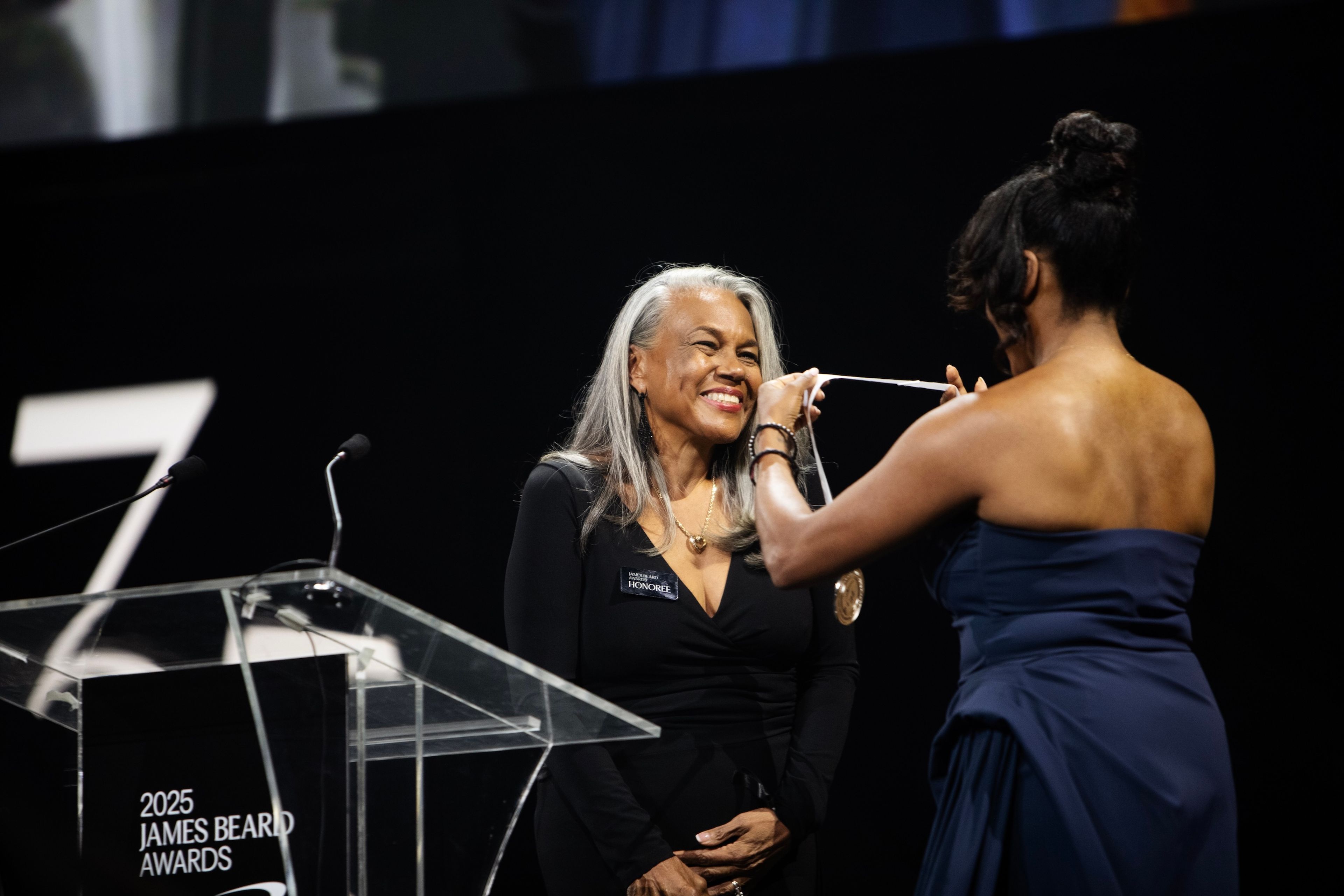
Toni Tipton-Martin receiving the 2025 James Beard Lifetime Achievement Award. (Photo: Eliesa Johnson)
Tue, February 17, 2026
Toni Tipton-Martin is a culinary multi-hyphenate. She blazed a trail by becoming the first Black food reporter at the Los Angeles Times and the first Black food editor of a major newspaper at The Plain Dealer, then went on to win a James Beard Award for her book The Jemima Code: Two Centuries of African American Cookbooks, which set out to trace the history of African-American cooking beyond stereotypical notions and figures, like its namesake Aunt Jemima. This lay the framework for her to delve even deeper, including her James Beard Award–recognized cookbooks: Jubilee, which explores the breadth and depth of African-American recipes, and the cocktails-focused Juke Joints, Jazz Clubs, and Juice. Her latest book, a follow-up to Jubilee, will be focused on desserts. In 2025, she received the James Beard Lifetime Achievement Award in recognition of her career accomplishments and work with the Toni Tipton-Martin Foundation.
Read on for our conversation with Tipton-Martin about Black culinary legacy and identity, her prolific cookbook collection and research process, her quest for the perfect chocolate chip cookie, and her exciting new projects. Plus, get Tipton-Martin's Hibiscus Gin Rickey recipe.
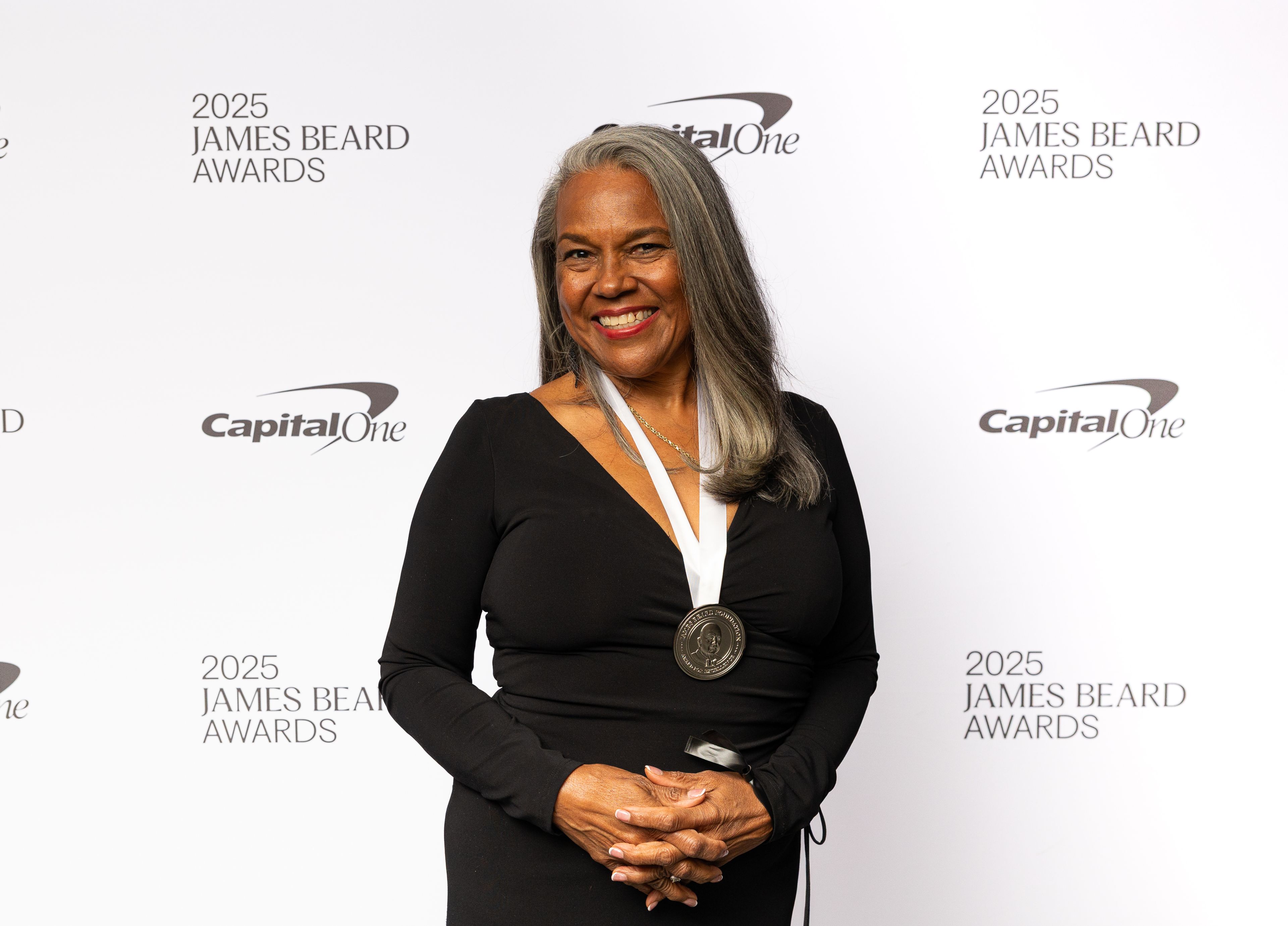
Toni Tipton-Martin at the 2025 James Beard Awards. (Photo: Galdones Photography)
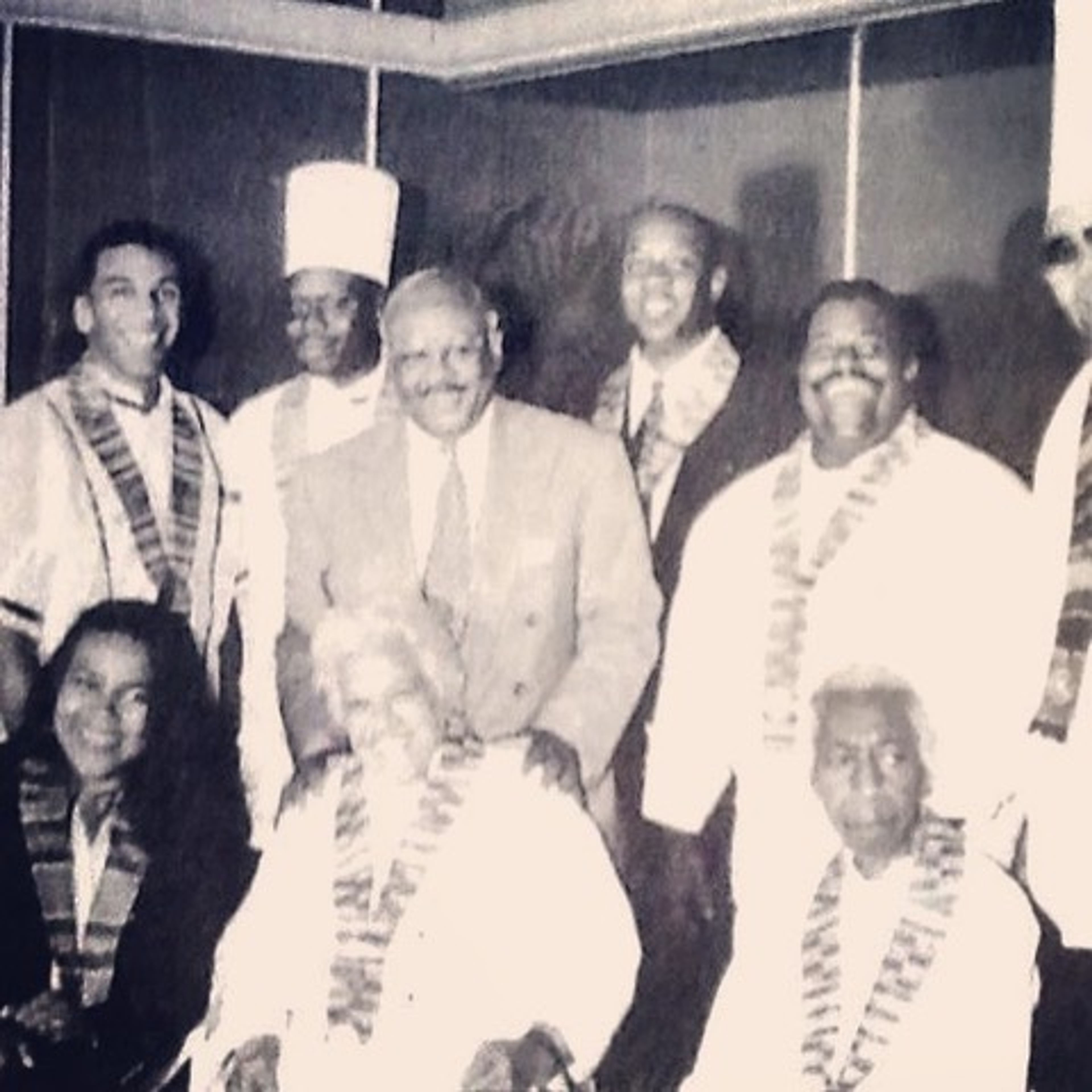
Toni Tipton-Martin at the 1993 Taste of Heritage dinner at the Hay-Adams Hotel in Washington, D.C. (Photo courtesy of Toni Tipton-Martin)
You are originally from Los Angeles—can you tell us about where and how you grew up and how that helped establish your culinary sense of place?
I grew up in an upper middle-class neighborhood called Windsor Hills. It was created as part of the Olympic Village in the 30s. It’s a place where affluent African Americans first began to settle when they migrated out of the South and beyond the borders of South Central Los Angeles. There was a diversity of experiences and regions represented in that area. It was a beautiful place to grow up. Windsor Hills sits on top of a hill in Los Angeles, so it has panoramic views of the city and out to the ocean. And those breezes were perfect for my mother and her gardening.
Can you tell us a little bit about your mother’s garden?
My mom became extremely health-conscious to the point that she converted a great part of our backyard—it went beyond an urban garden; I thought of it as a farm. She [grew] a variety of stone fruit—peaches, plums, apricots; avocados; various citrus; she tried pears and apples, but the climate didn’t always cooperate. And then she had all the assorted standard vegetables and berries on fences. It was really quite beautiful the way that she ornamented the whole thing around the swimming pool.
Was there something in particular that you enjoyed eating?
I have a particular taste for apricots and loquats, things that I just don’t find replaceable in today’s supermarket. One of the most vivid memories I have of her garden was growing strawberries. I would harvest them for her when the bushes were full, and she would trim and slice them and store them in the freezer until she had enough to make strawberry shortcake.
Tipton-Martin's Lifetime Achievement Award conferral video.
Your grandmother was a professional cook in L.A. I’d love to hear some of your memories of being in the kitchen with her.
In those early years, before my parents could actually afford to live [in Windsor Hills], we lived with my grandmother in an area that bordered South Central Los Angeles, as most Black families did. I spent a lot of time in the kitchen with my grandmother there. She is really the root of this whole work. At first, we would make play-food together. She nurtured my passion for baking in the shade of this sprawling avocado tree that took up literally half of her backyard. We would make mudpies under this tree and then decorate them with flowers. All the while under this plant that was producing avocados, which became another one of my favorite things to eat.
One of the things I remember most was watching her make hand pies. She’d give me a mound of the dough; we would roll it, pat it, fold it, and fill it. But then I had to be moved over while she slid them into the bubbling oil to fry them.
How have these memories and that time shaped your approach to cooking and culinary identity?
These memories, for the most part, disappeared as I grew older. Mostly because I began to associate my grandmother with the negative stereotype of the black mammy cook, because of imagery in Hollywood, cartoons—the Tom and Jerry cartoons with Mammy Two Shoes. I didn't know it at the time, but I was struggling with [the] identity of this woman I loved so much and how she was being portrayed. When I started [The Jemima Code], I was restoring the identities of African Americans on a more global stage. I didn’t really know that I was also restoring and reviving my grandmother’s identity and therefore my own.
This work has become the most significant of my life experiences because it has given me back the memories associated with my grandmother and food that were robbed from me by historical representations of Black women. I also think I gave other people permission to pursue culinary careers outside of the realm of servitude and soul food because both of those were subjects that mostly confined Black culinary creativity to poverty. And I didn’t grow up that way.
Coming up as the only Black food writer in the industry, most of what I heard was people who relished their family history and were eager to tell stories; recipes were written around the aroma in their grandmother’s kitchen. I can remember sitting in the L.A. Times newsroom thinking, ‘Well, my grandmother had an aroma in her kitchen. Why is that not as valued in this industry as the stories of other people?’
At that time, I didn’t have much I could do about this observation until Ruth Reichl became [food] editor, and then she liberated me from the narrow work that I had been charged to do for the Times food section and allowed me to tell more vivid cultural stories. And that’s kind of the beginning of the work.
What was the aroma of your grandmother’s kitchen?
It was always very sweet. Always cinnamon and sugar, chocolate; my next book is on desserts, and it captures this entire history.
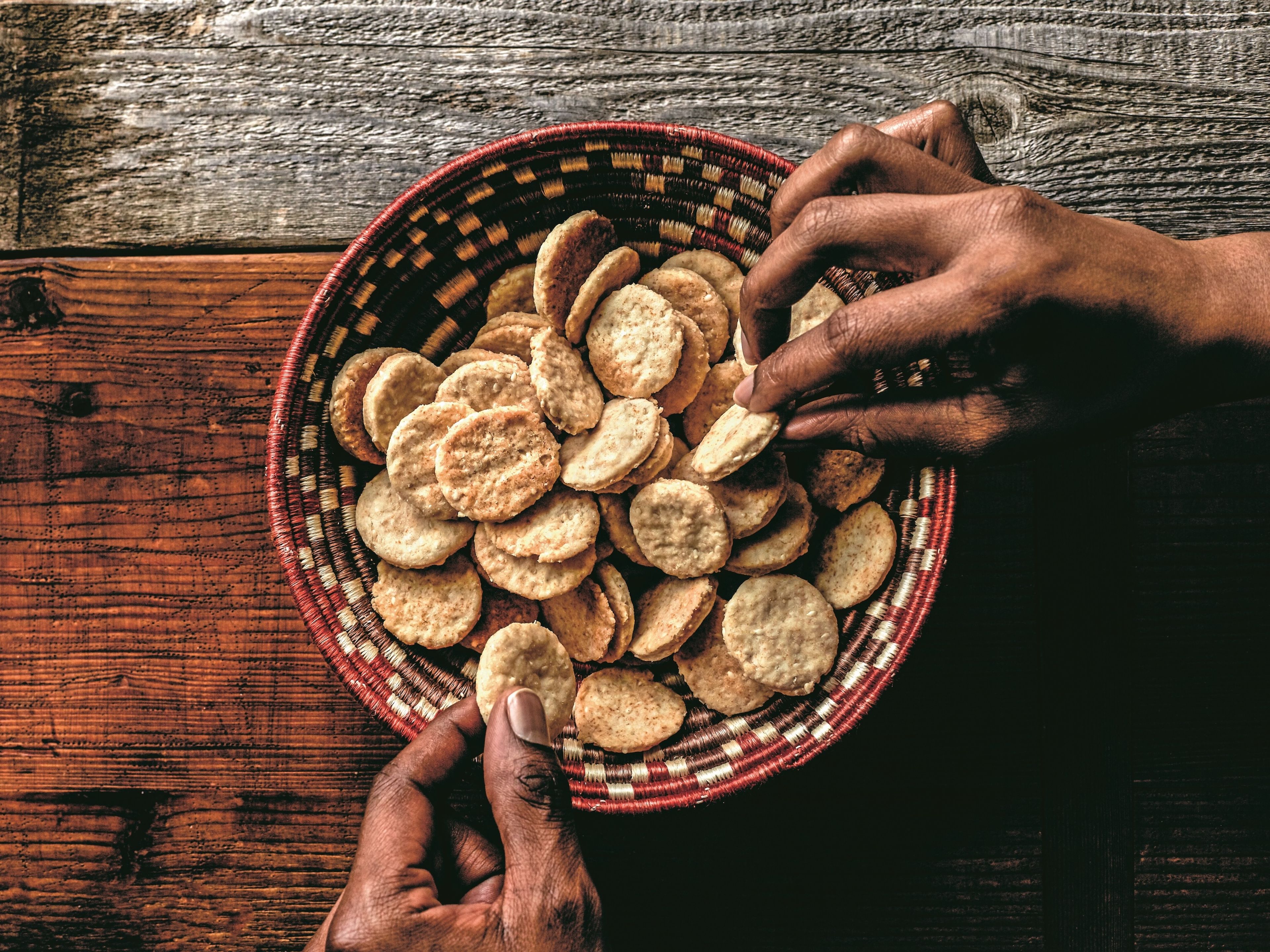
Benne Wafers from Tipton-Martin's cookbook Jubilee. (Photo: Jerrelle Guy)
Tell us about your home reference library spanning 200 years of Black cooking. How many cookbooks do you have now, and when and why did you start acquiring them?
The Jemima Code collection is now somewhere around 500 Black cookbooks. I don’t have as many of the modern books, so that is a reflection of books from 1827 to around the mid-to-late 2010s.
As a journalist, I knew the importance of first-person reporting; I realized there were going to be fewer and fewer people to tell the stories I wanted to hear about Black cooking. The grandmothers like mine were gone and disappearing, and there just wasn’t anybody writing about Black cooks and food at that time, other than soul food. It occurred to me as a food writer that I should try cookbooks. So, I did not intend to be a collector—I was looking for data.
Part of your goal with your cookbooks is to present a multi-faceted look at Black cooking and to dispel some of the harmful stereotypes associated with Black food. Are there recipes you’d recommend readers cook from or read about to really underscore this aim?
That’s been part of the fun of putting these books together because I tried to remain objective as a journalist and outside observer, but it’s also been my story, so I had this determination to prove people wrong and to validate my own upbringing. I want people to come to [Jubilee] expecting greens and cornbread and macaroni and cheese—and they will find those dishes there—but I also wanted to emphasize the depth and the breadth of the Black culinary experience...
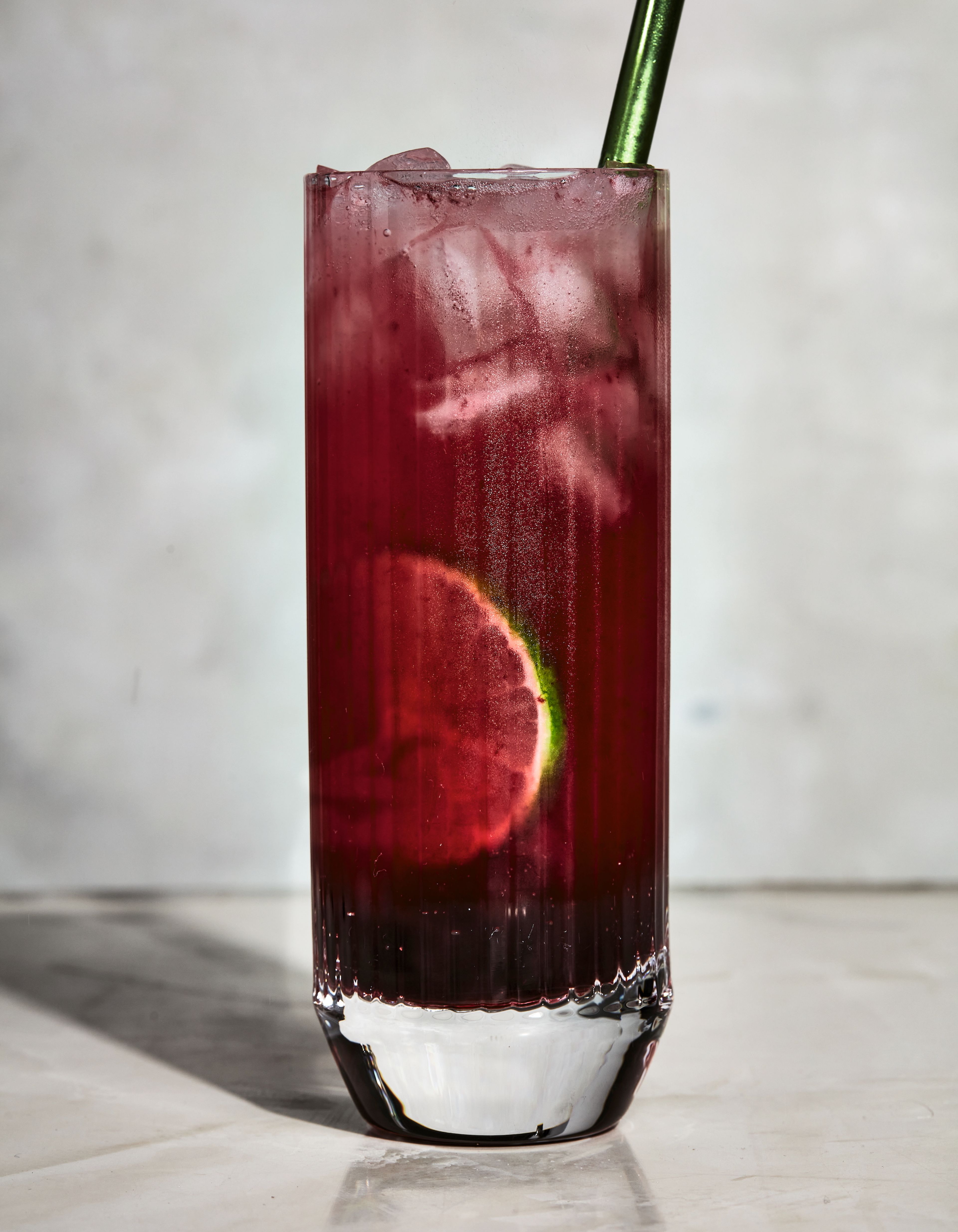
... The Hibiscus Tea in Jubilee introduces readers to the sweet-tart red Christmas drink, known in West Africa and the Caribbean. Then, in Juke Joints, Jazz Clubs, and Juice, the tea becomes a centerpiece cocktail spiked with gin, for modern Black celebrations, during Black History Month, for Juneteenth, or anytime.
In the introduction to Jubilee, you write that “...our culinary Jubilee is also about liberation and resilience. ... We have earned the freedom to cook with creativity and joy.” What recipes do you turn to when you want to feel joyous?
I love to bake and so it’s been entertaining to discover the relationship to history through many of the dessert recipes in my files. Chocolate chip cookies are one of my favorite things to eat. And I'm always on the search for the absolute best recipe.
Have you found it yet?
I think so. Through my work with America’s Test Kitchen, one of my editors and I had a running discussion to find the absolute best one. One of my favorites is an adaptation of the famous Neiman Marcus cookie. It’s a chocolate chipper that uses toasted oats to give the flour a flavor and texture boost, creating crisp edges and a plump, tender center. It appears in my forthcoming dessert book along with the story of my first interview [as a young reporter in Los Angeles] with a Black food professional, Wally Amos of Famous Amos Cookies. I couldn’t get him to reveal his secret recipe, but the story encouraged me to continue to learn about the Black cooks who American history had ignored or marginalized.
Can you tell us about the Toni Tipton-Martin Foundation and how it supports your advocacy work and legacy for the next generation?
For the past several years, thanks to a grant from the Julia Child Foundation for Gastronomy and Culinary Arts, my nonprofit has advanced my dedication to food journalism by supporting emerging writers through several projects including the Toni Tipton-Martin Award, presented by the International Association of Culinary Professionals, and scholarships for the inaugural M.F.K. Fisher Women in Food & Storytelling Symposium, held by Les Dames D’Escoffier.
The goal of the nonprofit is to use the Jemima Code work as the workbook for projects, classes, and lessons. The working operational objectives for the nonprofit are to use culture and cuisine to build community.
You received a James Beard Lifetime Achievement Award, but you’ve said you’re not done yet. What’s next for you?
I am writing a children’s book. I am working on my memoir. [My memoir] got another bit of refinement after the Lifetime Achievement Award because the opening sentence is about the night that I won the Beard Award for The Jemima Code. And now here we are where I’ve earned a Lifetime Achievement Award, and it’s at a place where the memoir is coming full circle. It’s really cool.
For more of 2025 James Beard Lifetime Achievement Award winner Toni Tipton-Martin's work, visit her website or pick up a copy of her James Beard Award–recognized books: The Jemima Code: Two Centuries of African American Cookbooks; Jubilee: Recipes From Two Centuries of African American Cooking; and Juke Joints, Jazz Clubs, and Juice: A Cocktail Recipe Book: Cocktails from Two Centuries of African American Cookbooks.
Reprinted with permission from Jubilee: Recipes from Two Centuries of African American Cooking by Toni Tipton-Martin, copyright © 2019. Photographs by Jerrelle Guy. Published by Clarkson Potter, a division of Penguin Random House, Inc.