Life of Pie
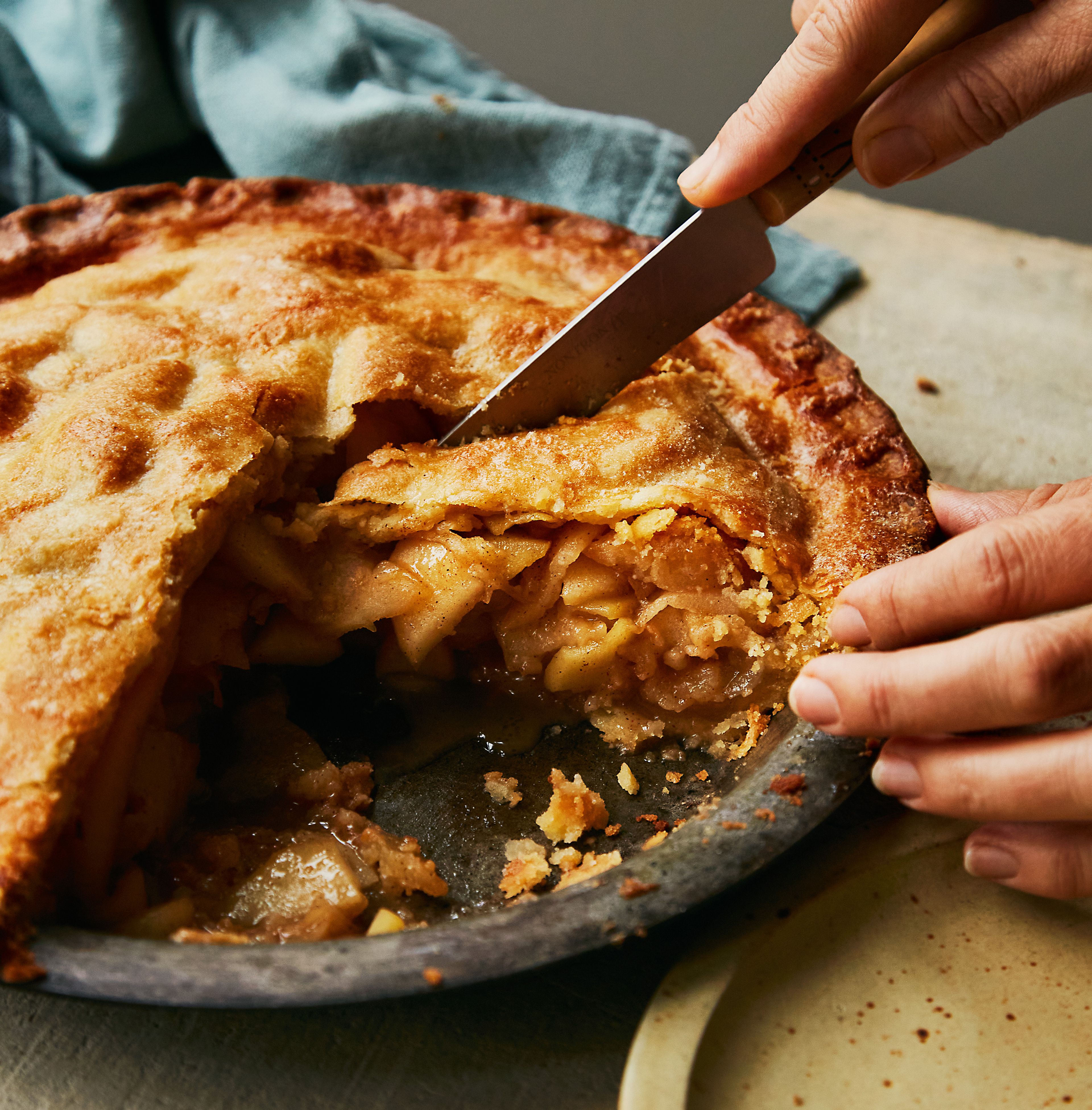
James Beard Award winner® Helen Goh dishes on Baking and the Meaning of Life, pastry tips, and her Very Good Apple Pie recipe.
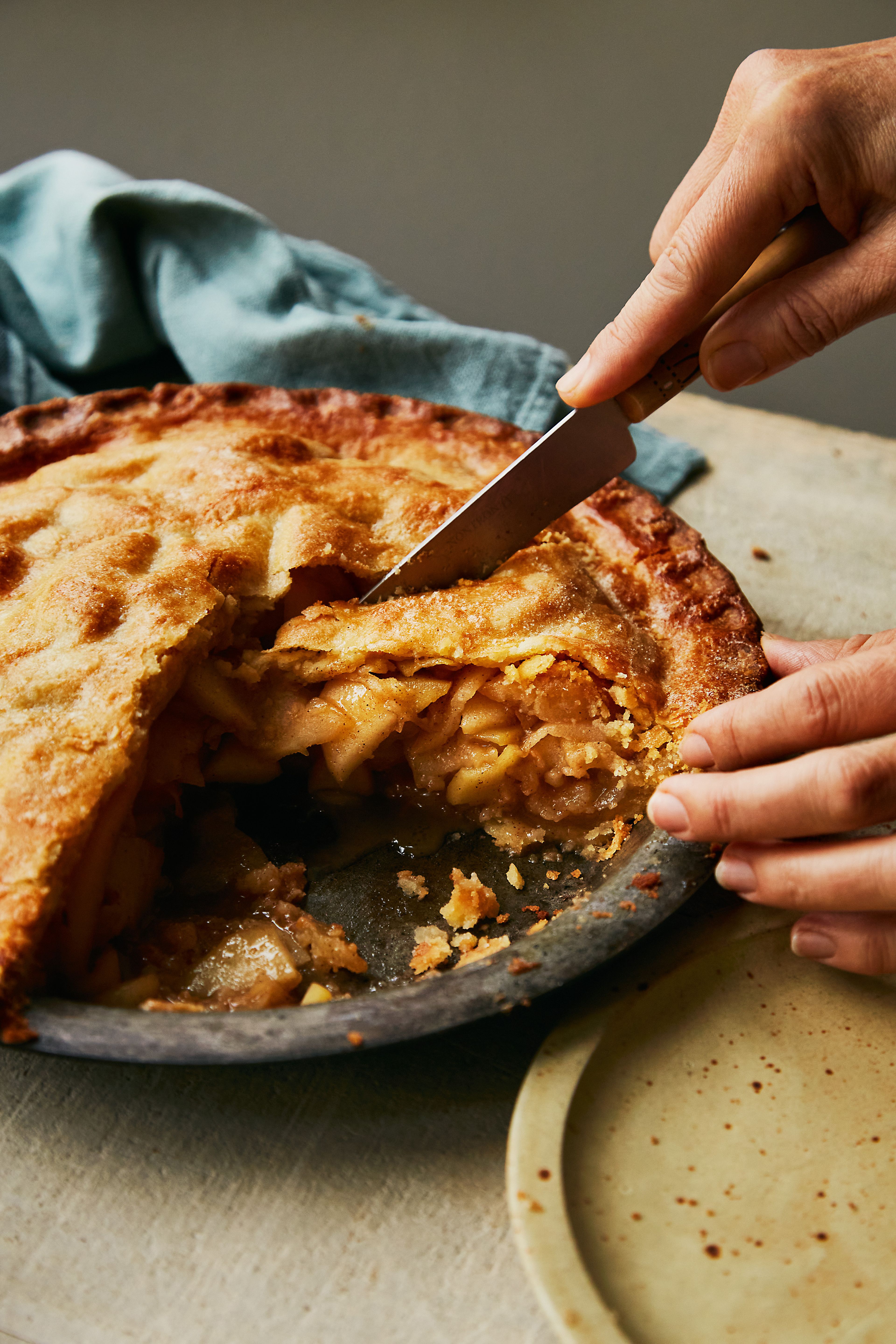
Helen Goh's Very Good Apple Pie recipe. (Photo: Laura Edwards)
Mon, September 28, 2026
When you’re navigating a new culture and language, your homeland’s food often becomes an anchor amid the chaos. When Helen Goh and her family moved from Malaysia to Australia, Goh found comfort in her mom’s Saturday morning congee and nourishment in nightly four-course meals, comprised of a soup, protein, vegetable, and fruit.
When Goh went to university, she originally studied psychology; in hindsight, she says it was a choice driven by a desire to unpack her multicultural upbringing. While taking a gap year prior to earning her master’s degree, she moonlit for a catering company and her passion for cooking ignited—right around when her boyfriend was laid off from his job. They used his severance to open a cafe in Melbourne; Goh became infatuated with baking, spending a third of her weekly paycheck on cookbooks. When a journalist from the Sydney Morning Herald visited the cafe, the front-page story’s headline read: ‘Is This the World’s Best Chocolate Cake?’
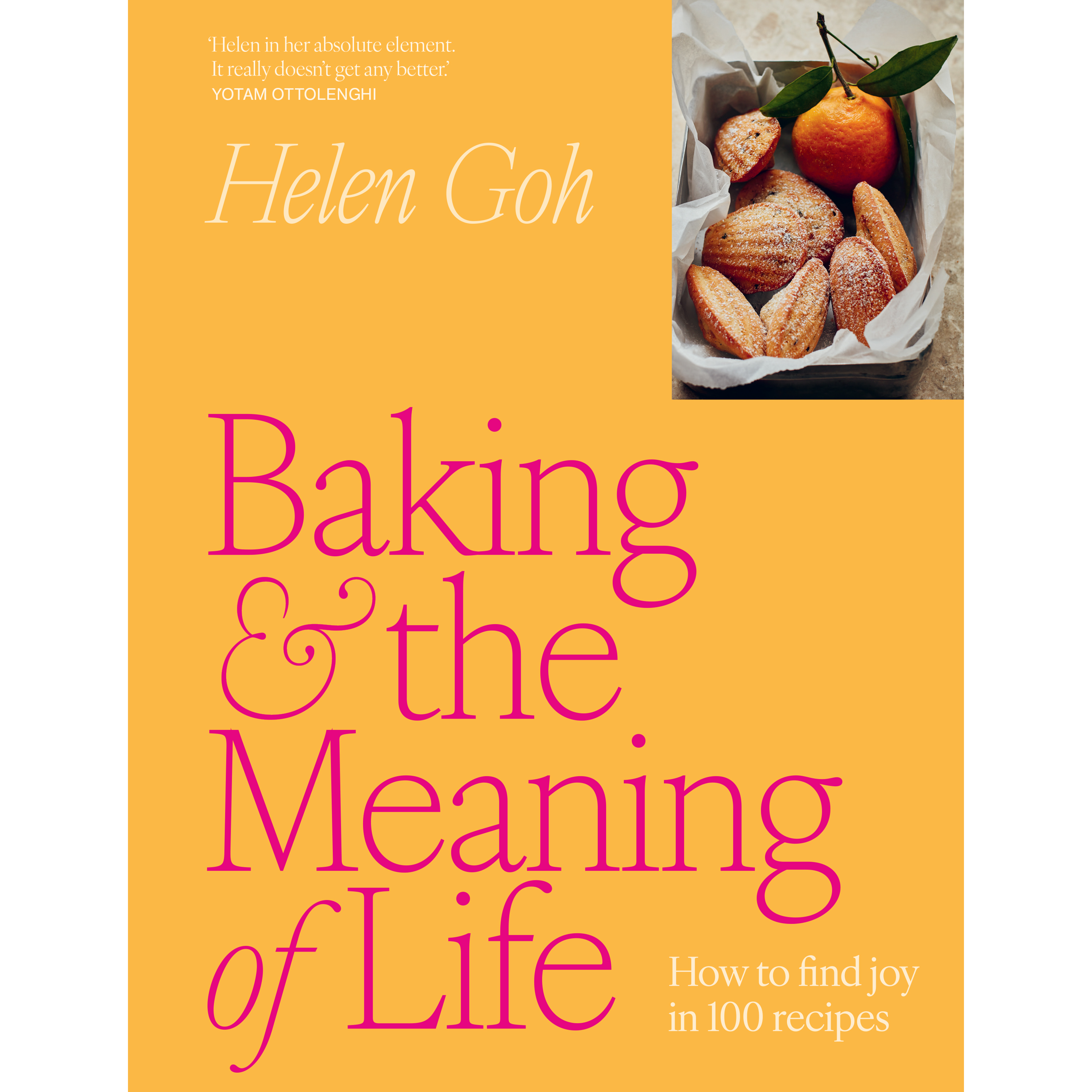
Goh moved to London and continued developing her craft at Ottolenghi (the beloved Middle Eastern–inspired cafe founded by chef Yotam Ottolenghi) where she developed products and recipes and co-authored two James Beard Award–nominated cookbooks, Sweet: Desserts from London's Ottolenghi and Comfort. Her solo cookbook debut, Baking and the Meaning of Life: How to Find Joy in 100 Recipes, won the 2026 James Beard Book Award for Baking and Desserts. In its pages, Goh explores baking through the lens of psychology and shares recipes inspired by her lived experience.
Read on for Goh’s baking tips that double as life lessons, and learn what winning a James Beard Award means to her. Plus, just in time for fall and holiday baking, Goh shares her recipe for A Very Good Apple Pie and its unexpected story involving Martha Stewart, Melbourne, and McDonald’s.
This interview has been edited for clarity and length.
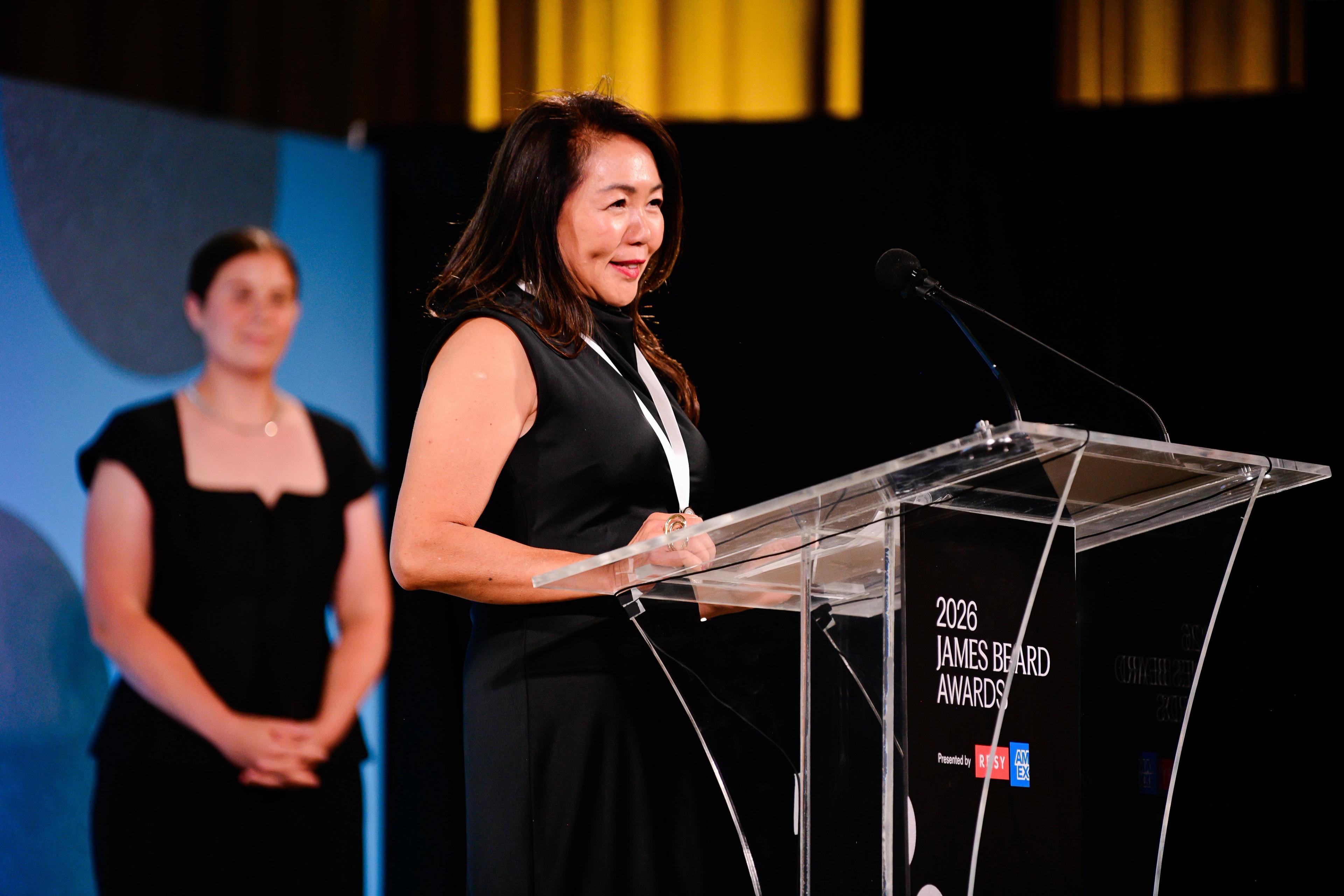
Goh accepting her James Beard Book Award for Baking and Desserts. (Photo: Max Flatow)
How did it feel to win a James Beard Award for your cookbook?
It's a career highlight. The book is so personal—it grew out of the years of thinking about why baking matters to people beyond the pleasure of eating what comes out of the oven. To have that work recognized by the James Beard Foundation® means a great deal. I also thought of the people who helped put the book together, and the generosity of this small team.
The thing about the James Beard Award is that everybody recognizes it. If you win an Oscar—which this is for me—suddenly, people see you differently. It is both humbling and thrilling.
Who are some of your cookbook author mentors or cooking heroes you look up to?
Very early on, I was influenced by Rose Levy Beranbaum [a multiple James Beard Award–winning baking expert]. The Cake Bible was like permission to nerd out, to feel good that you were obsessed with something. And Emily Lucetti, who worked for Jeremiah Tower and wrote Stars Dessert—her idea of putting fruit front and center in desserts really influenced me.
I loved Gabrielle Hamilton's Prune—that was such an unusual cookbook. And then reading [her memoir] Blood, Bones & Butter. I’m attracted to books in which cooking is indelibly a part of life. Yotam, of course, has been a mentor and collaborator for many years; working with him has taught me so much about flavor, patience, and staying curious. And of course, bakers like Claire Saffitz [author of the James Beard Award–nominated What's for Dessert] and Stella Parks [author of the James Beard Award–winning BraveTart: Iconic American Desserts].
Ever since I collected cookbooks, that James Beard Award label has been synonymous with reliability, but also creativity. You know you're going to learn something from it. And so, to now be a part of that is just wild.
Tell us about the inspiration for your book and the overall premise.
I put this book together by relinquishing wanting to make something ‘the best’ but wanting to speak honestly about lived experience. When I made this cake, why did I make it? What was the context? Who was it for, and what was the experience? That was what guided me towards the recipes. I thought about moments when I enjoyed baking, when somebody's gifted with something, or when I've been enthralled because I've seen a cake at a pastry store.
Baking can give us a sense of competence and creativity. It can help us remember someone, establish a ritual, celebrate an achievement, or offer care when words aren’t quite enough. The book explores those experiences through 100 recipes.
Were you always interested in baking?
We never baked—I don't recall that we had an oven in Malaysia, because Malaysian cakes are usually steamed. My sisters and I loved kueh-kueh—little steamed sweet cakes filled with kaya, red bean paste, or mung beans. When we moved to Australia, my mum used the oven to store things like dried fish and shiitake mushrooms. It was my sister Lily who discovered baking, making simple things like lemon bars. I was transfixed by the fact that she could squeeze some lemons, add some sugar and flour, put something down, and then it would come up as this delectable thing. It was as though she performed some magic.
Can you tell us how you developed the different chapters of the book?
The chapters reflect different ways baking enlarges and gives meaning to our lives. Giving, receiving, nurturing, remembering, belonging, learning, and celebrating, among others.
For many years, my sister Lucy worked the night shift as a midwife. She would finish work at six in the morning, and on her way home, pick up two currant buns from my favorite cafe, Babka, and drop them at my doorstep with the Saturday morning paper. So, the context for that was this great bakery. And then the memory of my sister doing this ritual. When we think of rituals and traditions, we think of Thanksgiving and pecan pie or pumpkin pie, or hot cross buns at Easter. But we also have our private traditions that anchor us in time and place, so I included it in the chapter called Ritual & Tradition.
In the Nurturing chapter, I have my son's babka [Jude’s “Bababka” with Chocolate & Halva]. At first, I thought, when you're teaching a child to cook, it is nurturing; but it wasn't about learning to bake. It was about his sense of curiosity and being willing to learn and make mistakes, and also the feeling of achievement. I think a lot of cooking and being in the kitchen is a small-stakes laboratory for life out there.
How did working on Sweet: Desserts from London's Ottolenghi and Comfort with Yotam Ottolenghi compare to the process of working on your own cookbook?
At Ottolenghi, I started top-down. ‘What's a great dessert I can do and then keep working at?’ Working with Yotam and the wider team is a deeply collaborative process—testing ideas against other people’s instincts, finding a shared direction, and making the recipes stronger through that exchange.
Baking and the Meaning of Life was sort of ground-up; the questions began somewhere more personal. I was choosing recipes partly for what they meant to me, or for what they might allow someone to do for another person. And then I started to make the best of its kind, testing and retesting the way I worked at Ottolenghi. It still took a wonderful team to turn those ideas into a book, but finding my own voice felt like a very different experience.
Let's talk about A Very Good Apple Pie. What was the inspiration for this recipe and why did you include it in the Nurturing chapter?
My friend Caroline [a fellow Melburnian in London] was telling me that her husband was craving old-fashioned apple pie. Throughout his chemotherapy sessions, a group of us had dropped meals off—lasagna or salads or soups—and they were appreciated. There was something about the apple pie that wasn't just for practical reasons. It signified his recovery and was symbolic of his wanting something extraneous that wasn't about just health. Apple pie was entirely unnecessary, but also necessary for the joy of making and giving him something.
Was apple pie something that you baked often?
No, I thought, ‘Ooh, I don't have a signature apple pie in my repertoire.’ In fact, it made me think of when, in 2018, Martha Stewart invited me to be on one of her programs. Her team was hopeful that I would do her apple pie segment, and I said no. Apple pie for Americans is a big deal. It is so loaded. I didn't have that sense of ownership of apple pie, so I felt I couldn't go on American TV and do this. I do regret it now because I could have seen it as a challenge. But at the time, I was very intimidated by it.
Do you have any other memory associations or preconceived notions about apple pie?
I'm going to tell you something that might make you wince. My definition of apple pie was McDonald's apple pie. When I was a pastry chef and finished work at one in the morning, I’d go through the McDonald's drive-thru and have an apple pie on the way home. I was obsessed with that apple pie for many years. I've put two of these apple pies in my baking columns using that as inspiration.
Your friend gave you a specific pie to emulate—the apple pie from Johnny Ripe in Melbourne—but you’d never tasted it. What was the description you had to go on, and what were you trying to achieve?
When I mentioned my reference for apple pie is the McDonald's apple pie she said, ‘Oh, no, it's nothing like it.’ She told me it was not a flaky pastry, that it wasn’t very sweet, and it had lots of different textures, so it wasn't completely mushy. So, I knew that would be a biscuity, cookie dough–like pastry. And I didn’t want the filling to be entirely puréed. I didn't want to cook the apples separately, so that gave me the idea that I needed different types of apples—one that broke down more readily than the other. I wanted a very apple flavor without too much sweetness; and a bit of spice and a bit of acidity. It pretty much came together after the second attempt.
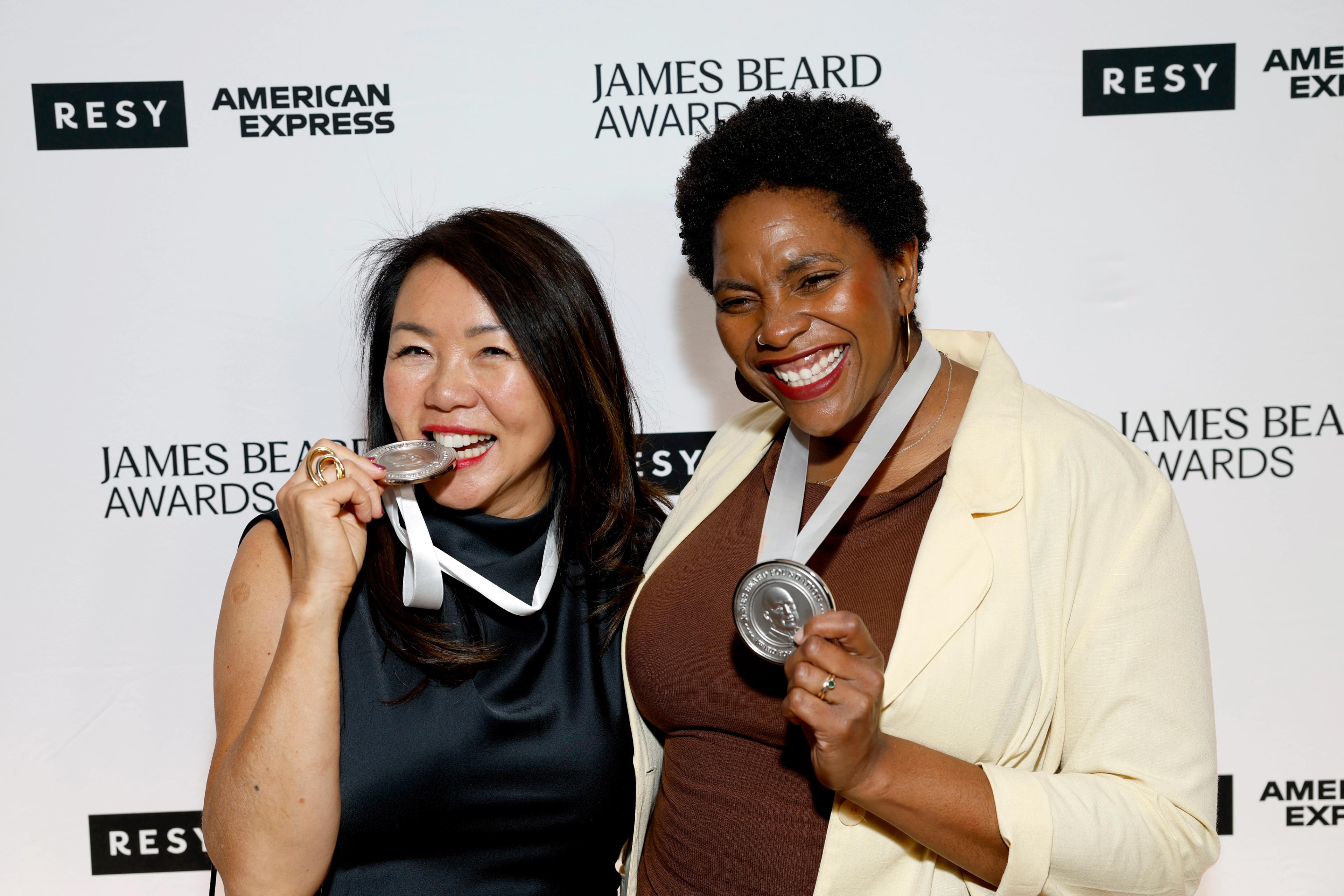
Goh with fellow 2026 Book Award winner Marie Mitchell. (Photo: Jeff Schear)
Tell us about the different apples you chose to use.
I wanted to make sure there were some sweeter, softer bits to capture the nostalgic quality associated with the Johnny Ripe pie as it was described to me. In the UK, the green Bramley is what most people use for apple purée, but it’s not readily available in other countries. So, I added Golden Delicious to give the filling some tender parts against the more texturally distinct Pink Lady. Golden Delicious are sweeter than Bramleys, so the Granny Smiths are there to balance it all with their tartness.
If Pink Lady isn’t available, Honeycrisp would be a good substitute. For an even softer element, you could use a little McIntosh in place of some of the Golden Delicious, bearing in mind that it will break down much further.
Any other tips for making the apple filling?
I also add a little salt, lemon juice, and apple cider vinegar (along with some spices) to macerate the apples first. This step gently draws out the apple juices, which I collect and thicken with a little cornstarch to add to the lightly cooked apples to concentrate the flavor and ensure the juices don’t leach out into the pie while it is baking, turning the crust soggy. Briefly sautéing the apples also collapses them a little, and I can pack more apples into the crust. If uncooked apples go into the crust, they bake down inside the pie and leave pockets of air. I wanted a pie that was loaded with apples; they’re thinly sliced, so there are no air pockets in and around the apples.
What advice would you offer someone who is intimidated by making pie crust?
Trust the process. It's very difficult when you see the crumbly mess to not think ‘This is not going to work.’ People either panic that they've made a mistake and then feel very unconfident about what the next step is. Or they go extra hard to push it together, to try to make it work. So, you're either backing off in fear or going in too fast, rather than trusting the process.
And trust that you can use your judgment. If it feels dry, add a drop of liquid. If it feels warm, refrigerate it. Use your senses—that has been a game changer for me.
Is there a reason you called it A Very Good Apple Pie and not The Best Apple Pie?
It’s not that I wanted to sell myself short. I've always thought about how when that journalist wrote ‘World's Best Chocolate Cake’ it was somehow an invitation to be disappointed. I've been thinking of this family therapy concept called the Good Enough Mother, coined by pediatrician [Donald] Winnicott in the 1950s. He saw that all the mothers who were depressed had something in common: they wanted to be perfect mothers. He introduced the concept to them in therapy sessions, and paradoxically, because they let go of the pressure, they became even better mothers.
Something about it made me think of ‘a very good apple pie.’ It doesn't have to be the best apple pie. When you let go of wanting it to be that perfect thing, you get the very thing that you're looking for.
For more of 2026 James Beard Award winner® Helen Goh's work, pick up a copy of Baking and the Meaning of Life, follow her on Instagram, or read her baking column contributions in The Guardian's The Sweet Spot and the Sydney Morning Herald's Good Weekend.