Kalaya’s Spirit of Generosity
The people-first hospitality ethos that defines the 2026 Outstanding Restaurant Award winner
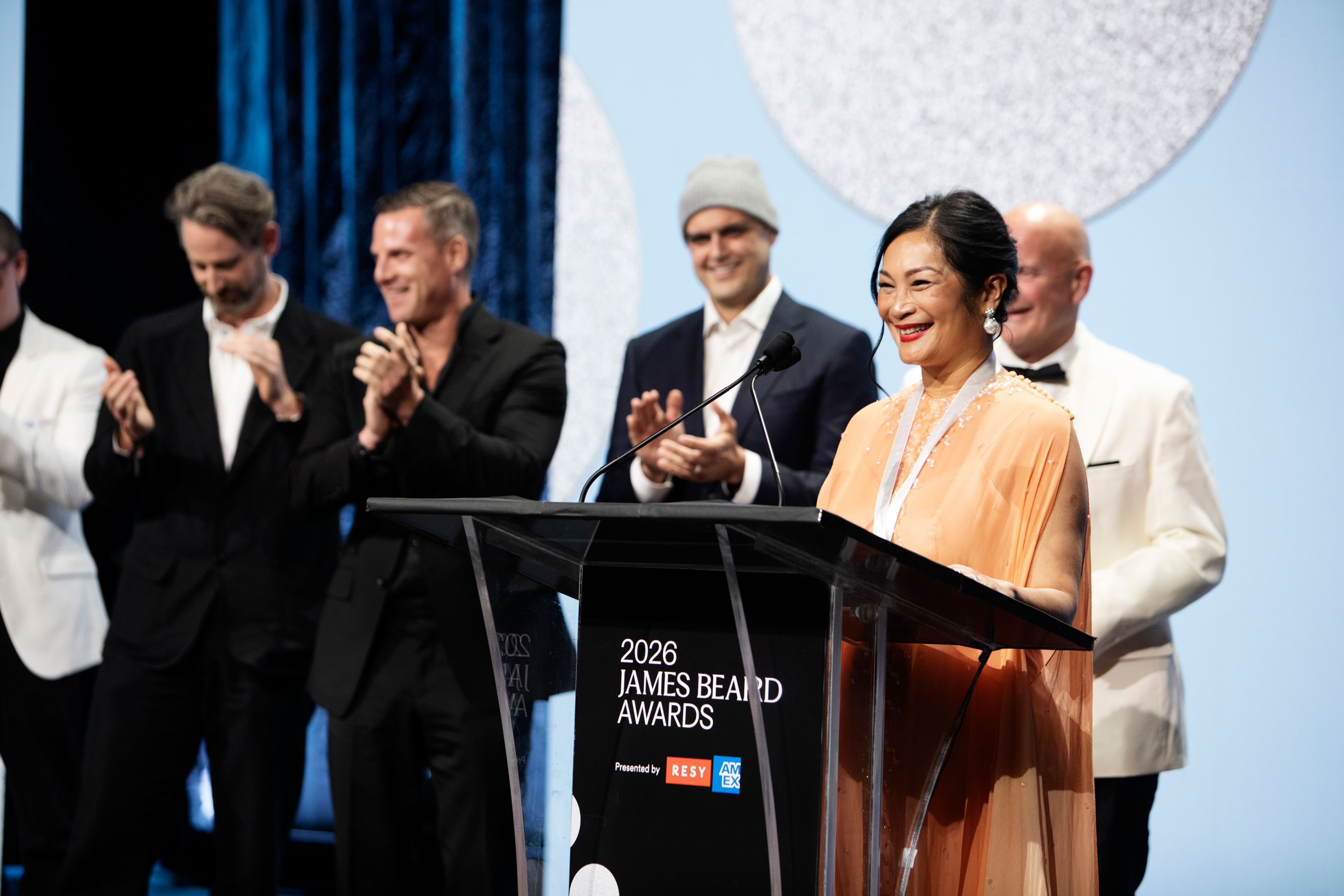
Nok Suntaranon accepts the 2026 James Beard Award for Outstanding Restaurant. (Photo: Eliesa Johnson)
Fri, July 17, 2026
It’s 8:00 P.M. in Thailand when we reach James Beard Award winner® Chutatip “Nok” Suntaranon, the chef/owner of Kalaya, a Southern Thai restaurant in Philadelphia. Suntaranon still can’t quite believe that Kalaya won the 2026 James Beard Award for Outstanding Restaurant presented by Acqua Panna® Natural Spring Water in Chicago just last month. But her chef de cuisine, Will Flemming, had just reassured her of that fact earlier in the day while market shopping in Pattani, where Flemming spent the better part of an afternoon selecting gifts for each staff member.
This spirit of generosity defines Kalaya—from its workplace culture to its hospitality ethos to the dining experience—and is what, for Suntaranon, elevates a great restaurant to an outstanding one. To be considered for the James Beard Awards’ Outstanding Restaurant category, a restaurant must have been in business for at least five years and demonstrate consistent excellence in food, atmosphere, hospitality, and operations. At Kalaya, which opened in 2019, it’s clear that upholding generosity as a core value has helped Suntaranon and her team exemplify these criteria. “The happiness has to come from within the organization first, before we share that with our guests,” she says. “The minute we open the door, we know that whoever is coming into our home, they'll be well taken care of. Because our team has been well taken care of.”
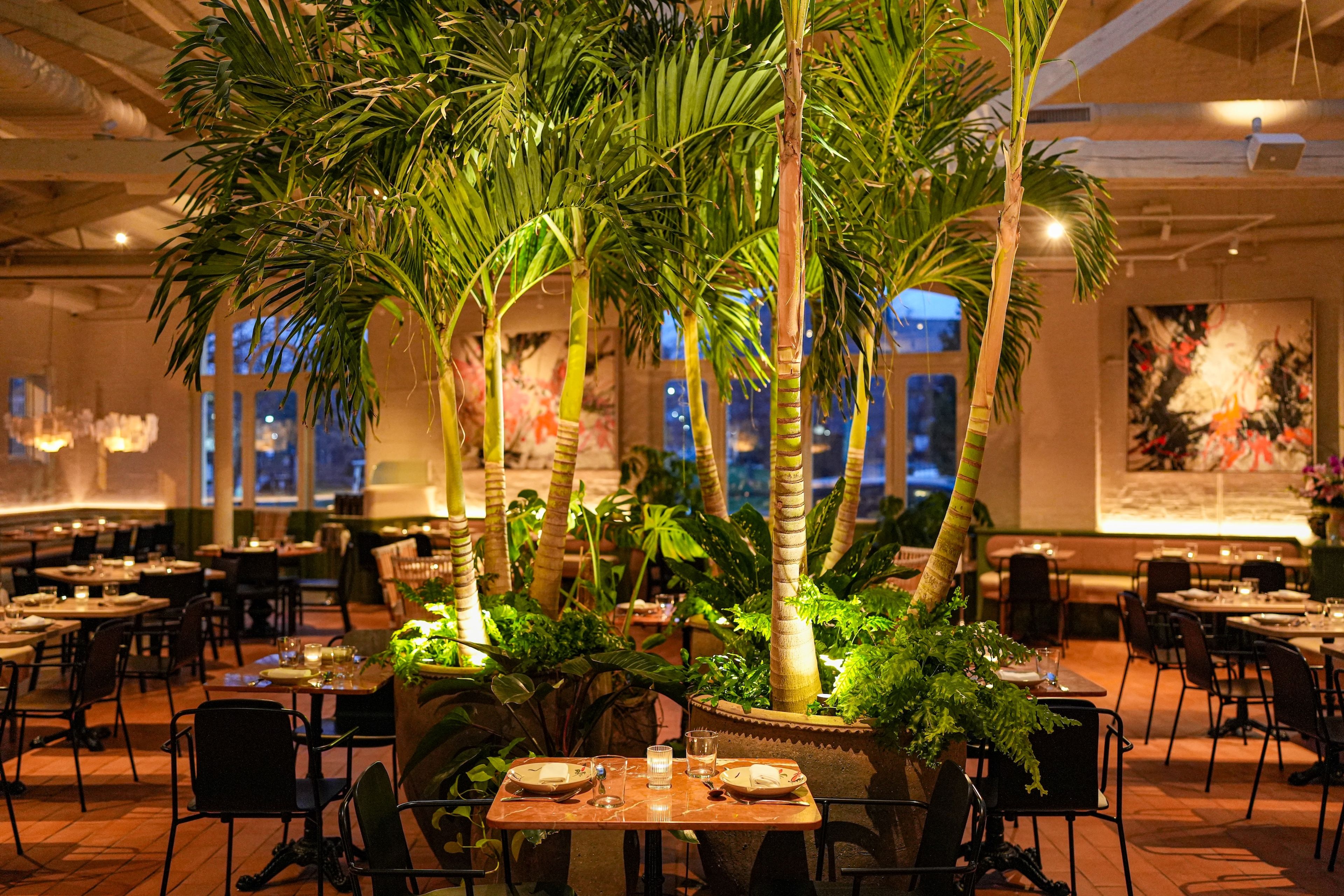
The interior at Kalaya. (Photo: Mike Prince)
It’s fitting that Suntaranon describes Kalaya as her home. Like her apartment, the expansive, airy space is outfitted with chandeliers, vibrant plants, and a bright, welcoming vibe. She wanted the back-of-the-house team to feel like part of the dining room, too, so she opted for an open kitchen. “I want it to be like a theater, so we have five woks. You see all the flames; you see the action.” Suntaranon also sought to create a transportive environment, which included installing three palm trees in the restaurant and ensuring that the aromas of boldly spiced stir-fries and fragrant curries greet diners long before their dishes hit the table.
“The restaurant will look nothing like Thai restaurants. The only Thai there will be me and my food,” Suntaranon says. “You walk into the restaurant; you smell the food. Because I was born and raised in the market. And I want my place to look like that.”
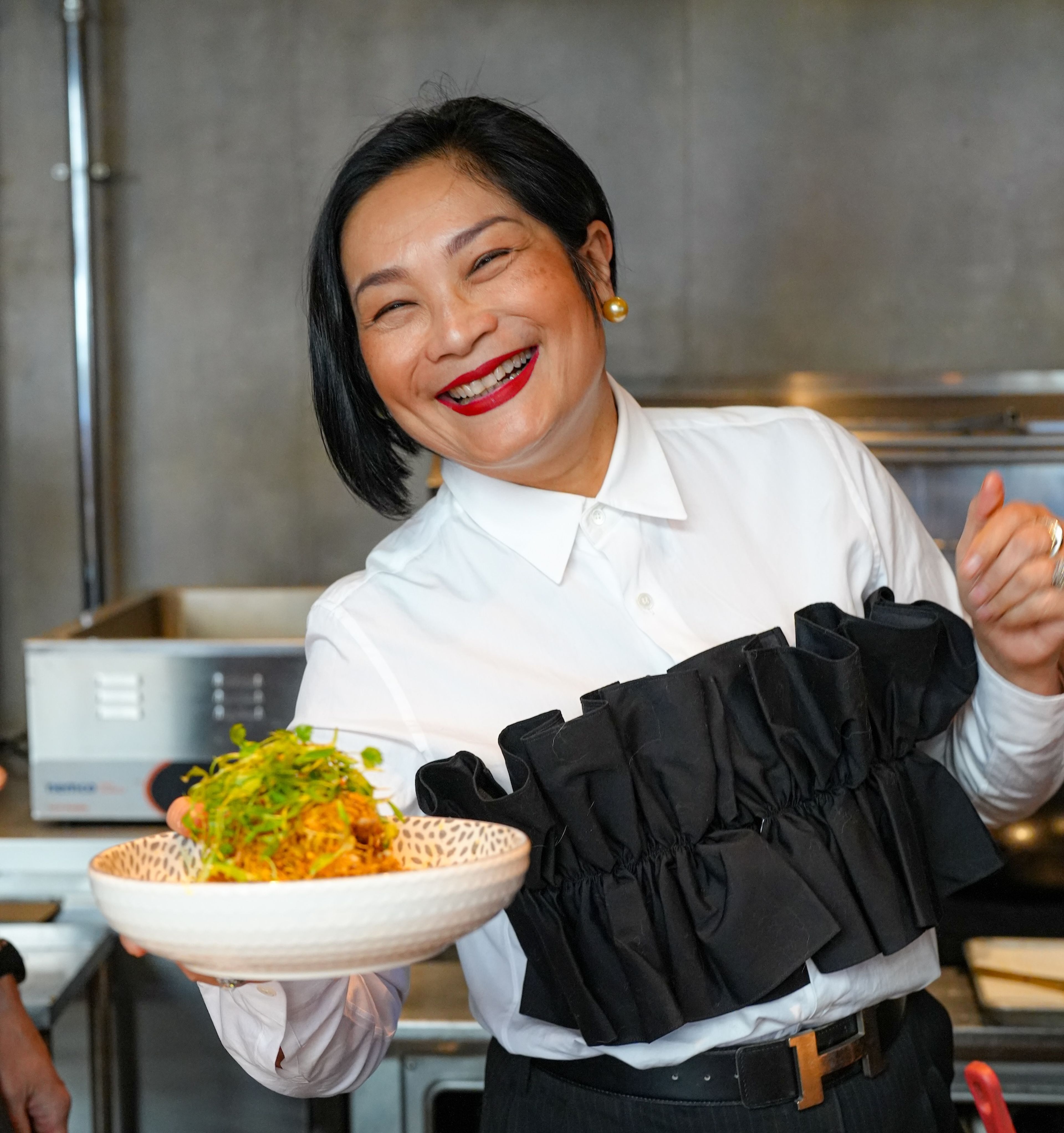
Suntaranon grew up in Trang, Southern Thailand, nurtured by her mother’s delicious food, work ethic, and spirit of generosity. When her mom started her curry paste stall at Talat Yan Ta Khao, their local market, Suntaranon helped peel ingredients and set up the stall, carrying huge bricks of shrimp paste through the market. Suntaranon named Kalaya after her mother and strives to honor her in everything she does at the restaurant, from cooking flavorful, unapologetic food with the best ingredients to her fastidious attention to detail. “How we treat people at Kalaya is just like how my mother treated the customer back in the old days,” she says. “I remember where my customers sit, the conversation we had, and sometimes who they come with.”
Before becoming a chef and opening Kalaya, Suntaranon spent 20 years as a flight attendant, another formative experience that shaped her approach to restaurant operations and hospitality. "You always treat everybody like how you want to be treated,” she says, admitting that she has very high standards. “It means we have to give them more than what they expected.”
Photo: Mike Prince
Part of the secret sauce to exceeding diner expectations at Kalaya is creating conversations. That takes the form of authentic storytelling around the deeply personal menu, whether servers are sharing snippets from Suntaranon’s childhood or anecdotes about particular dishes, like gai yaang naa por, a charcoal-grilled chicken dish fashioned after a recipe from a village in Suntaranon’s hometown, or gaeng pae, a goat and lamb curry that pays homage to her father.
When chef Suntaranon stops by the table, she not only asks how diners are enjoying their meal; she surveys the plates to see if they’ve left anything untouched. “We check on you because we're really curious,” she says. “We care about your experience, because our food is very different.” Taking a page out of her mother’s hospitality playbook, she’s been known to send out an extra dish for diners to try or take a dish off their bill if they didn’t enjoy it.
This generosity of time and sincerity is something that Suntaranon extends to her team, too, which helps foster a positive restaurant culture. “There is no complaint too small at Kalaya. That means when they bring something up, we get to it immediately. And I talk to my team every day,” she says. This feedback loop is especially important as Kalaya continues building a strong team by promoting from within and creating career pathways at the restaurant. In the last year, Suntaranon says they’ve only hired two new servers externally—the rest have been promoted from the runner team through training and individual coaching. This hands-on approach applies to the back-of-the-house staff, too. “We train people who have zero skill, and now their bird dumplings are more beautiful than my bird dumplings,” Suntaranon says, who also personally trains cooks on the wok and curry stations.
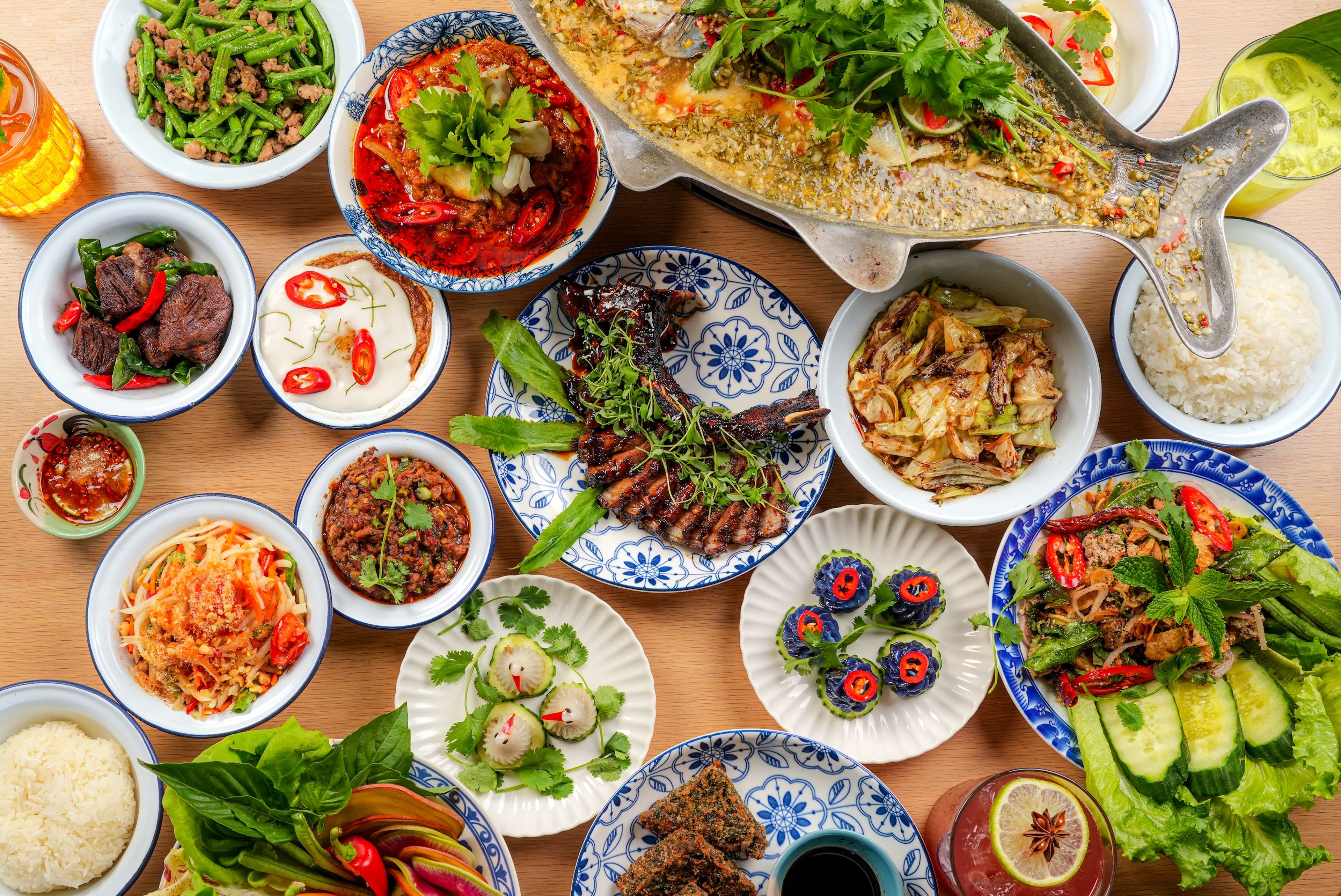
A spread of dishes at Kalaya, including their famous dumplings and whole branzino. (Photo: Mike Prince)
Recognizing a need for more women in culinary leadership roles, Suntaranon is also focused on building a strong female line cook team to promote them to junior sous chef positions. She recognizes the value of making time to answer questions and share hard-won wisdom. “I want everybody to have the same thing that I received when I entered this culinary world at the age of 50,” she says, crediting industry veterans like James Beard Award–winning Philadelphia chefs Michael Solomonov and Mark Vetri with making time for her. “Mentorship is important because I didn't get here because I’m Superwoman. I got here because people in the industry cared enough to guide me. So, I want to pass that along,” Suntaranon says.
During her acceptance speech at the James Beard Awards® ceremony, Suntaranon said, “To make good food is not only to be a good chef. You have to be a good person, and you will have to work with good people. We all have that quality.” It’s this people-first ethos that sets the stage for the kind of hospitality exchange that Suntaranon seeks to provide diners with, one that is rooted in authenticity. “I hope they walk away feeling like they came to my home and I cooked for them,” Suntaranon says. “And that I was able to transport them to the market and the hospitality I grew up with that my cousin, my auntie, my mother gave to their friends and their family.”
Watch chef Nok's red carpet interview
Related Content

What a James Beard Award Means to These Best Chef Winners
Dining with Dignity at JBJ Soul Kitchen