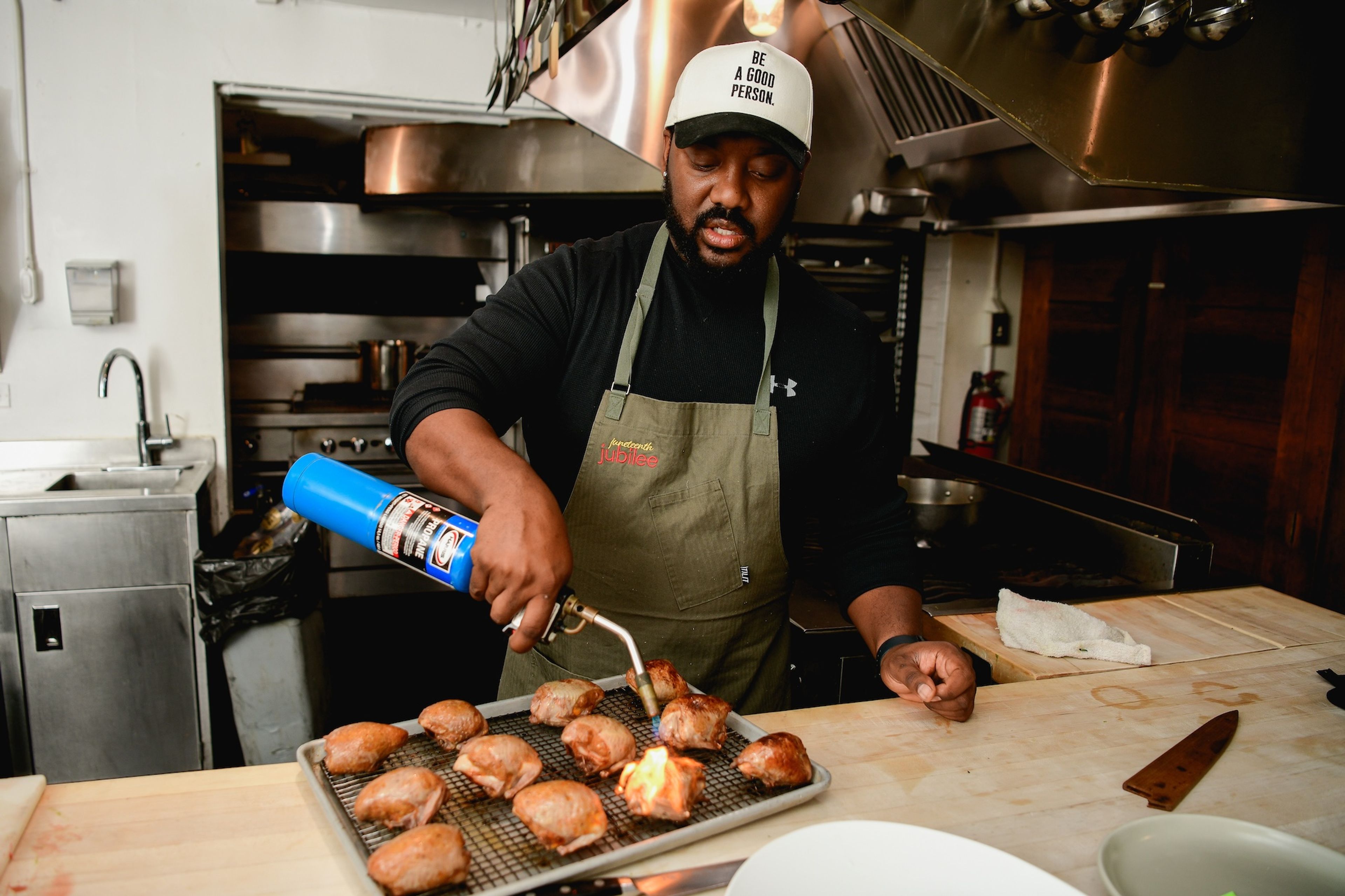
Top Chef Rhoda Magbitang’s Soulful Filipino Cuisine
The Season 23 winner dishes on her historic run, the power of nostalgia, and her Beard House dinner
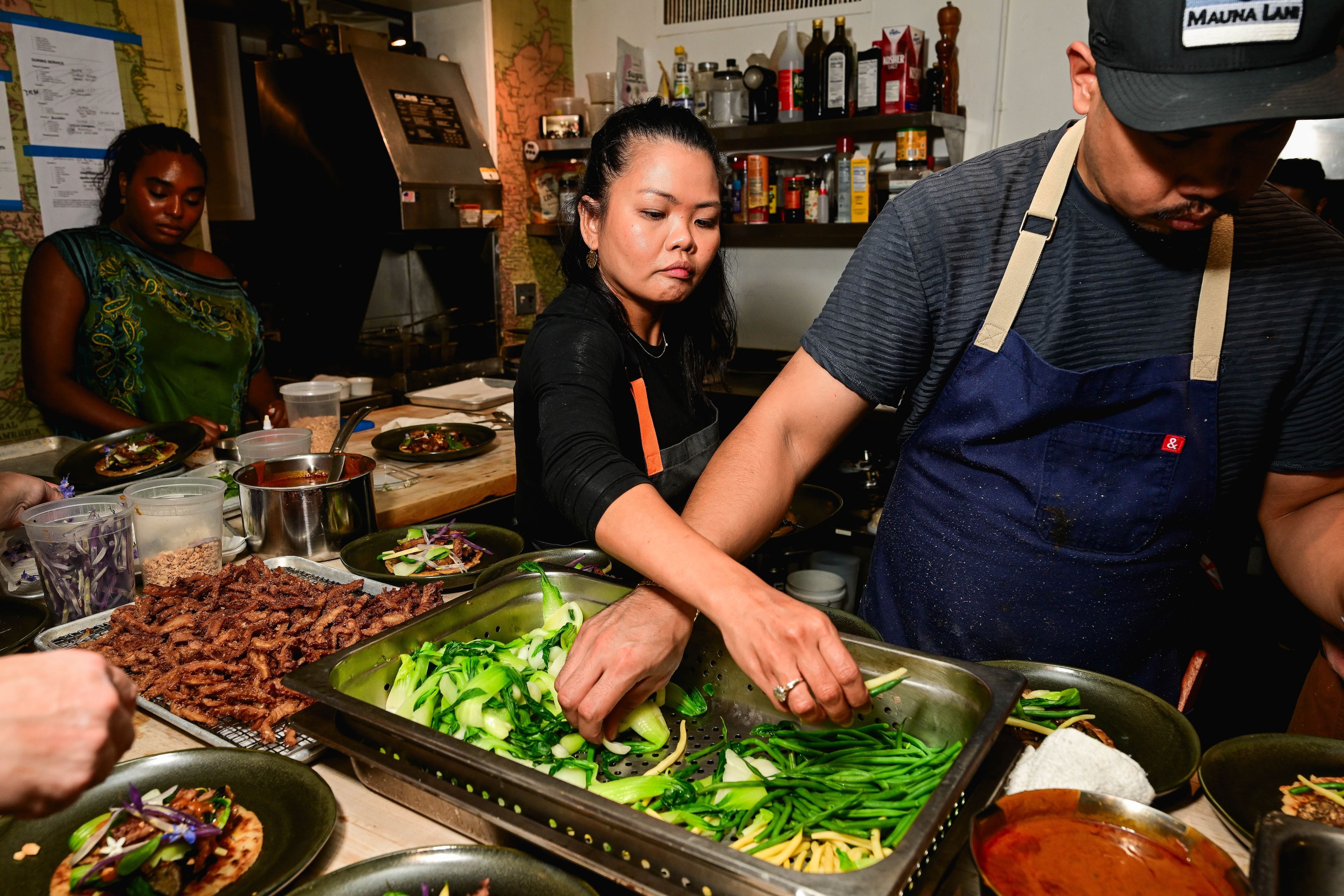
Top Chef season 23 winner Rhoda Magbitang cooking in the James Beard House. (Photo: Max Flatow)
Fri, August 28, 2026
Imagine an al fresco table with banana leaves in the place of plates, where aunts, uncles, and cousins crowd around a spread of braised jackfruit, fried fish, pots of stew, steamed vegetables, and multiple rice cookers. This scene was a daily occurrence for chef Rhoda Magbitang, who grew up in the Philippines as the eldest of six children and with extended family as next-door neighbors. Sharing abundant communal meals instilled in Magbitang an appreciation for food and an understanding that preparing food is a labor of love.
As the winner of Top Chef season 23, Magbitang is the first Filipina to hold the title and the first woman to win since season 17. Magbitang says that, as the competition progressed and the stakes rose higher, she found more and more inspiration from her childhood taste memories. By blending nostalgic flavors with chef techniques, Magbitang created wow-worthy dishes, culminating in a dazzling four-course finale menu that included abalone lugaw, a comforting rice porridge inspired by her mom’s recipe, and kaldereta, a celebratory beef stew reimagined as beef short rib plated with liver sauce and vegetables.
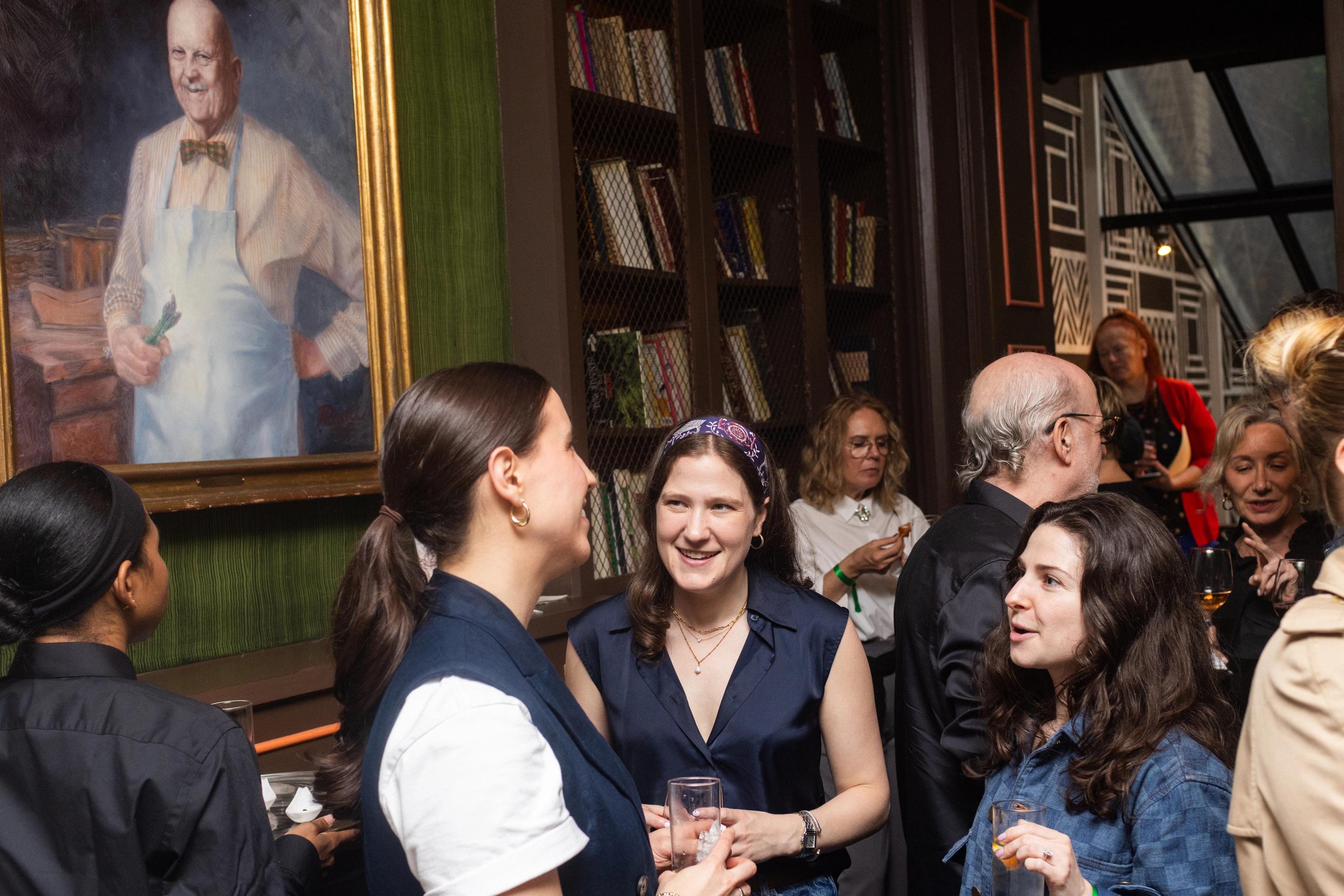
In addition to making history and taking home the Top Chef title, Magbitang's prize package included the opportunity to cook a multi-course dinner with a cocktail reception at the historic James Beard House, where guests, including Top Chef judges Kristin Kish, Gail Simmons, and Tom Colicchio, got an encore of Magbitang’s soulful Filipino creations.
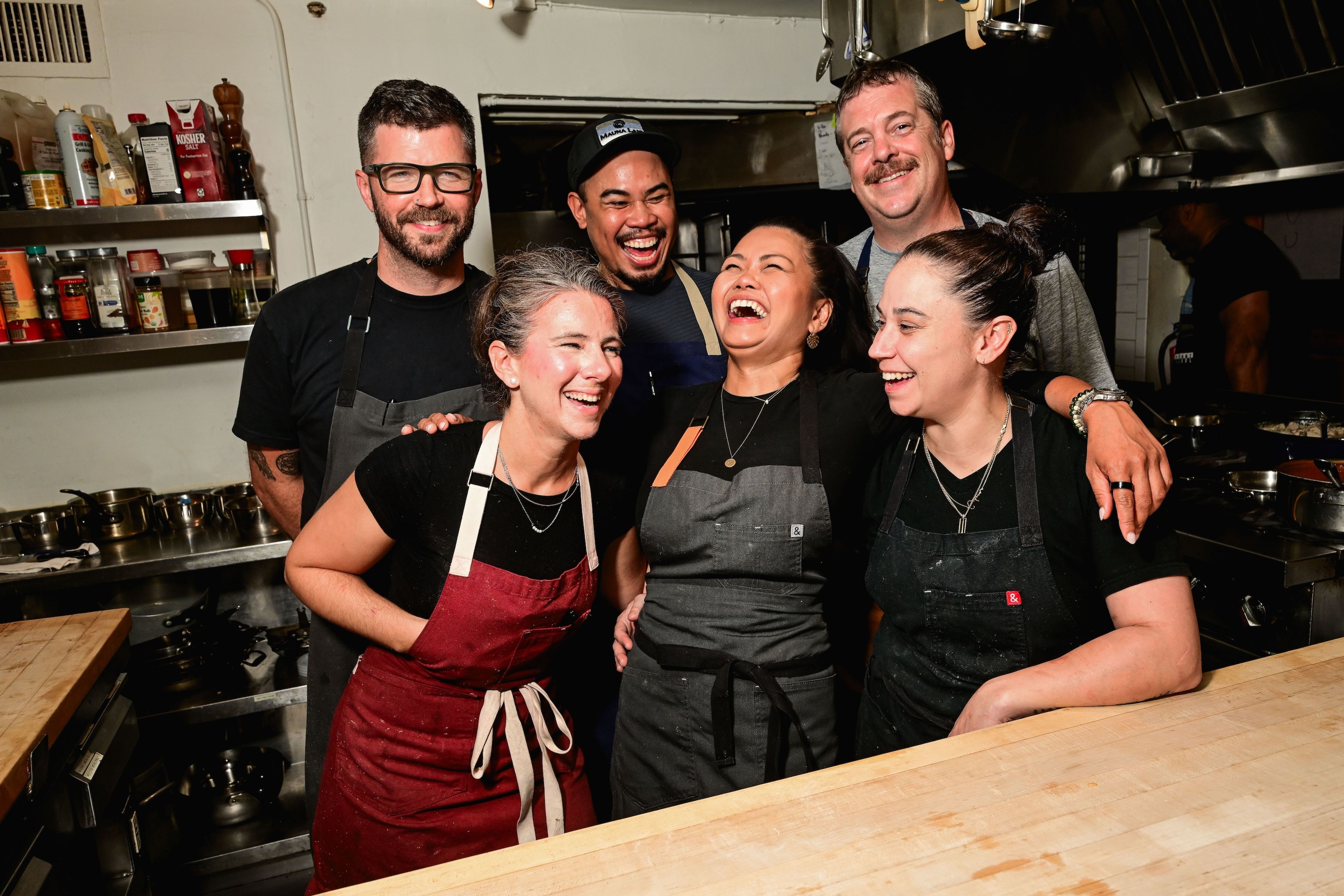
Magbitang's kitchen team at the Beard House included fellow season 23 cheftestants Sieger Bayer and Brittany Cochran. (Photo: Max Flatow)
Despite learning to make homestyle Filipino dishes as a child at her grandma’s karenderia—a steam-table eatery—cooking professionally wasn’t on Magbitang’s radar. When she was 17 years old, Magbitang and her sister Katrina moved from the Philippines to the U.S, where their father was already a resident. “If you [have] the opportunity to immigrate to the U.S. from a country like the Philippines, you take it,” she says. “You just pack up your life, and you go. Whether you have a plan—that's kind of irrelevant.”
Magbitang enrolled at a community college in San Fernando Valley with the intention of pursuing a nursing career but quickly realized it wasn’t for her. She found that she enjoyed teaching, working first at the Los Angeles Unified School District’s early childhood education centers, then at a private preschool in Los Angeles where she was tasked with running an after-school program teaching food preparation and kitchen safety skills. Magtibang recalls having an a-ha moment, thinking, "Oh, maybe I should go to culinary school and really do this with more knowledge."
After attending Le Cordon Bleu in Pasadena, California, she went on to hone her technique at some of the most celebrated restaurants in the country, including James Beard Award–recognized spots such as Suzanne Goin’s A.O.C., République, and Bazaar by José Andrés. She then helmed the kitchen at two Auberge Collection resorts, including most recently becoming the first female executive chef of CanoeHouse at Mauna Lani. It was while working there that she was approached to compete on Top Chef—as a day-one fan of the show, Magbitang recognized what a huge opportunity it was. “In the beginning when you get approached, you're like, ‘Oh heck yeah!’ You've seen all these people that have gone through the show and have done tremendous things with their careers,” she says. “And obviously, I wanted to make my family proud, and I wanted to make my work proud. And I wanted to see if I could really do it.”
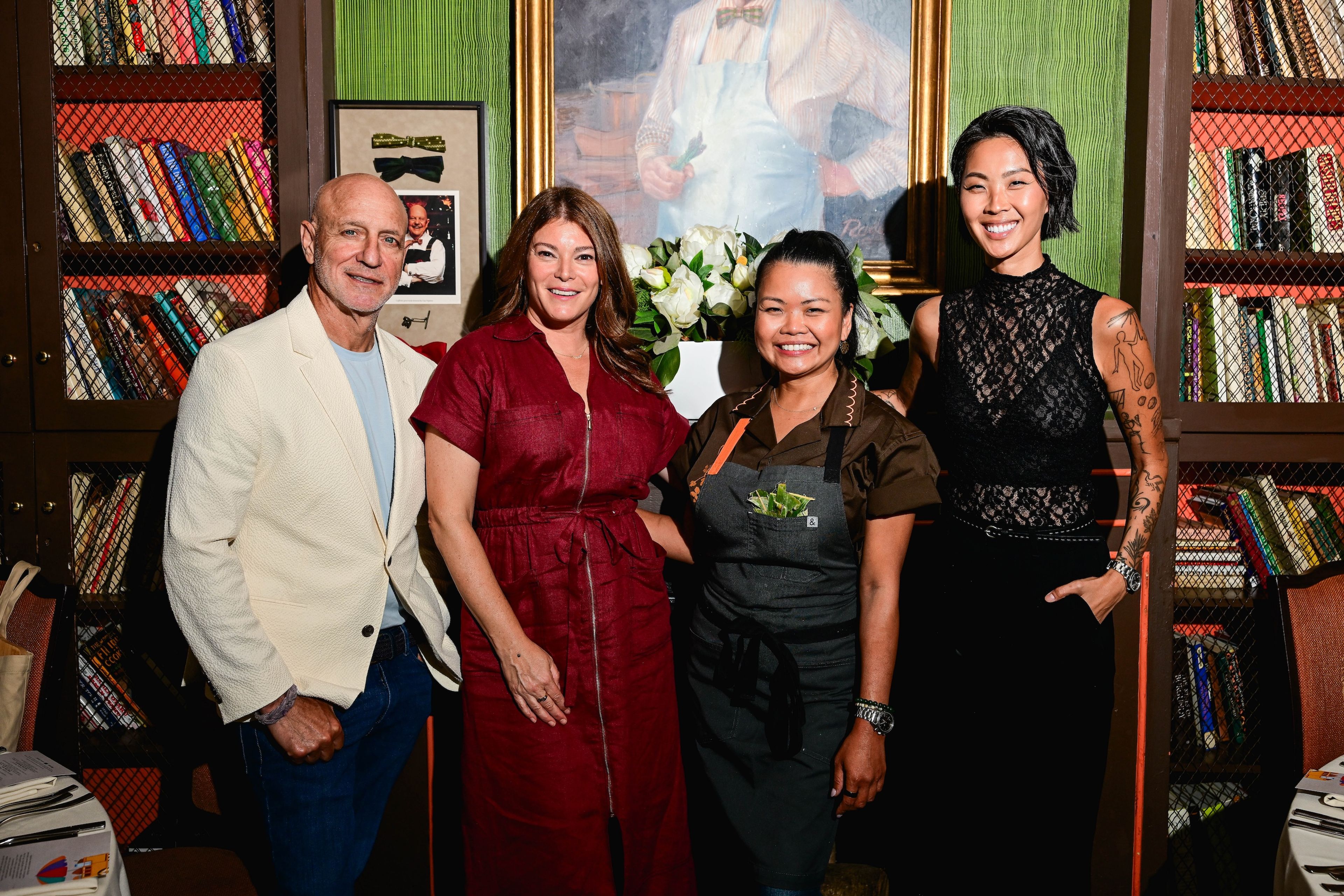
Magbitang with Top Chef judges Tom Colicchio, Gail Simmons, and Kristen Kish. (Photo: Max Flatow)
Magbitang also made history as the first cheftestant to win the first two elimination challenges, impressing the judges with her technique-driven dishes like soy-glazed sweet potatoes inspired by kamote cue, a popular Filipino street food dish, paired with miso sweet potato purée and lime crème fraîche. After she was eliminated in the fourth episode, Magbitang fought her way back to the competition via Last Chance Kitchen before going on to take home the title (just the fourth chef to do so). Early in the season, Magbitang says she leaned on her professional training, but as the competition heated up, her approach changed.
“The thing with Top Chef is that there's a shift that happens because your safe space is no longer what you know; it's what you remember,” she says. "I think that's the reason why there's a lot of people that cook the food that they grew up with. It's not about the training that you had. It becomes about the food that spoke to you.”
Magbitang’s expressive cooking and heartfelt stories not only won over judges; they inspired the next generation of Top Chef fans. Once she returned to CanoeHouse—which serves up to 300 covers per night—Magbitang found herself fielding daily meet-and-greet requests from young diners. “It's pretty crazy—these young girls, who are so impressionable, and they watch the show and they tell you, 'Rhoda, I picked you from day one’—like, what?!” she says, adding that she has artwork from fans hanging in her office.
This experience has deepened Magbitang’s appreciation of the impact that Top Chef has on viewers as well as diners, and the platform’s potential for introducing diners to new culinary perspectives and traditions. It’s one of the reasons Magbitang was so excited to have the opportunity to cook at the Beard House.
“Filipino cuisine has been getting a lot more attention lately, and it was really meaningful to have the opportunity to showcase it in a place as historic as the James Beard House,” she says. “Being able to bring the food and flavors I grew up with into that space felt really special.”
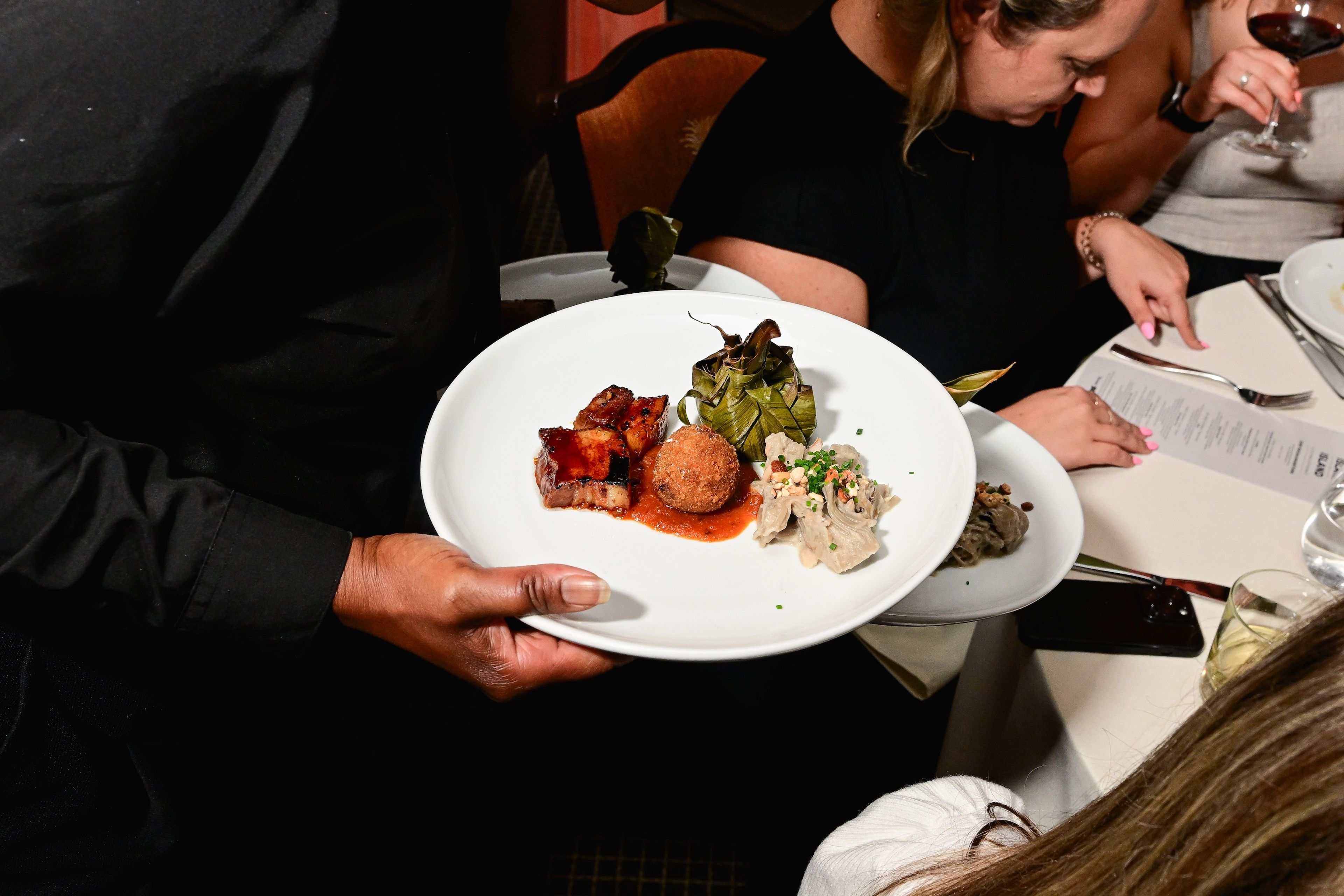
Magbitang's third course was inspired by her grandmother’s karenderia. (Photo: Max Flatow)
Diners at her Beard House dinner were treated to a one-of-a-kind menu that reflected the people, places, and stories who helped shape her and her culinary journey. The menu unspooled like a typical day of eating in the Philippines, with Magbitang riffing on Filipino comfort food cravings and family favorites while executing them with refined techniques and surprising presentations.
The third course is especially close to Magbitang’s heart, a trio of dishes inspired by her grandmother’s karenderia. “It’s very representative of a typical-style Filipino eatery. You enter this space—it's usually lit by fluorescent lamps—and then there's a steam table filled with dishes upon dishes of home-cooked meals. They also call it turo turo, which translates to ‘point point,’”she says, noting that diners simply point to the dishes they’d like added to their plate.
Magbitang chose a few favorites, including the staple dish of adobo—typically chicken or pork braised in soy sauce and vinegar—featuring pork belly and employing a coconut vinegar–caramel glaze to achieve her platonic ideal of a sticky (rather than saucy) finish. In a nod to her cherished family gatherings, she served a coconut-braised jackfruit dish paired with banana leaf–wrapped toasted garlic rice. Evoking one of the courses from her Top Chef finale dinner, Magbitang reimagined kaldereta as a croquette starring braised lamb neck and a smoked tomato jam accompaniment.
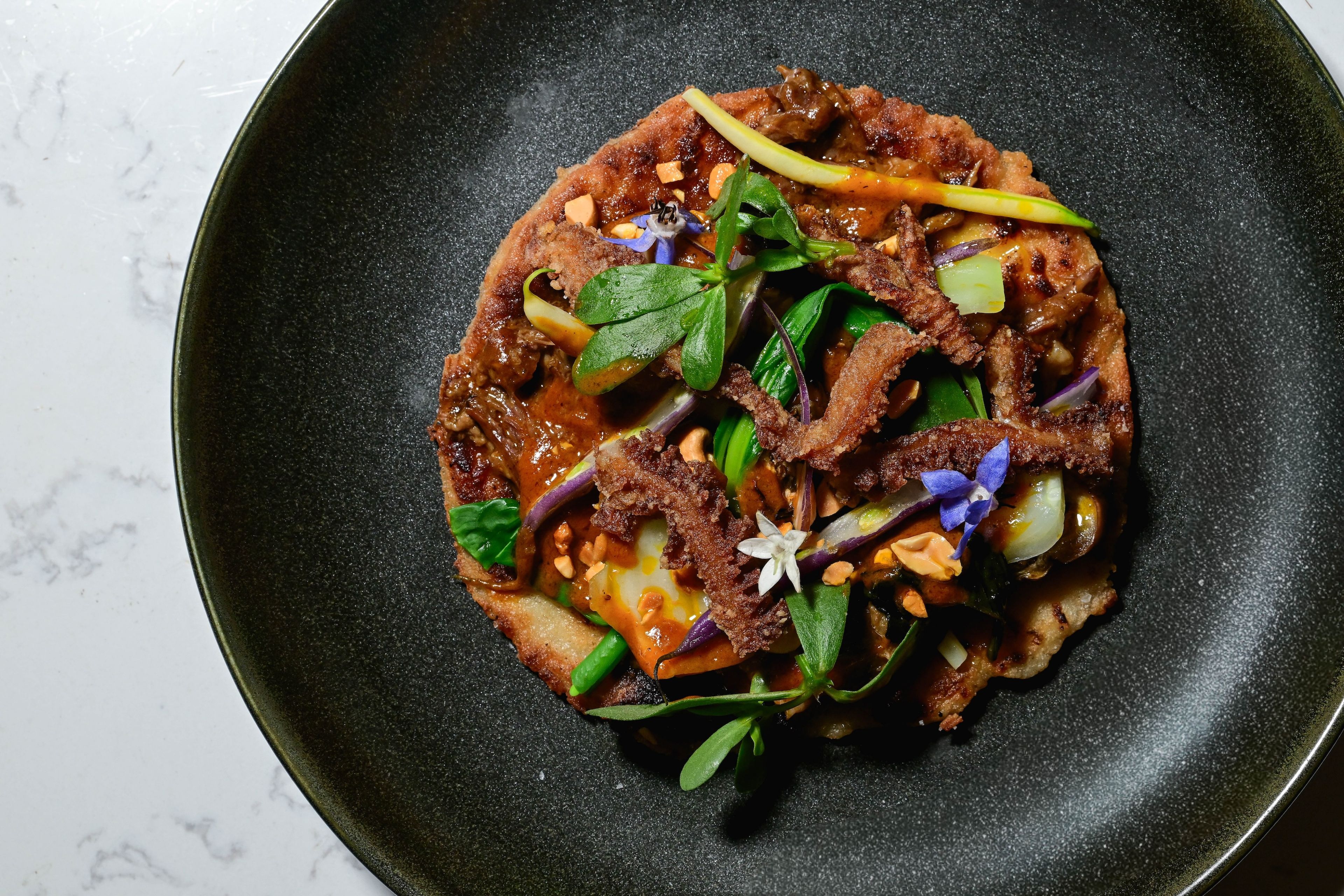
Magbitang's take on kare-kare: oxtail and tripe on a savory rice crêpe. (Photo: Max Flatow)
Asked if she could pick one dish from her Beard House dinner to serve James Beard himself, Magbitang chose one with many different textures and flavors working in harmony. "Oxtail with the crispy tripe. The richness of the oxtail and the creaminess of the peanuts complement each other so well, and then the crispy tripe adds a completely different texture that I think is really underrated. I also grew up eating a lot of offal, so it’s something that feels very familiar to me,” she says. “You're meant to eat it with this really concentrated shrimp paste and it's what brings out all those flavors. It's kind of like a create-your-own-adventure thing.”
After the event, Magbitang reflected on how it felt serving Beard House diners such a deeply personal menu. “It was really encouraging. It reminded me that when you cook from the heart and stay true to your own flavors, the food can translate across cultures and connect with people regardless of their background,” she says. “Sometimes it can be intimidating to present food you grew up with, especially dishes that may feel humble or very personal to you. But this experience reinforced that if you cook with your whole heart and stay true to yourself, that comes through in the food.”