Chef Tristen Epps-Long is Redefining Culinary Representation
The Top Chef winner dishes on Afro-Caribbean cuisine, his Beard House dinner, and new restaurant, Buboy.
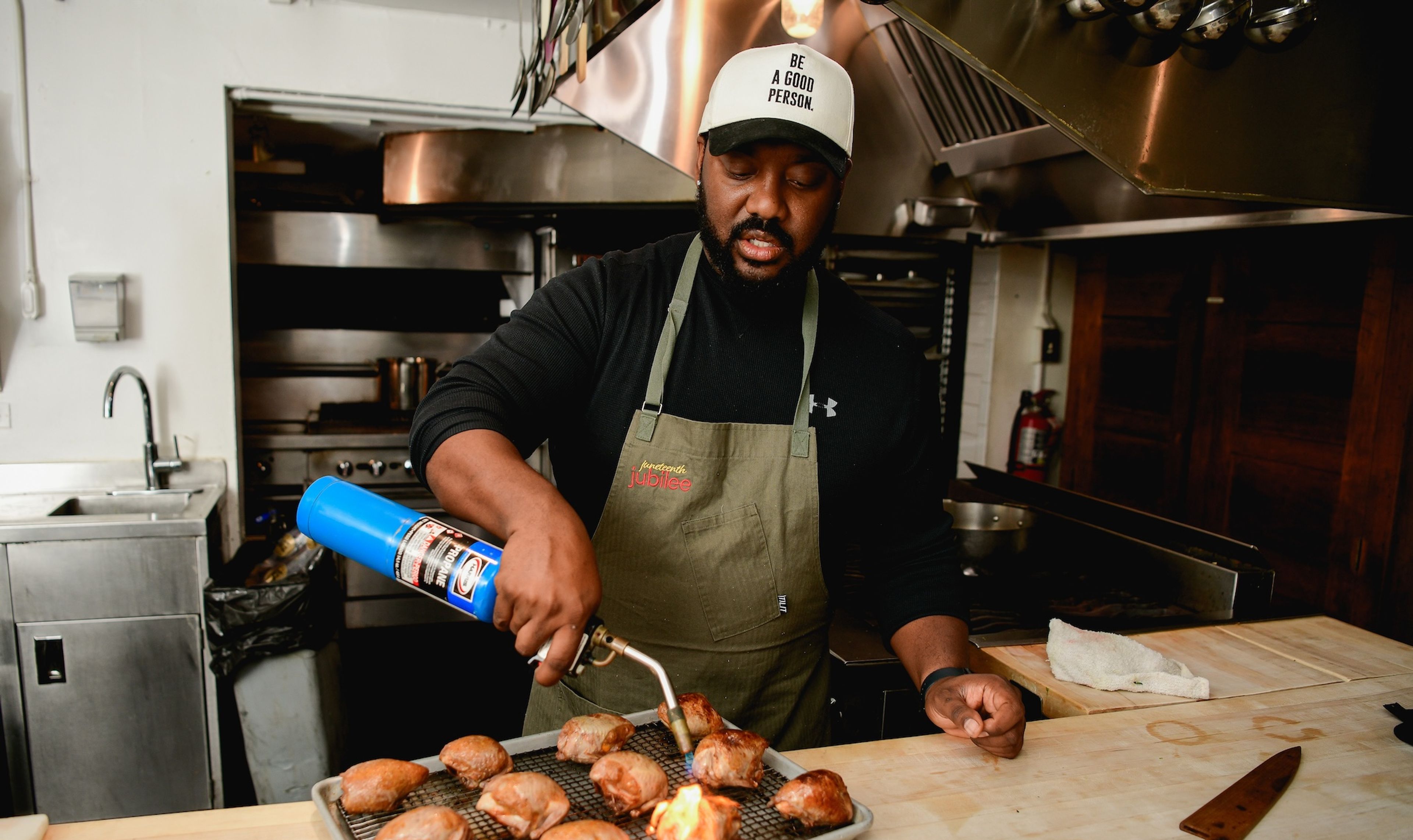
Tristen Epps-Long cooking in the Beard House kitchen. (Photo: Max Flatow)
Mon, March 9, 2026
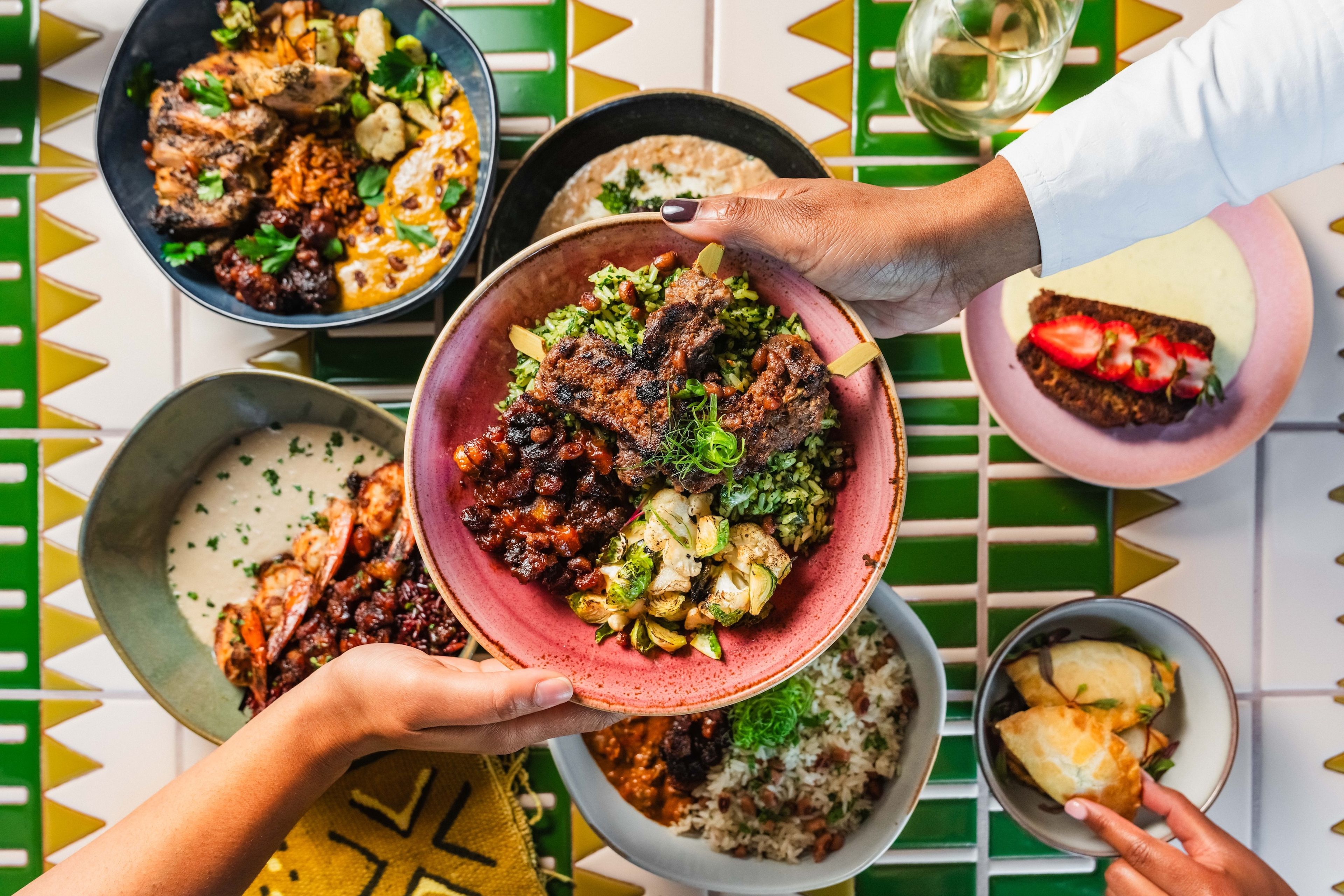
There was a time in chef Tristen Epps-Long's career when he couldn’t have imagined serving stew chicken—a Caribbean dish of slow-cooked chicken in a savory, spicy, and sweet broth—as part of a beautiful restaurant dish. Yet as the winner of Top Chef season 22, he was rewarded over and over again for exploring his family’s Trinidadian and Afro-Caribbean heritage, impressing judges with dishes like a play on steak and eggs that featured maple jerk strip loin and rice grits folded with scrambled eggs and cheese, pepperpot with braised lamb and pickled grapes, and a season finale show-stopper of oxtail Milanese crepinette with Carolina Gold rice grits, curry butter, and bone marrow gremolata. In addition to earning the Top Chef title, Epps-Long's prize package included the chance to cook a multi-course dinner with a cocktail reception at the historic James Beard House, where guests, including Top Chef judges Kristin Kish, Gail Simmons, and Tom Colicchio, got an encore of Epps-Long's Afro-Caribbean creations.
Epps-Long's culinary perspective also reflects his multi-cultural upbringing, which included living with his military-career mother in places like Guam, Japan (where he tried sushi for the first time), and the Philippines (where he developed a lifelong affinity for lumpia). “I was told as a child, ‘The best way of getting to know somewhere and a culture is through food.’” Every Friday night, he and his mother got dressed up and went out for dinner to sample their host country’s food.
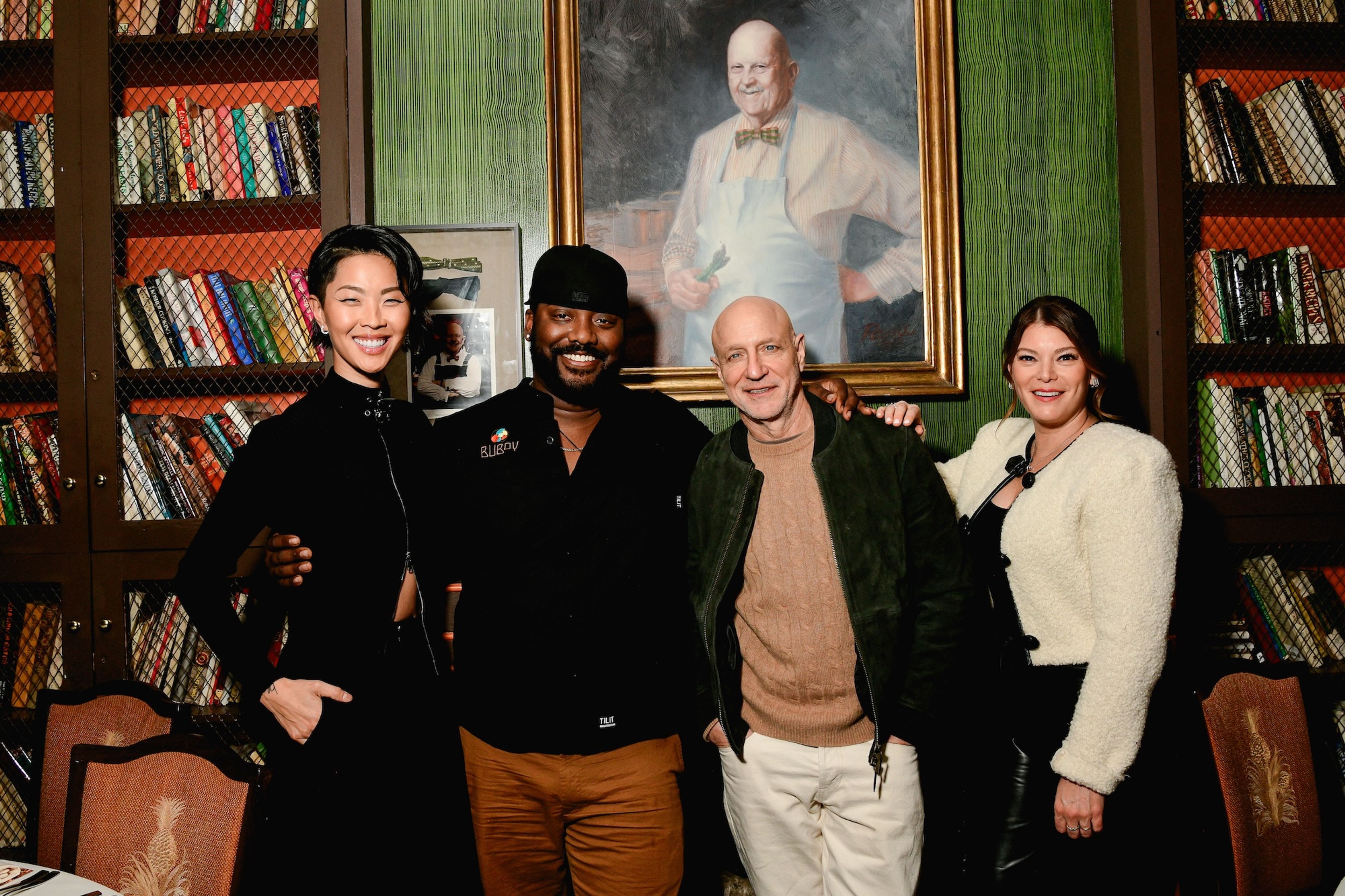
Tristen Epps-Long with Top Chef judges Kristen Kish, Tom Colicchio, and Gail Simmons. (Photo: Max Flatow)
These multi-cultural experiences sparked Epps-Long's curiosity around food. It’s an ethos he brought wholeheartedly to Top Chef, where he continued asking questions and taking risks in the kitchen, all while staying true to his goal of spotlighting Afro-Caribbean on the fine-dining stage and validating Black chefs. “I did [Top Chef] because, as [my culinary school mentor Sadruddin Abdullah] told me, ‘I crawl so that you can walk, and you’re going to have to walk so that someone else can run.’ And so now, I need someone else that sees me to run, so that the next person can fly. Doing Top Chef gave me the platform to do that.”
After graduating from Johnson & Wales University, Epps-Long honed his cooking chops at The Greenbrier in West Virginia and while working with his mentor, chef Marcus Samuelsson, on restaurants in London, Sweden, Bermuda, the Bahamas, and Miami. Working at Red Rooster, Samuelsson’s flagship restaurant in Harlem, New York City, is where Epps-Long says he first had the freedom to explore the richness and diversity of Black culinary heritage and Afro-Caribbean cuisine in a restaurant setting. “The only examples I had ever had of Afro-Caribbean cuisine or Caribbean cuisine was always in a square to-go box, coming from a food truck and a counter-service place,” he says. “I never really got the opportunity or valued it. But when I finally wanted to push for it, I got push back—until I met Marcus.”
When asked to define Afro-Caribbean cuisine, Epps-Longs qualifies his answer by saying it’s how he’d explain it to an American. “To me, Afro-Caribbean cuisine is the basis of American cooking,” he says. “The basis of Southern foodways comes from Afro-Caribbean—the slave trade from Africa into the Caribbean into South America into the southeastern part of the United States. [Afro-Caribbean cuisine] is vibrant, it’s delicious; it is the food of sustenance, sustainability, and perseverance; and modernism. It’s all of these things encompassed.”
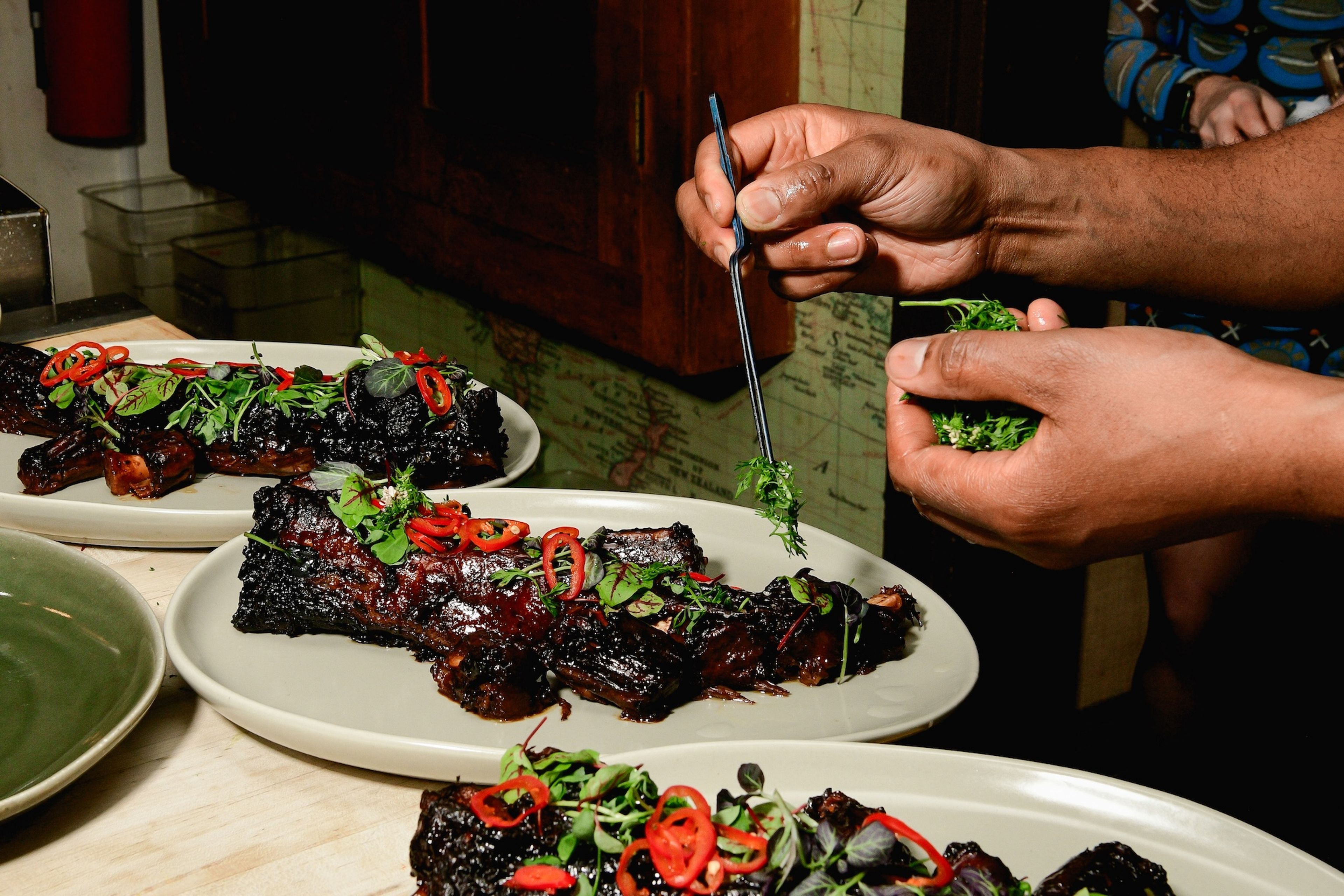
Chef Tristen's oxtail course. (Photo: Max Flatow)
Much of Epps-Long's approach to developing dishes stems from researching heritage recipes and preparing them with classic cooking techniques. “When you [pair] classic dishes of something that is unfamiliar with classic techniques that are [familiar], it looks modern,” he says, giving the example of sous-viding a protein in palm oil and berbere, an Ethiopian spice blend. In addition to demonstrating that Black food culture has always existed, he wants to further evolve the narrative of Black culinary excellence. Cooking his expressions of Afro-Caribbean cuisine at the Beard House was another opportunity to do so—and a capstone moment on his Top Chef journey.
“The Beard House is such an iconic place for chefs, so getting to host a dinner there as part of the Top Chef win was a really special moment,” Epps-Long says. “The ‘Royalty to Roots’ theme was a great way to celebrate the traditions and cultures that inspire my cooking, and having people from the show and friends in the room made it feel like a true celebration of the journey.”
Epps-Long's menu featured dishes and ingredients he says aren’t typically associated with Black cuisine. Take a Toro bluefin tuna crudo, which he imbued with the flavors of Caribbean pickled pig feet and topped with caviar from Caviar Dream, the only female- and Black-owned caviar brand in the world. Dessert showcased peanut butter sorbet by PLK 1848, a Black- and woman-owned artisanal ice cream brand with whom Epps-Long has previously collaborated to develop flavors inspired by the Pan-African diaspora. Asked if he could pick one dish from his Beard House dinner to serve James Beard himself, Epps-Long says, “It would probably be the oxtail dish [Oxtail and Wagyu Beef Flatiron Steak]. I think I might find some really cool satisfaction watching him tear oxtail from the bone.”
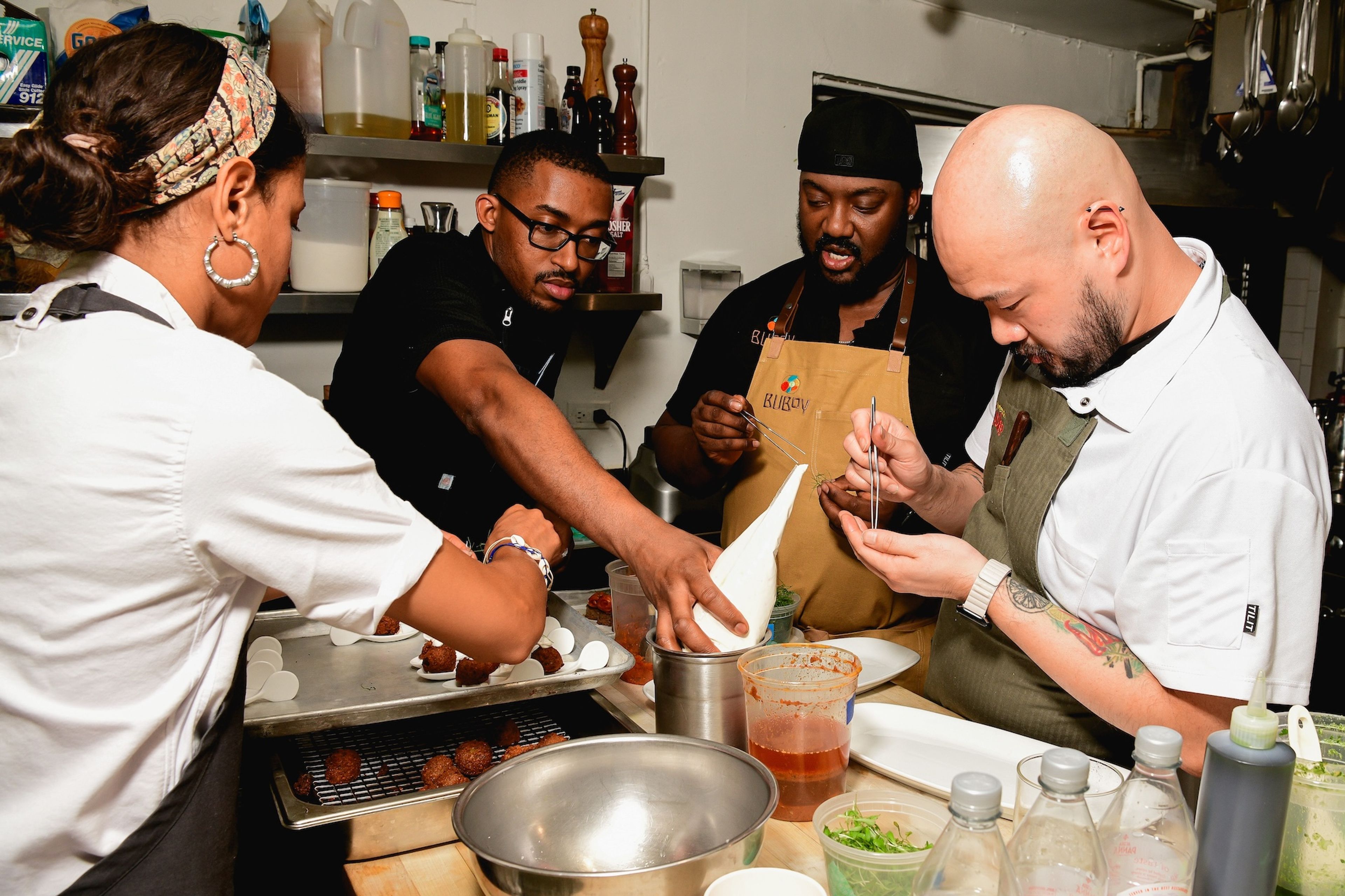
Tristen plates canapés with, from left, Lana Lagomarsini, Anthony Jones, and Henry Lu. (Photo: Max Flatow)
Epps-Long was joined in the kitchen by fellow season 22 Top Chef contestants-turned-friends Lana Lagomarsini and Henry Lu (a 2026 James Beard Award semifinalist®) as well as season 23 Top Chef contestant Anthony Jones. “He’s another person who’s kind of gone through this journey of mine,” Epps-Long says. “He’s one of the people that I got to mentor [to] find his culinary voice.”
Epps-Long is now busy getting his Houston restaurant Buboy ready to open. He describes the space as “very intimate, about 20 to 24 seats,” and a vibe that evokes the style of artist Kehinde Wiley’s portraits, whose work he admires. “I just love that juxtaposition of the dark and the colorful, and the modern and the historical, all playing into the same kind of feel,” he says. The dining room is oriented around the kitchen, which will be anchored by open-fire cooking. “It allows me the platform to really explain my food and tell the story of this very narrative-forward food.” To that end, the menu will highlight Epps-Long's Afro-Caribbean culinary point of view, but he wants to leave room to celebrate Houston’s diversity, perhaps weaving in stories of its Vietnamese and Latin communities. Ultimately, Epps-Long says that he wants Buboy “to bring people together through a lens of good food, great culture, and a little bit of nostalgia. It's a menu and a restaurant that you can feel seen in.”