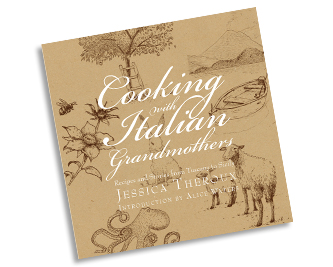
While traveling through Italy, chef and author Jessica Theroux met twelve Italian grandmothers, the keepers of the artisanal traditions that make Italy's cuisine one of the most delectable in the world. These humble women shared their kitchens, recipes, and lives with Theroux, who documented the experiences in her book, Cooking for Italian Grandmothers. Part cookbook, part travelogue, her project documents culinary customs that had been verbally transmitted through generations, providing home cooks with a valuable collection of authentic recipes and transporting photography.
You can hear Theroux speak at today's Beard on Books, which starts at 12:00 in the Beard House dining room. If you can't make it, read our interview with her below. (You'll also find a recipe from one of the nonnas!)
--
James Beard Foundation: This is a unique cookbook: it’s part memoir, part anthropological study, and there are profiles in addition to all of the recipes. Why did you decide to do a book like this? Jessica Theroux: In many ways, the book shaped itself from the material I generated, quite similarly to how a meal in Italy comes together: I brought my skills, the grandmothers brought their stories and recipes, and with the help of a fantastic team at Welcome Books, the book took its form. My greatest hope was that the book design would give people pause to think about their food, family, and elders. I am a cook, writer, photographer and filmmaker, and I pay very close attention to people and food. I wanted to use my skills to best convey the heart of the experience that I had with these grandmothers, and so it made sense to do so with a number of forms of media. JBF: Did you alter these traditional Italian recipes in any way? JT: No, I didn't change the recipes for an American audience; I wanted to keep them true to the Italian taste. However, what I did do is make adjustments so that they would work in American kitchens to produce the same flavors that the grandmothers dishes had in Italy. JBF: What are your favorite recipes in the book? JT: That completely depends on my mood, the season, and the particularities of the day. In many ways this was what I learned from the nonnas: pay attention to the weather, what's ripe in the garden, how you are feeling, and who will be eating at your table, and then make your decisions about what to cook and eat. That being said, some of my favorite dishes for this time of year are the lasagne di vincisgrassi (an 18th-century regal lasagne that's named after an Austrian general and layered with wild mushrooms and béchamel), Irene's cavolo rosso (sweet-and-sour braised red cabbage) and Carluccia's walnut black–pepper cookies (get the recipe here!). JBF: Do you still keep in contact with the grandmothers? Have they seen the book? JT: I keep in touch with the ones who are still living, and all of the women and their families have received copies of the book. It was very touching to hear of the grandmothers' reactions upon opening the book; stories from their families of unusually wide smiles, tears, and sweet laughter came pouring in. These are women who had spent their lives humbly, simply, deliciously nourishing their families, and I think seeing the book allowed them to realize just how big an impact their lives had made, on those both near and far. JBF: In the book you say that you often traveled without plans and were very spontaneous. What advice do you have for travelers who are seeking adventure? JT: Trust your instincts. And always talk to the locals! JBF: We recently read about concerns over the lack of commitment among younger Italians to sustain artisanal and agricultural traditions. Did you see any evidence of this during your research? JT: Yes, I did see this, and it was something that some of the women who were active farmers talked a lot about. For more information on this, I would suggest that people view my documentary film on Carluccia at cookingwithitaliangrandmothers.com.


